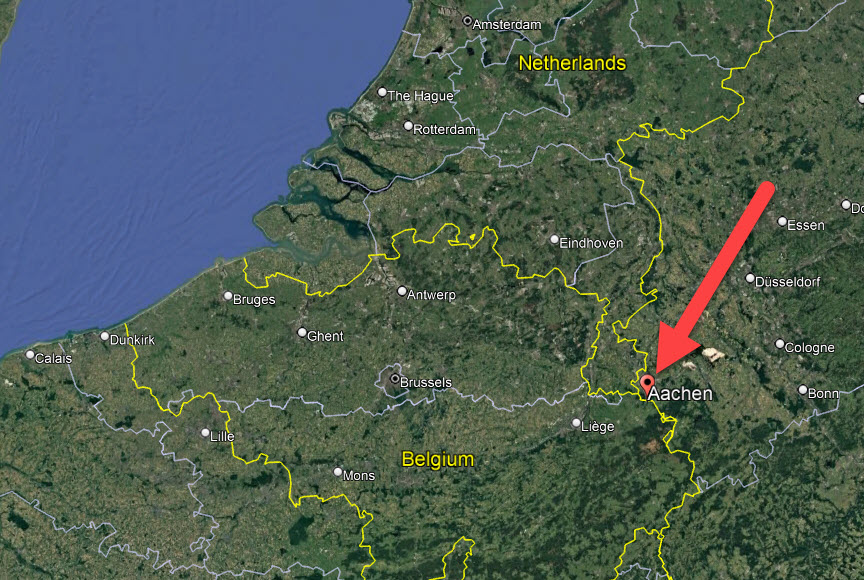
Welcome to Germany and to Aachen. You might know it better as the homestead of Charlemagne.
Background of Charlemagne. Rome has collapsed in the West. Through different wars the Frankish kingdom is created to kind of hold together the former empire. Centuries go by, the dynasty weakens over centuries. Along comes Pepin the Short (Charlemagne’s dad).
His father has two sons and was kind of in charge of the Merovingian region. Think of him as mayor of the empire, the man behind the man who wore the crown. Dad does all the things which keeps the region working but he’s not given true power. Keep in mind, the region is almost all of Western Europe. Eventually that eats at him and he wants a change. In secret, dad goes to the Pope and asks if he’d be ok if he deposed the Merovingian king. Pope says go for it, dad crowns himself king. With that move, dad begins a sanctioned coup and all hell breaks out.
Dad successfully takes over the region, eventually dies, splits the kingdom into two; one half for each son. Brother dies three years into this arrangement. Charlemagne is young and inexperienced. The region senses this. He’s forced to keep control of the Lombards in Italy, pagan Saxons to the northeast, Muslim-controlled Spain to the south, and a Byzantine Empire that saw itself as the only “real” Roman successor. Of all these groups, the Saxons are the worst to keep in line. They keep promising peace just to have Charlemagne pause war in their area only to defy their promises and restart war, harder and more violent than before.
Charlemagne spent the next four decades essentially conquering the Lombards (Pavia), waging the brutal 30-year Saxon Wars, campaigning into Spain. And that’s where the real story of Aachen begins. Charlemagne has an ego after all his wars. One Sunday, unknown to our pal, the Pope comes to Aachen to have him bless the ring because now the new Pope wants a cut of the popularity Charlemagne has. C is forced to decide either: show he’s inline with Rome and that Rome was the power behind his victories OR reveal to the world Rome had sanctioned the coup. He plays nice for the optics but his later actions shows he actually sees himself as higher than Rome and the Pope. All this will make sense in the photos below.
Early start to the day. The weather is much cooler than prior days. Today’s the first day a train ticket required a pre-assigned coach and seat.
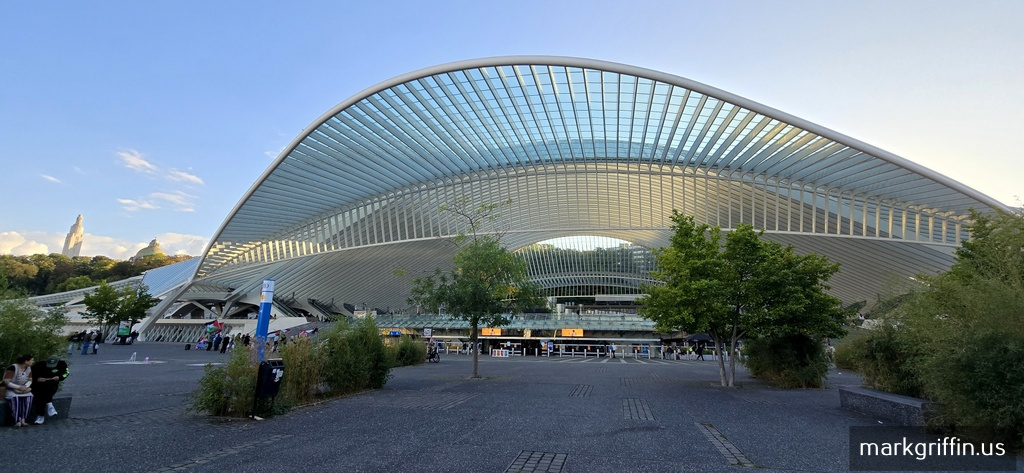
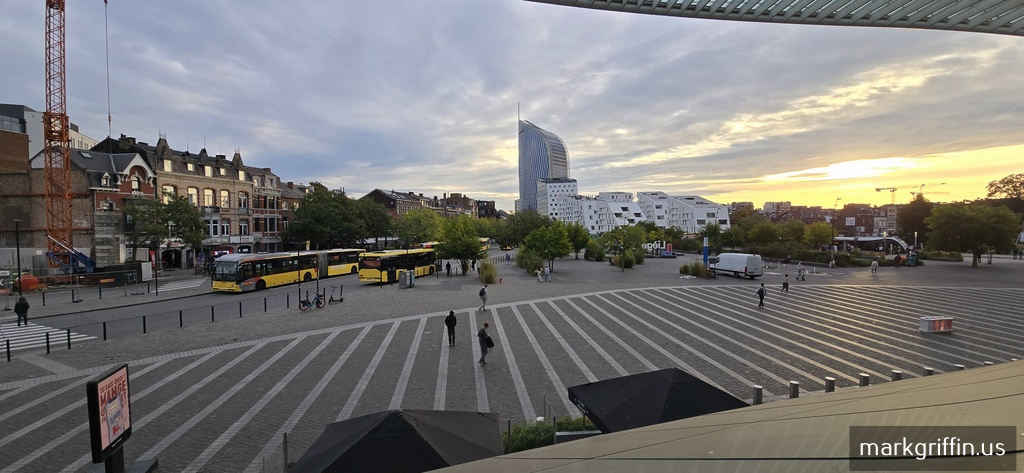
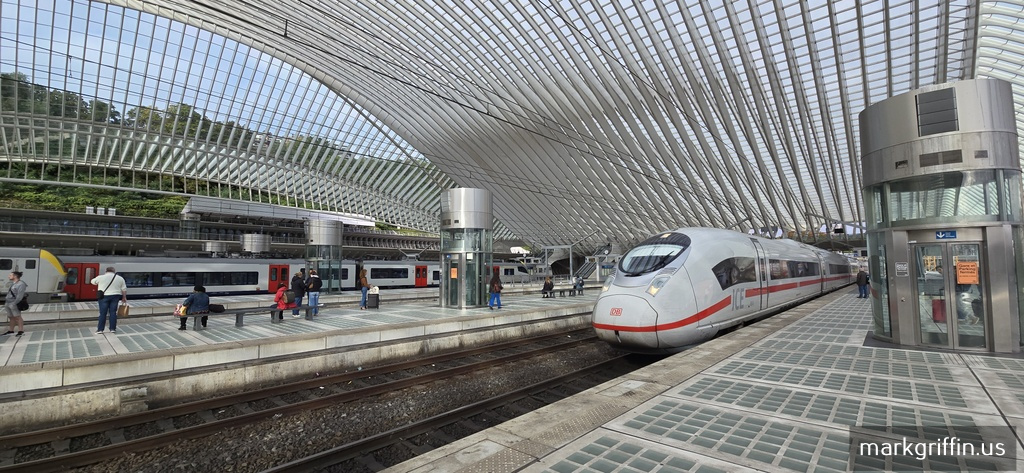
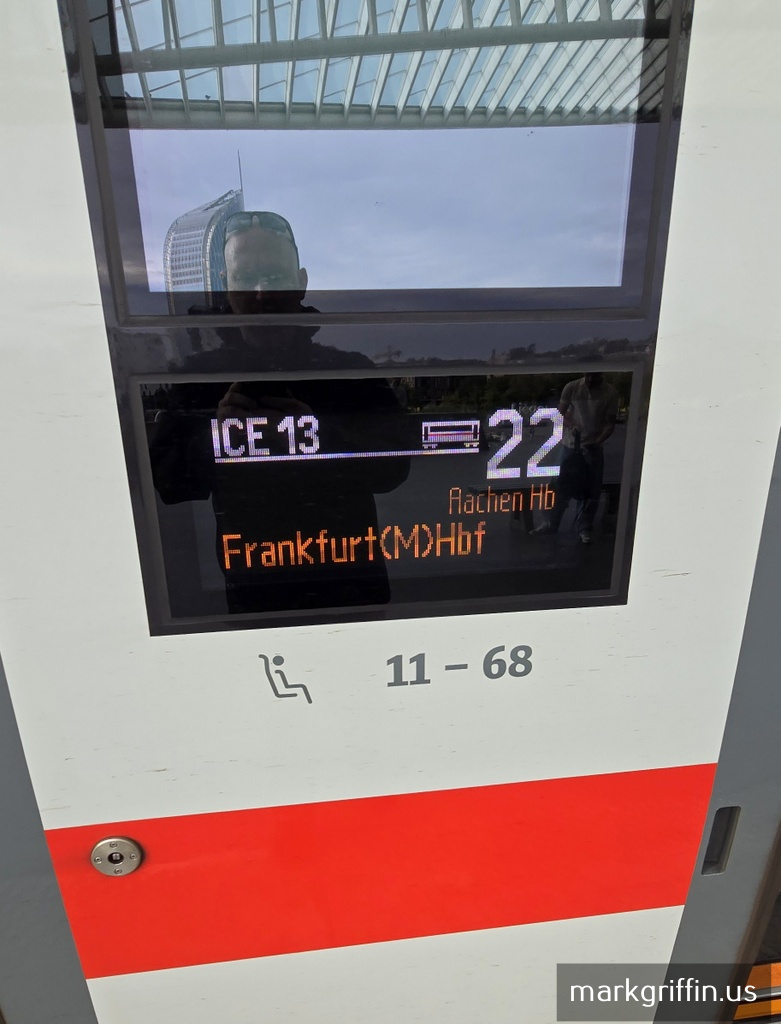
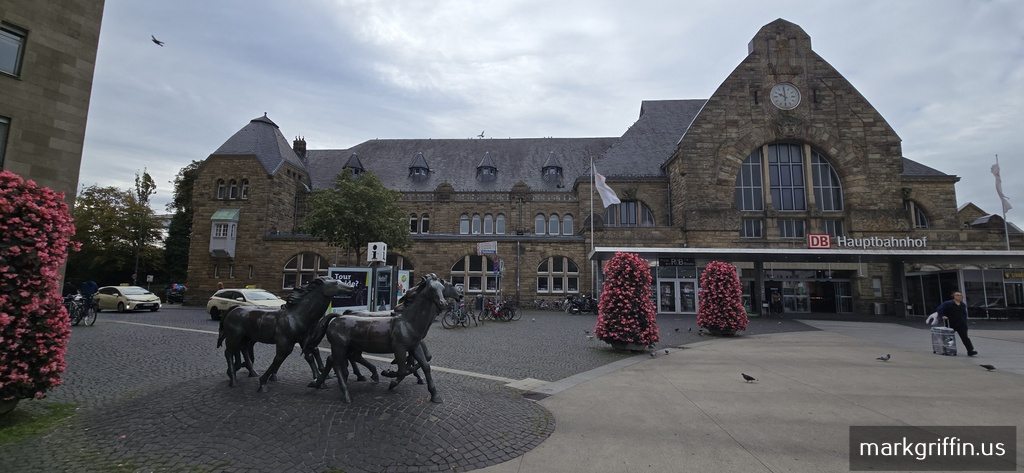
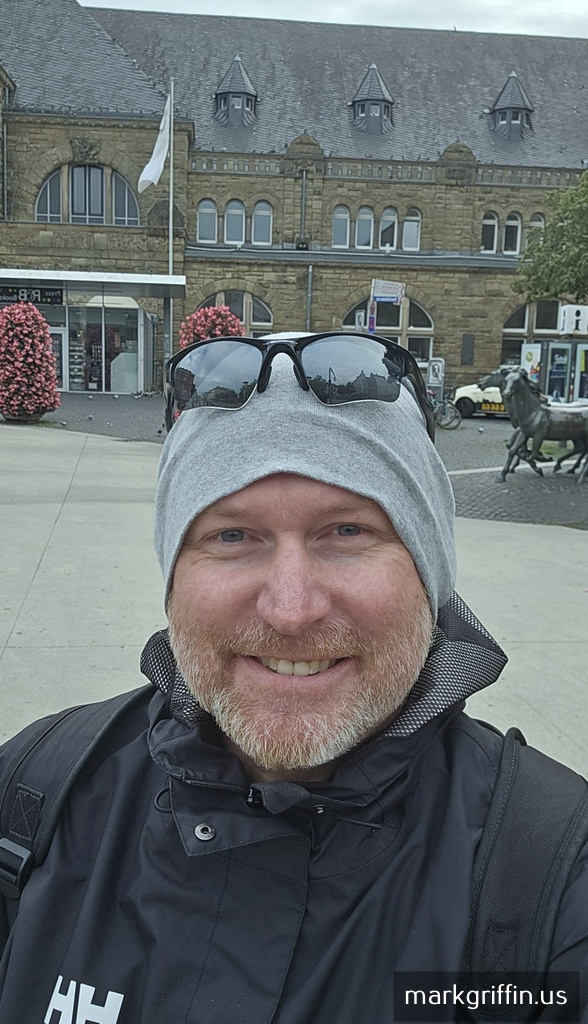
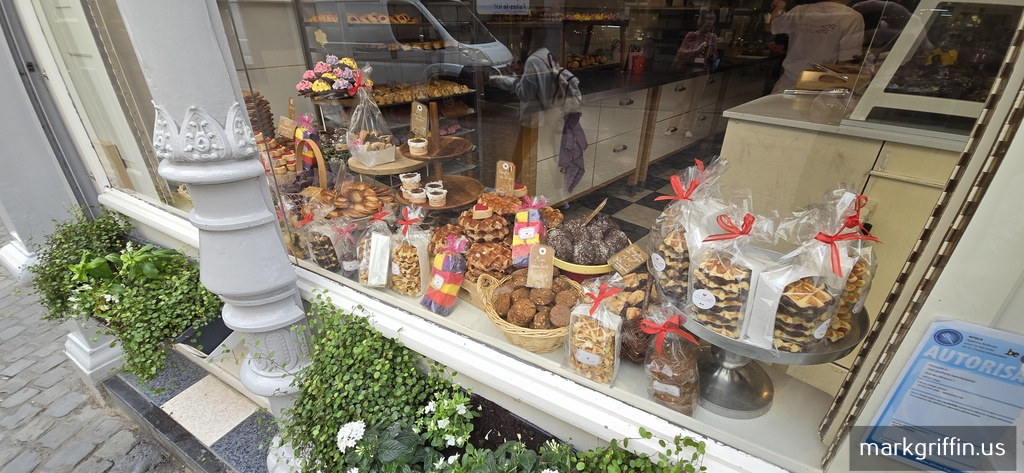
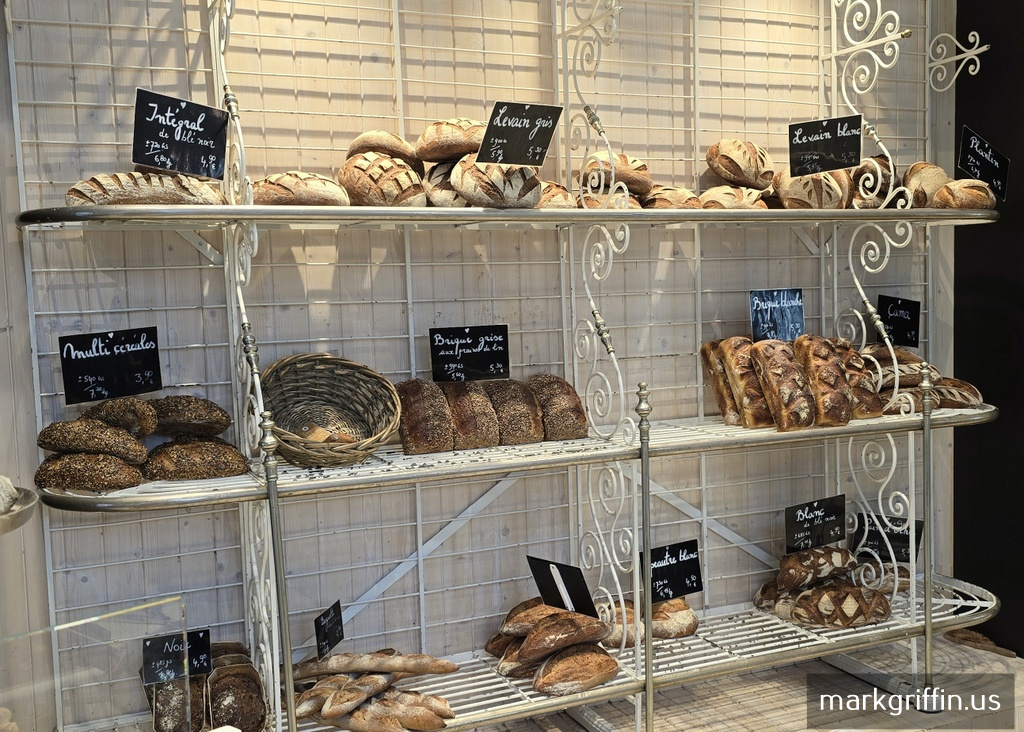
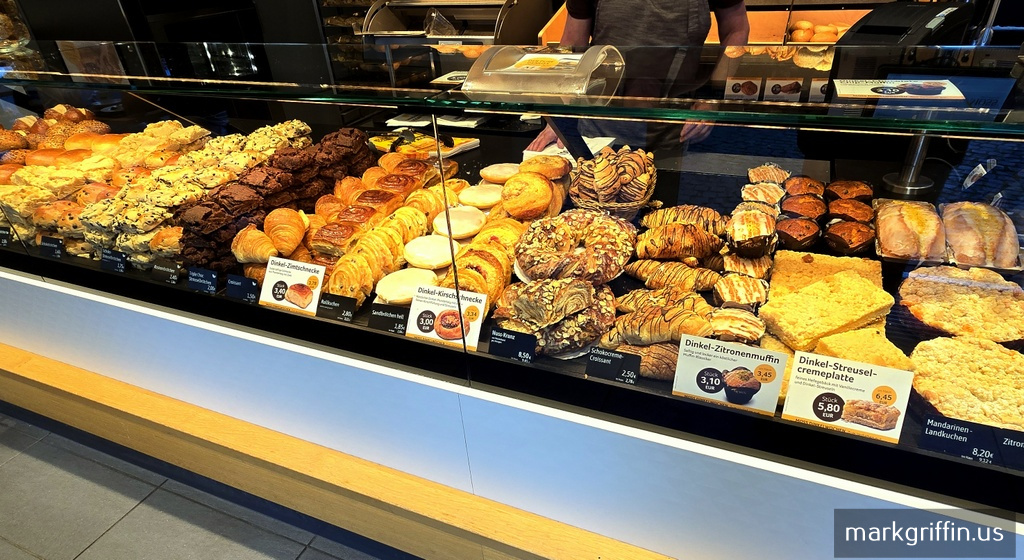
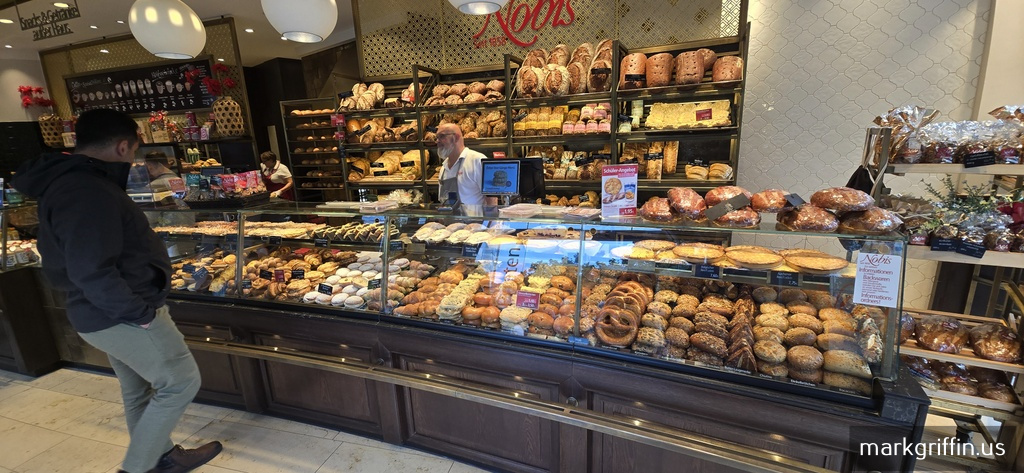
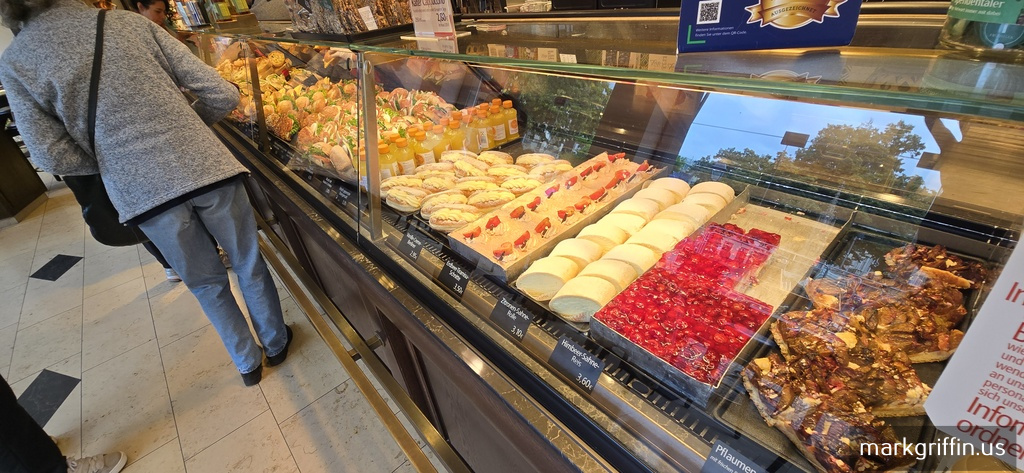
Welcome to Aachen. Home of baked goods and ongoing excavations as they continue to modernization the city.
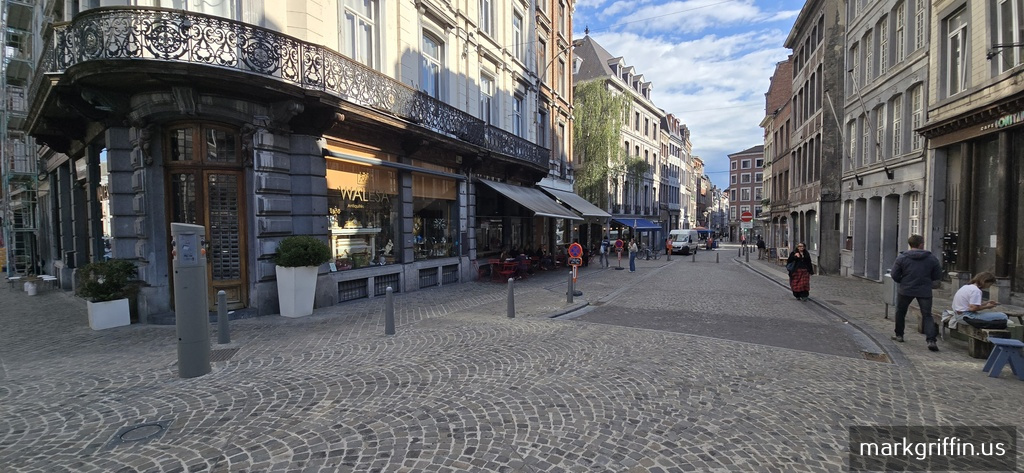
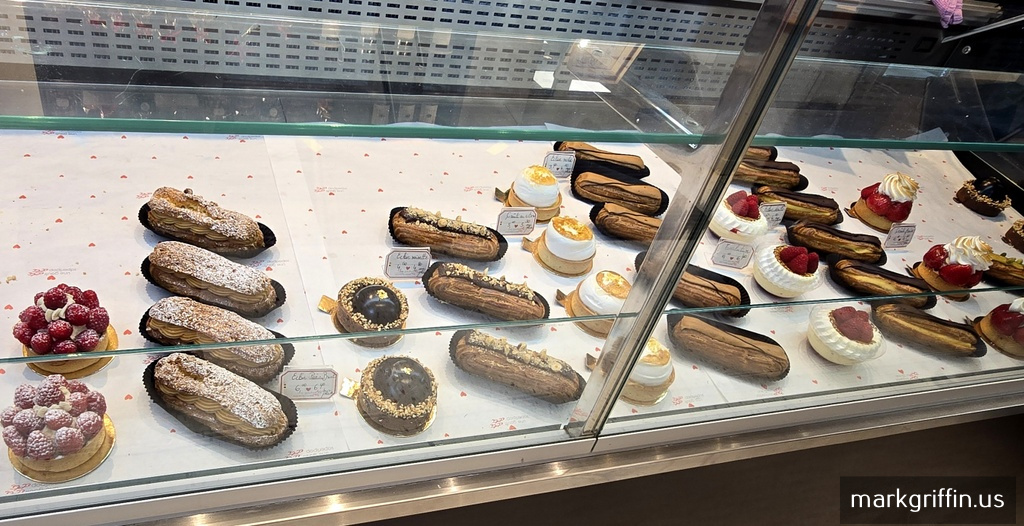
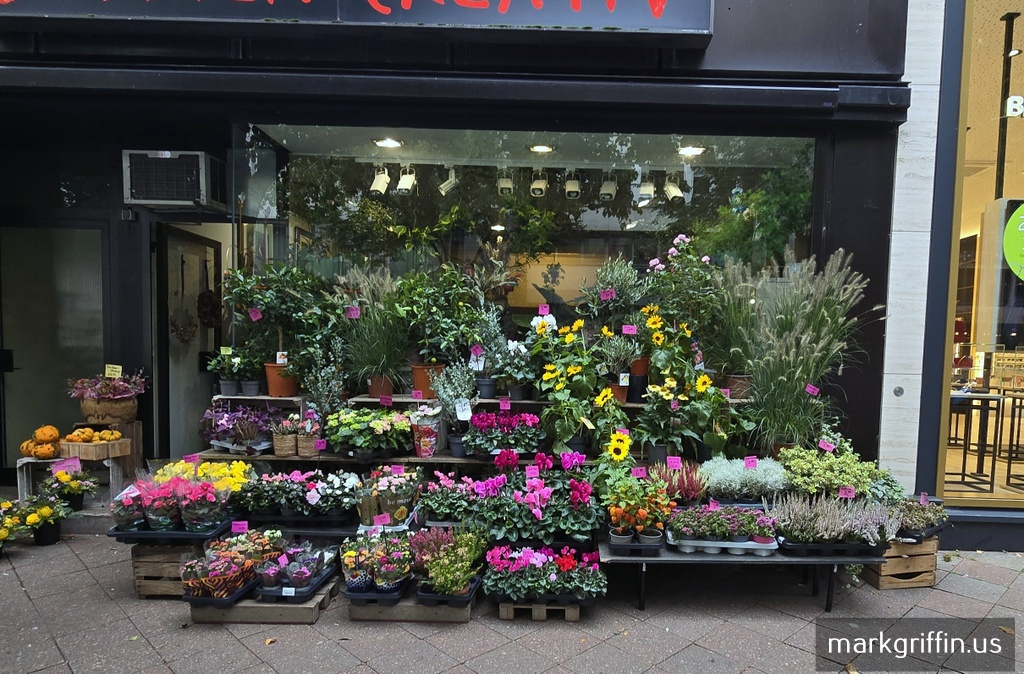
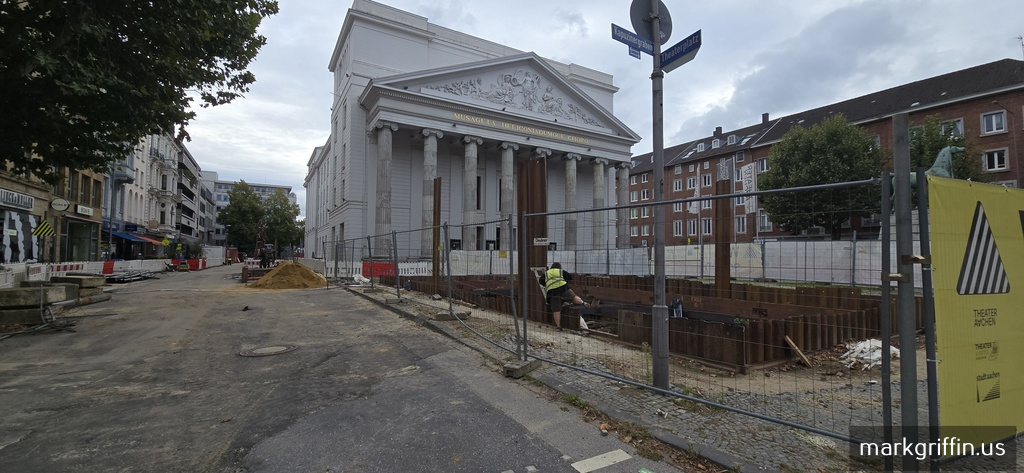
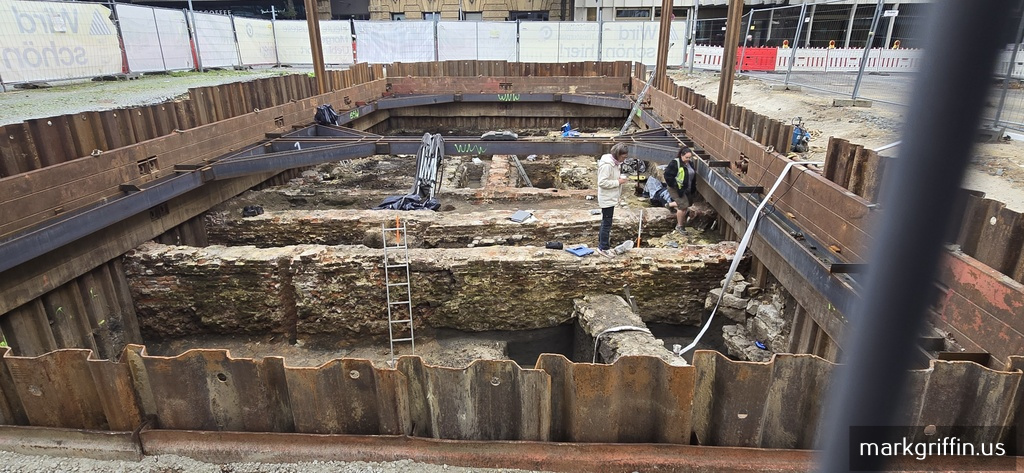
Long ago, Aachen was home to very hot, sulfur Roman baths. Retired troops moved here so soak their bones after wars. While the baths may be gone, one monument remains to offer locals the hot mineral water, Elisenbrunnen was built in 1827 in an attempt to make the water more bearable as the aroma from the water is like rotten eggs. If it’s housed in a pretty building, it must be pretty, right? Napoleon, Victor Hugo, and Tsar Alexander I of Russia all have come to “take in” the beauty of the water. As luck would have it, a tiny farmers market is setup here today
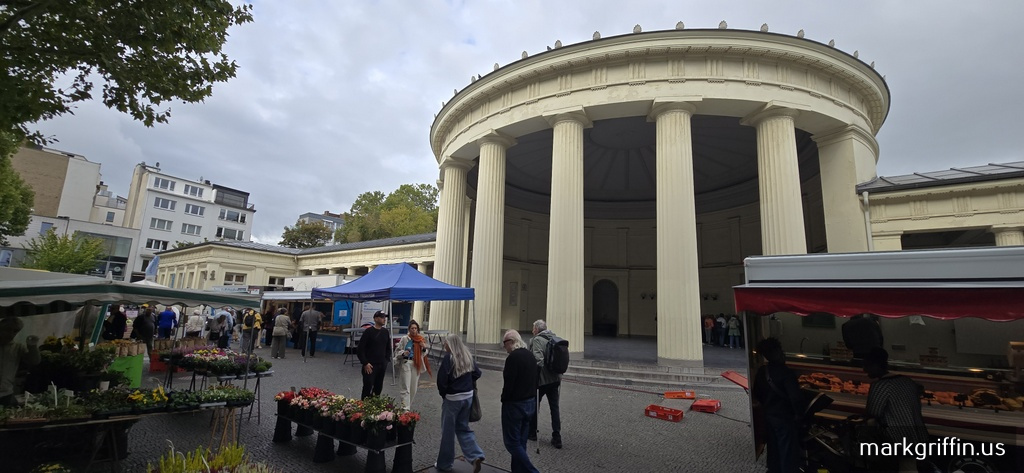
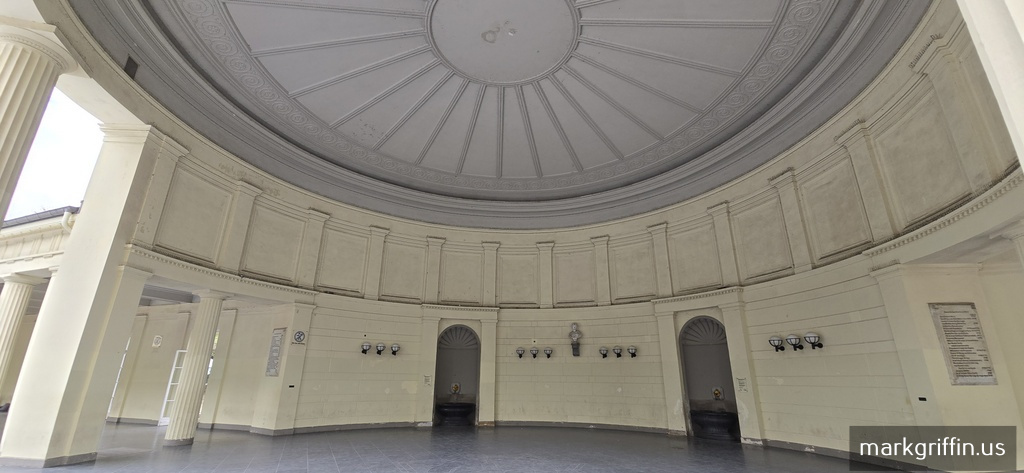
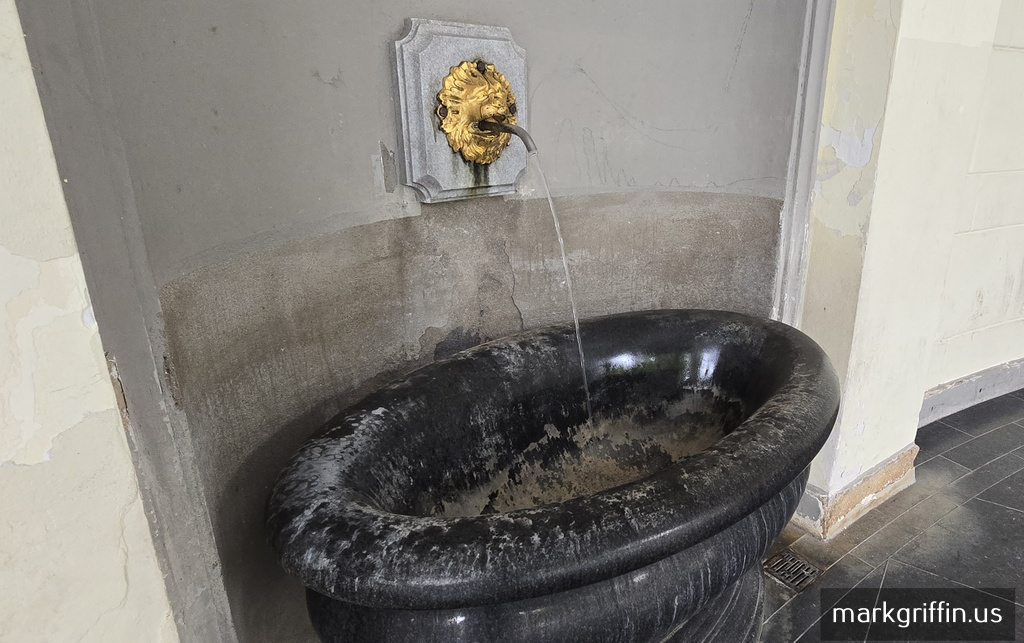
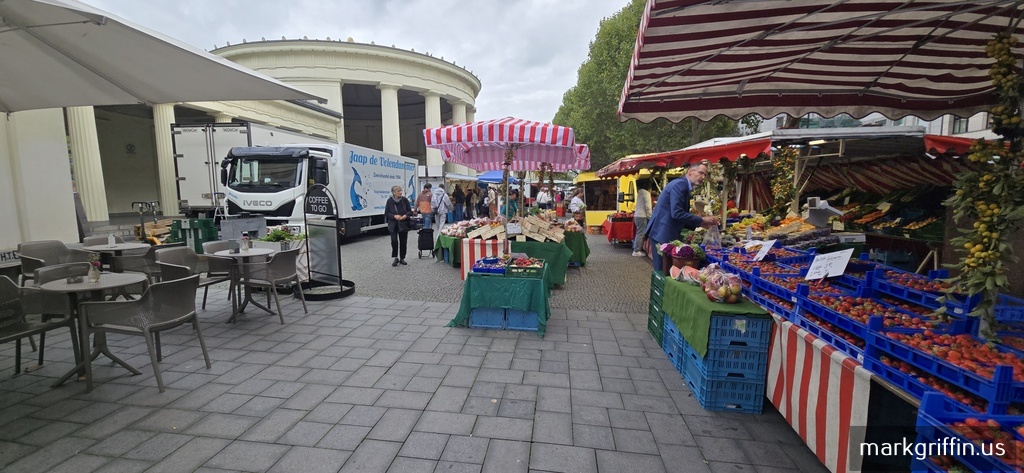
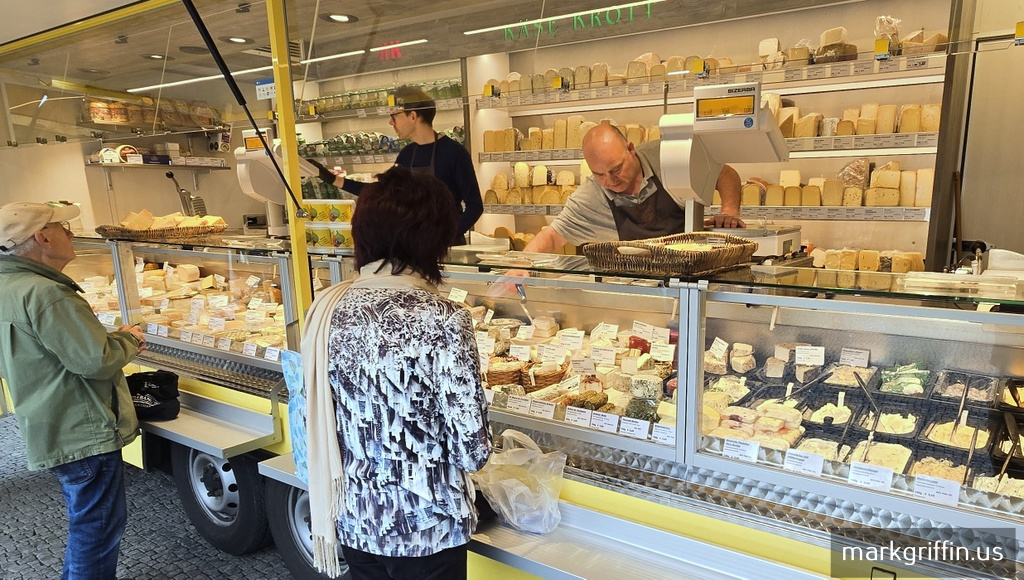
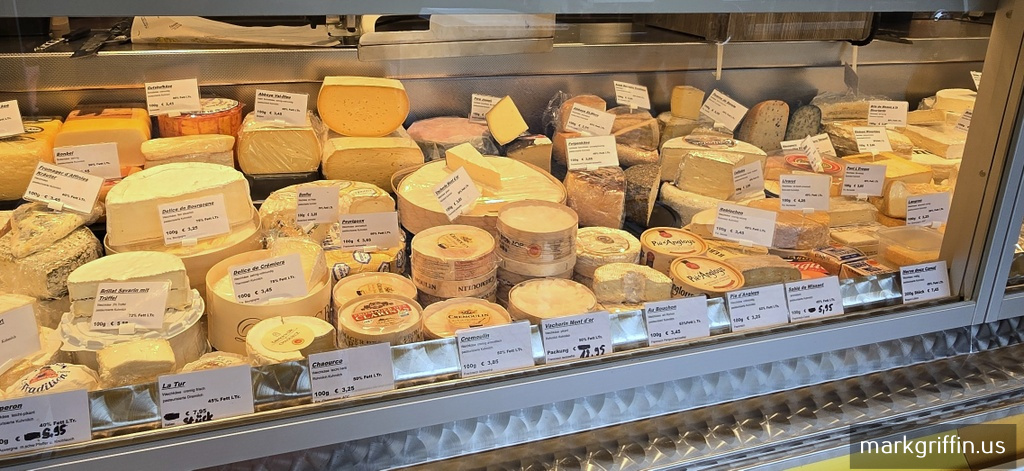

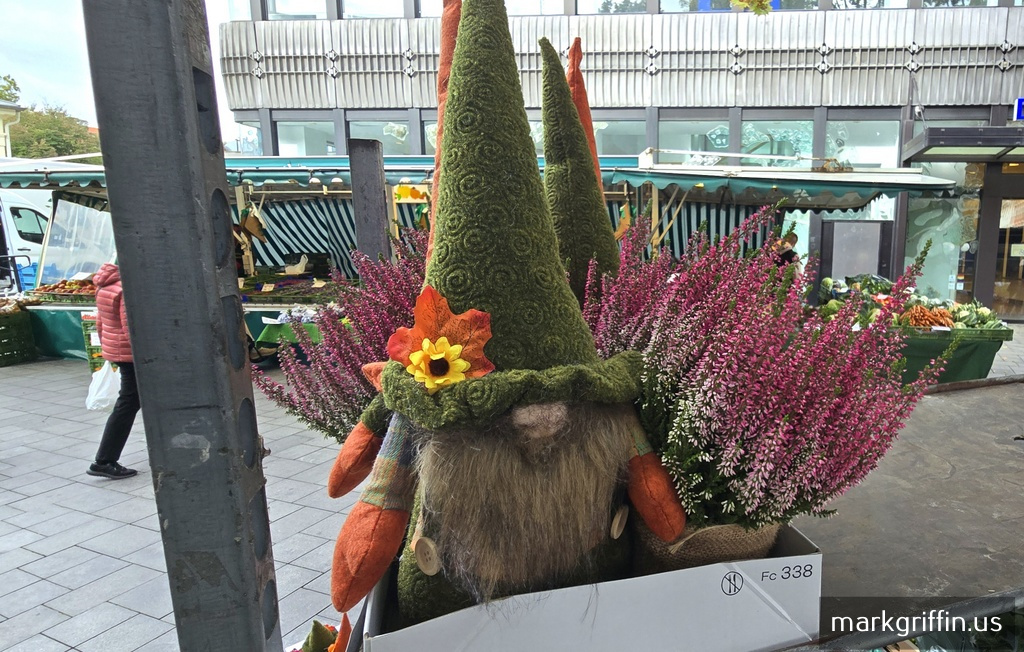
Aachen wasn’t anything special, until Charlemagne really comes into power. This had been a tiny outpost located right in the heart of the territory, It didn’t hurt that Charlemagne loved swimming and you’d find him there often. The fact it had also been an old Roman outpost also helped when he later picks a feud with Rome (more to come).
It is Germany so they operate on their own, more relaxed hours, than neighboring towns. Here museums open at 11 instead of 10. Might as well enjoy the
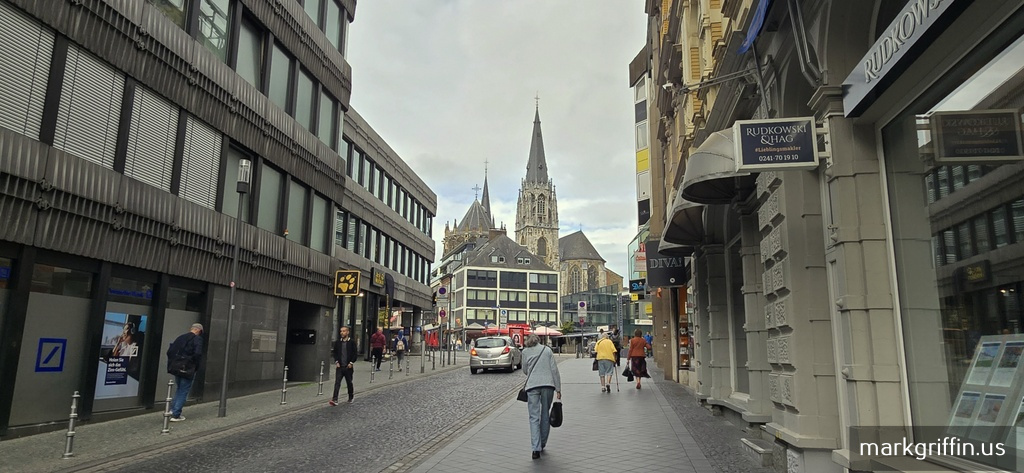
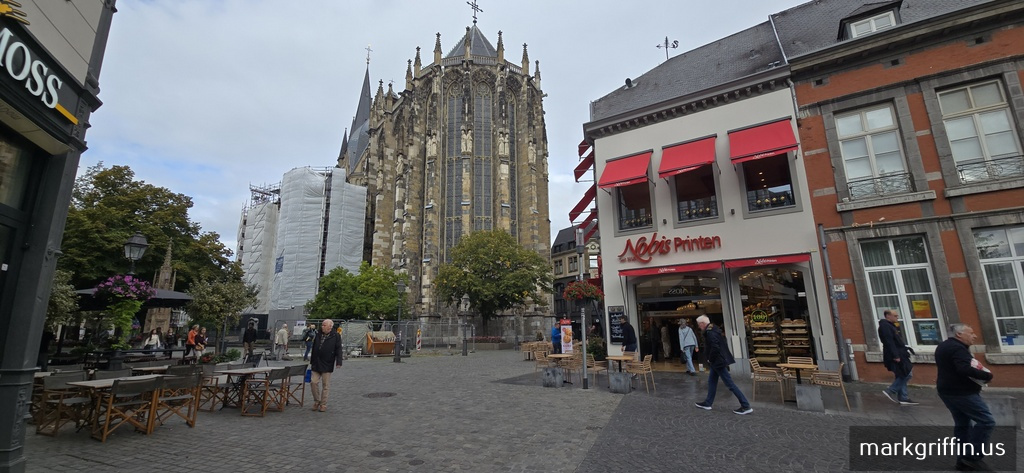
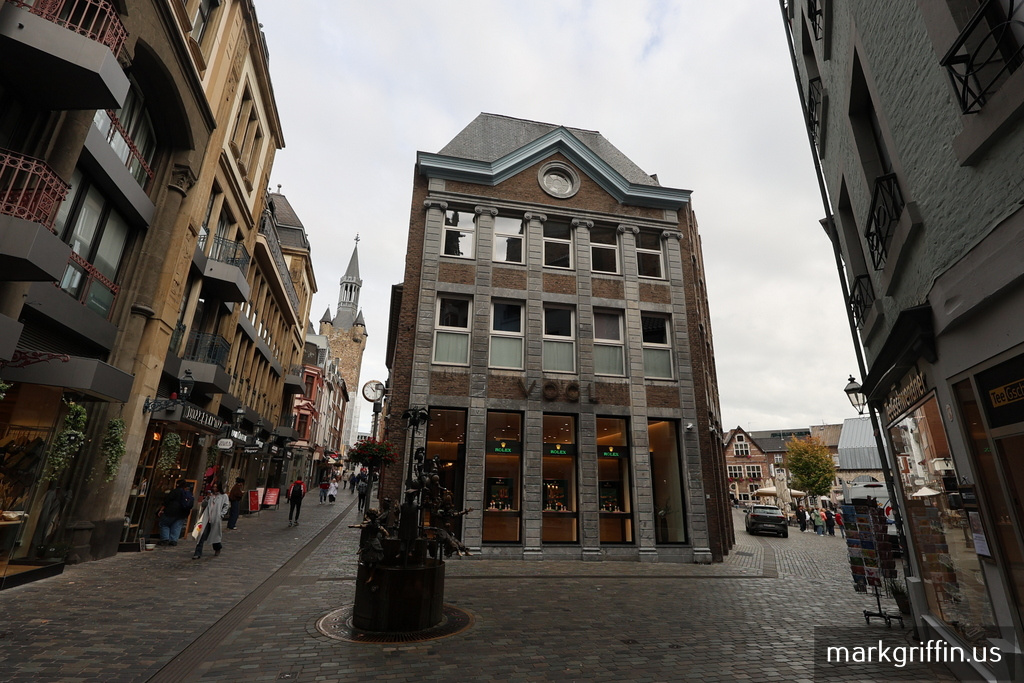
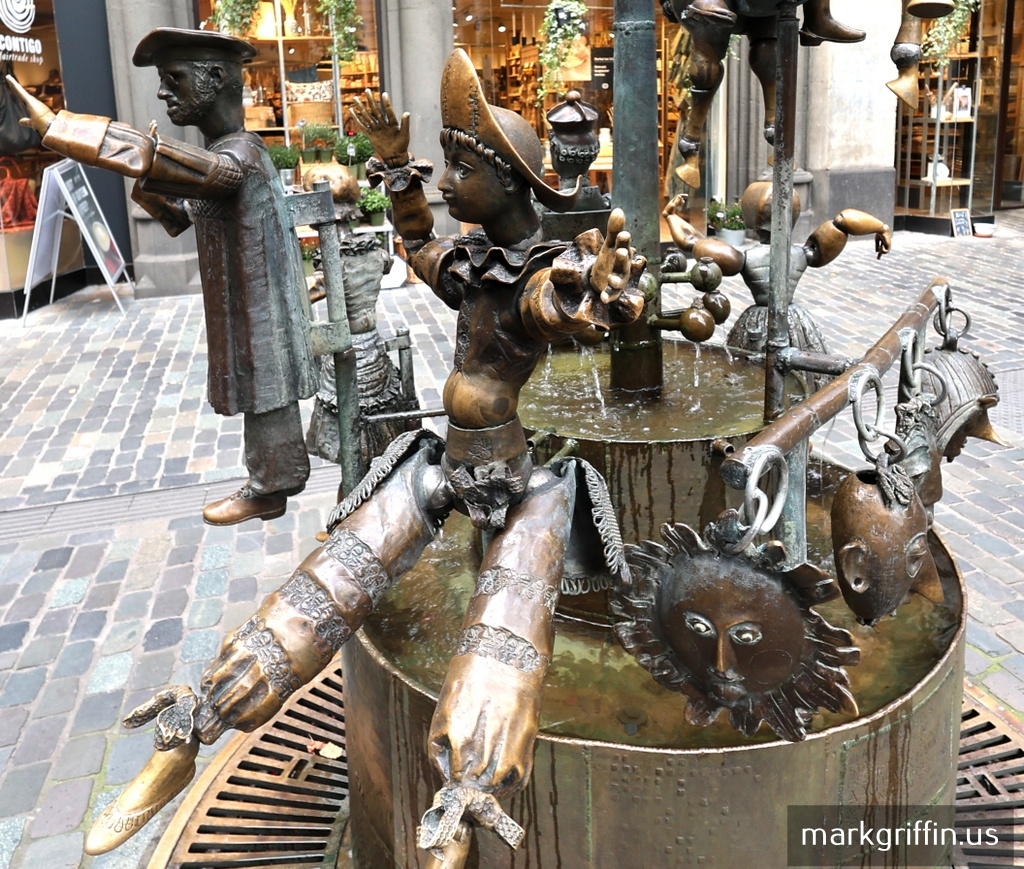
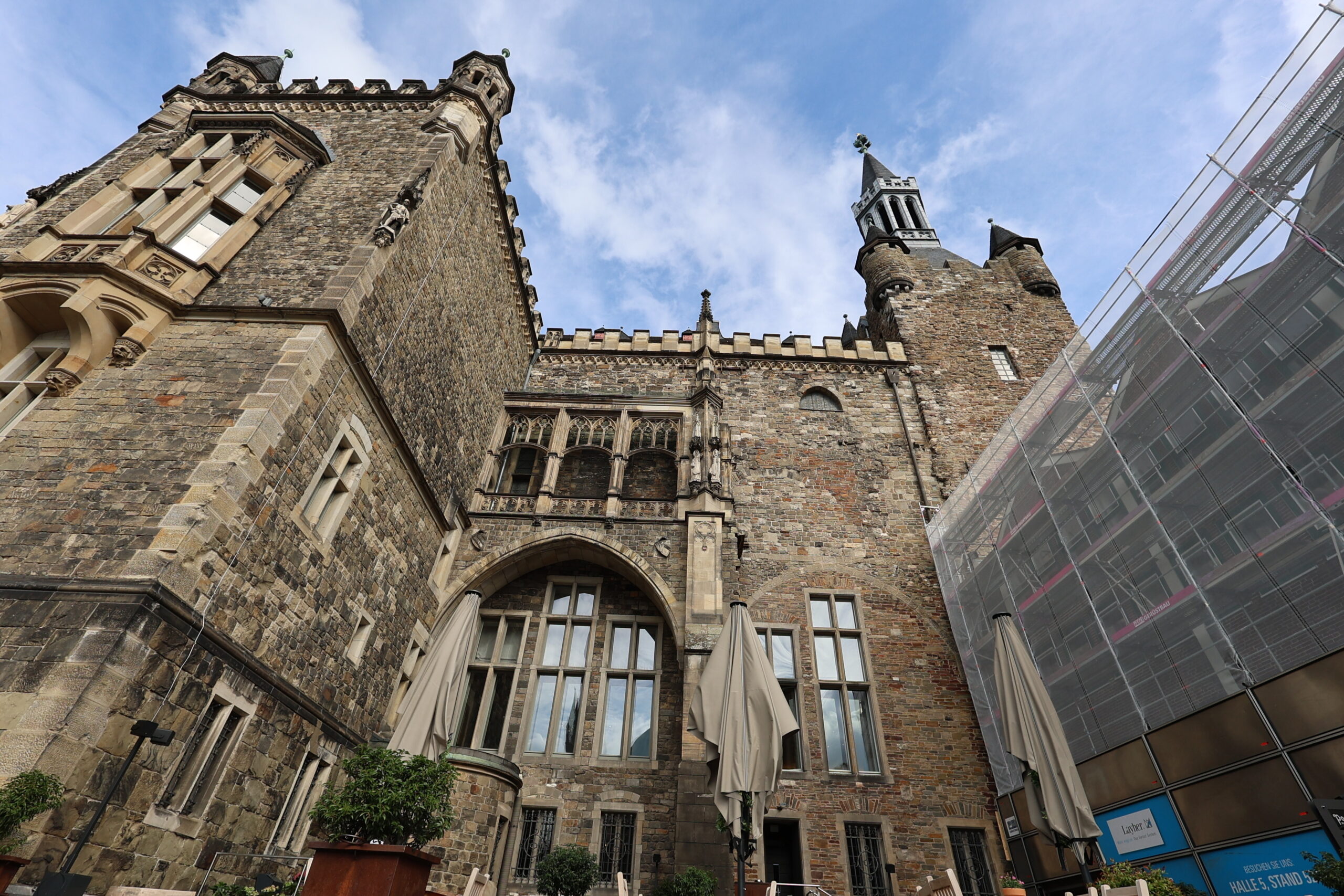
Let’s head up the hill to the 1349 city hall. We pass by a very creative water feature. At the tho of the hill, built into city hall is Postwagen. These two buildings have been a lot of things over the years (hotel, restaurant, button shop, bookstore). Shockingly, these buildings survived bombing of 1945.
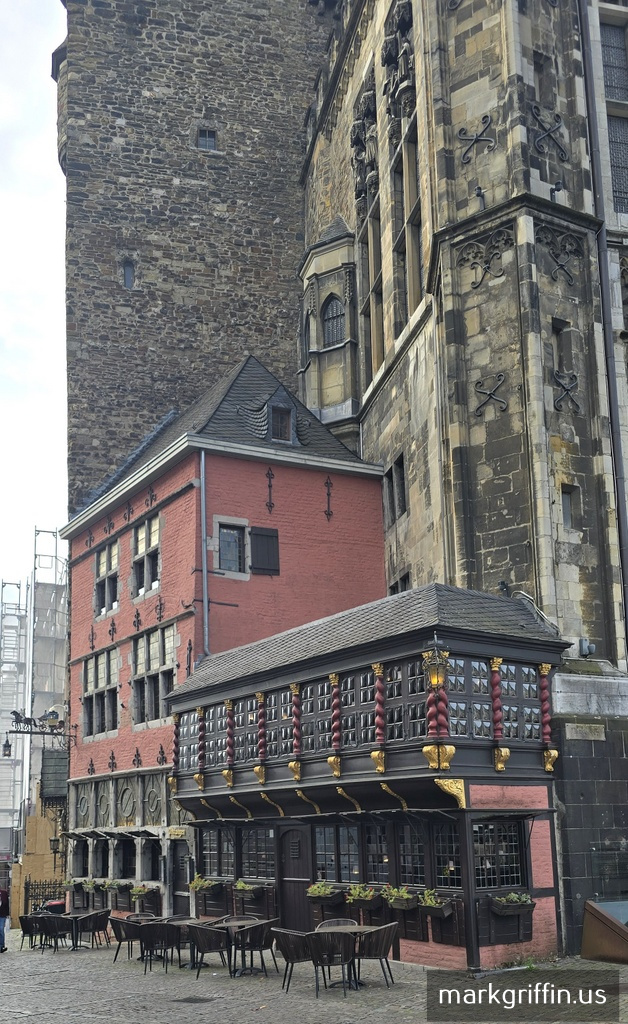
Towards the end of the 13th century, a suitable new venue became necessary for coronation banquets.The town agreed on the idea of a shared use of the new building even before construction began: While the ground floor was to serve the administration of the city, the upper floor remained reserved as the Imperial Hall for ceremonies.
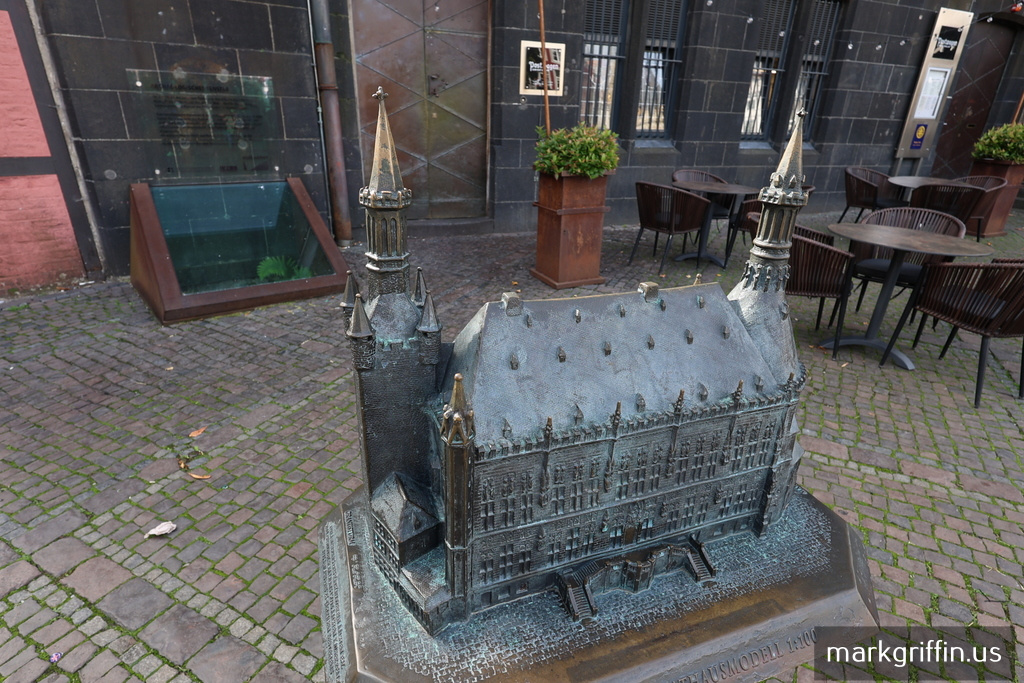
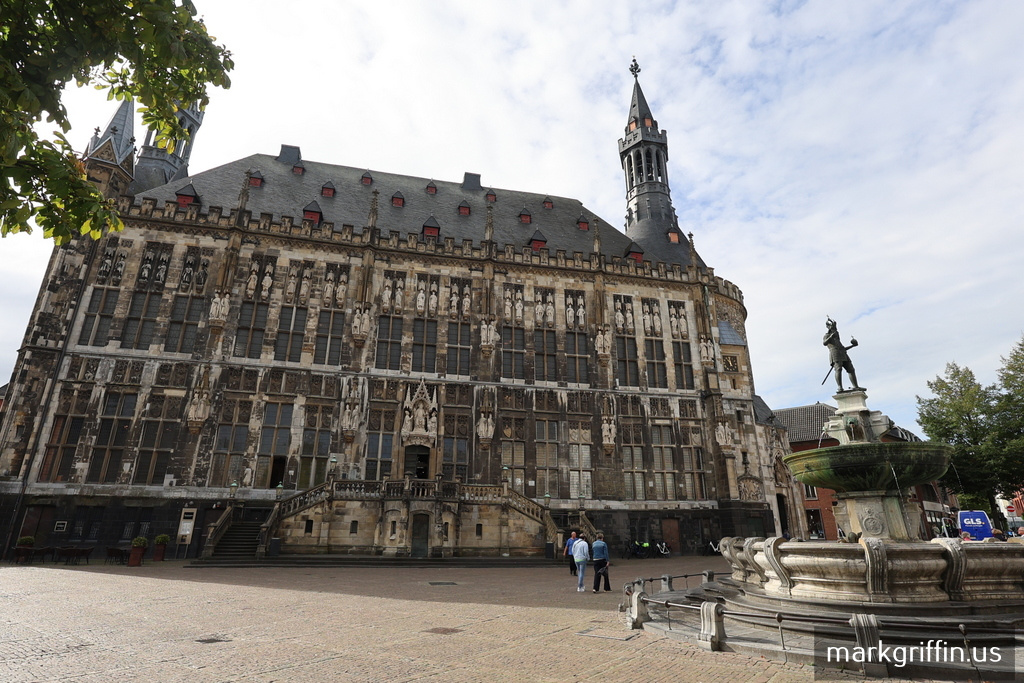
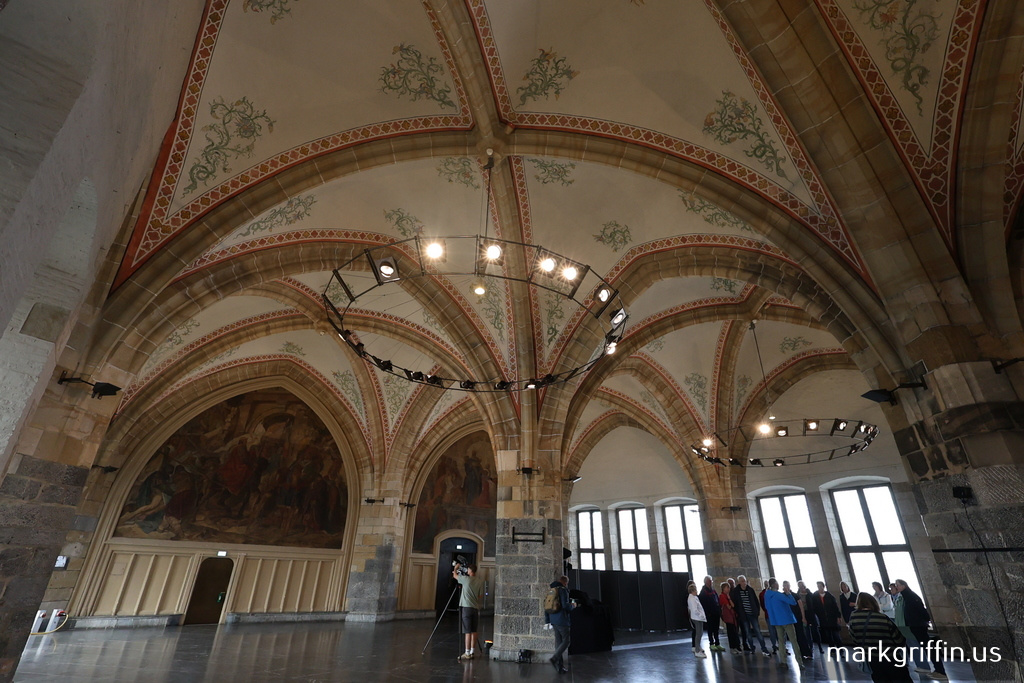
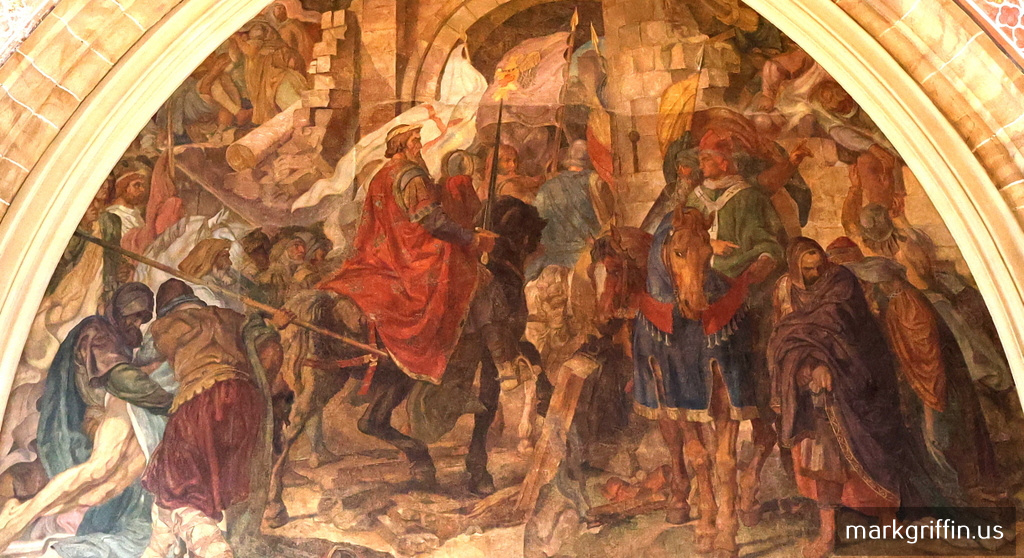
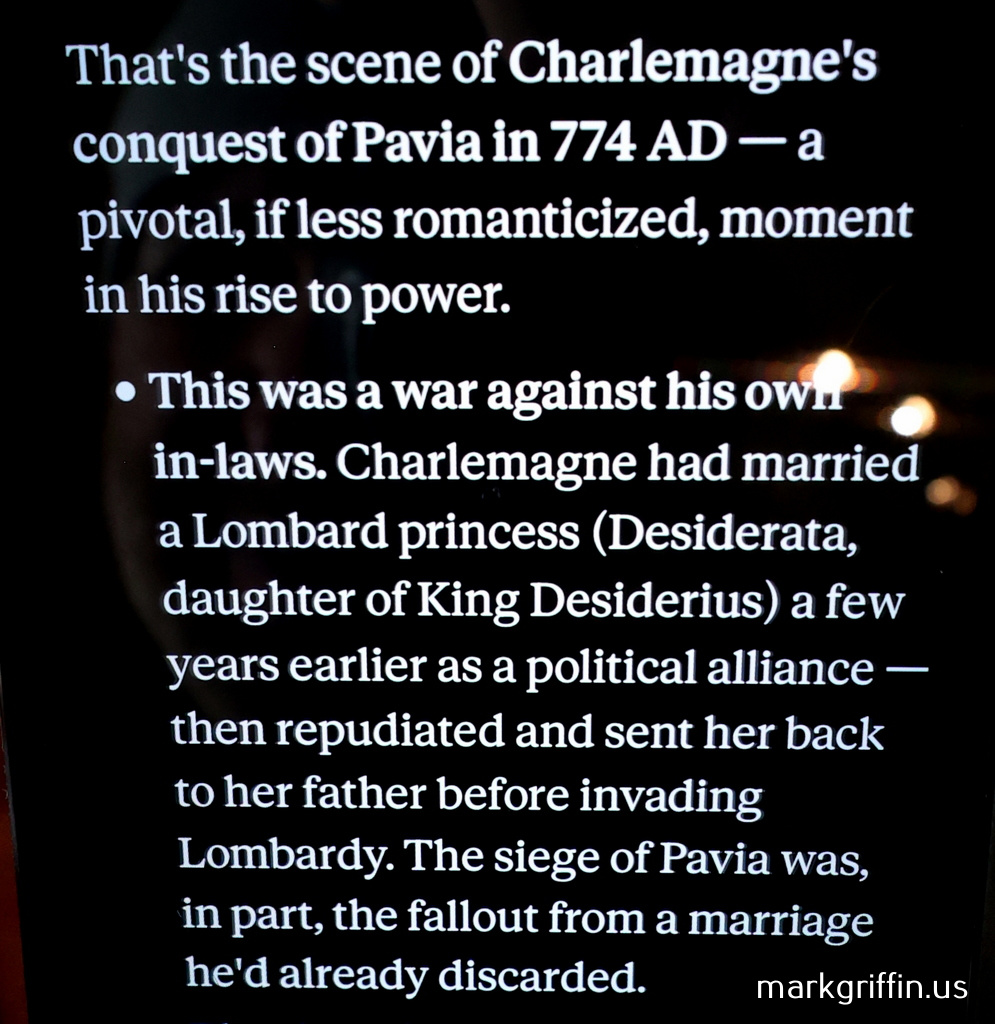
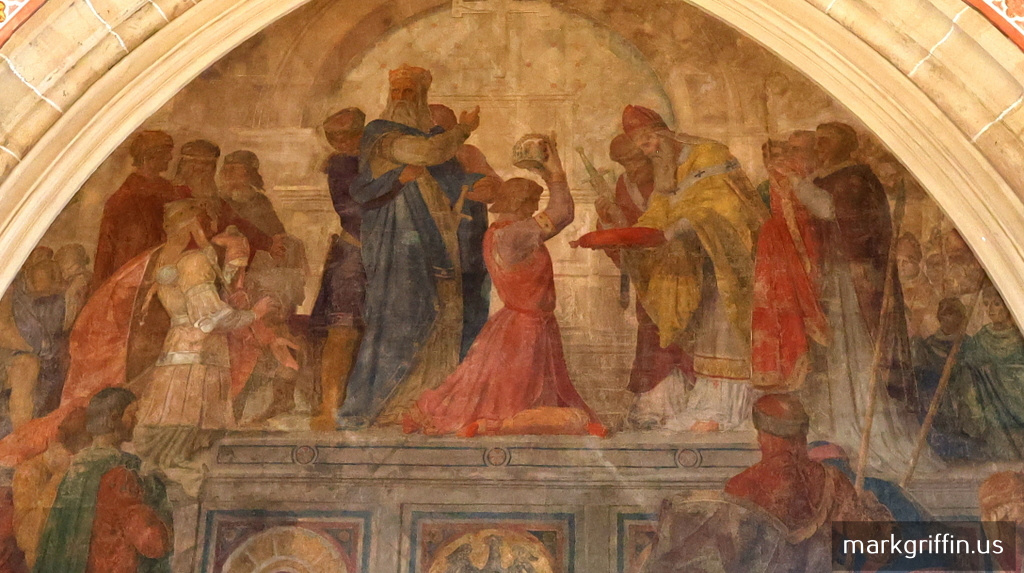
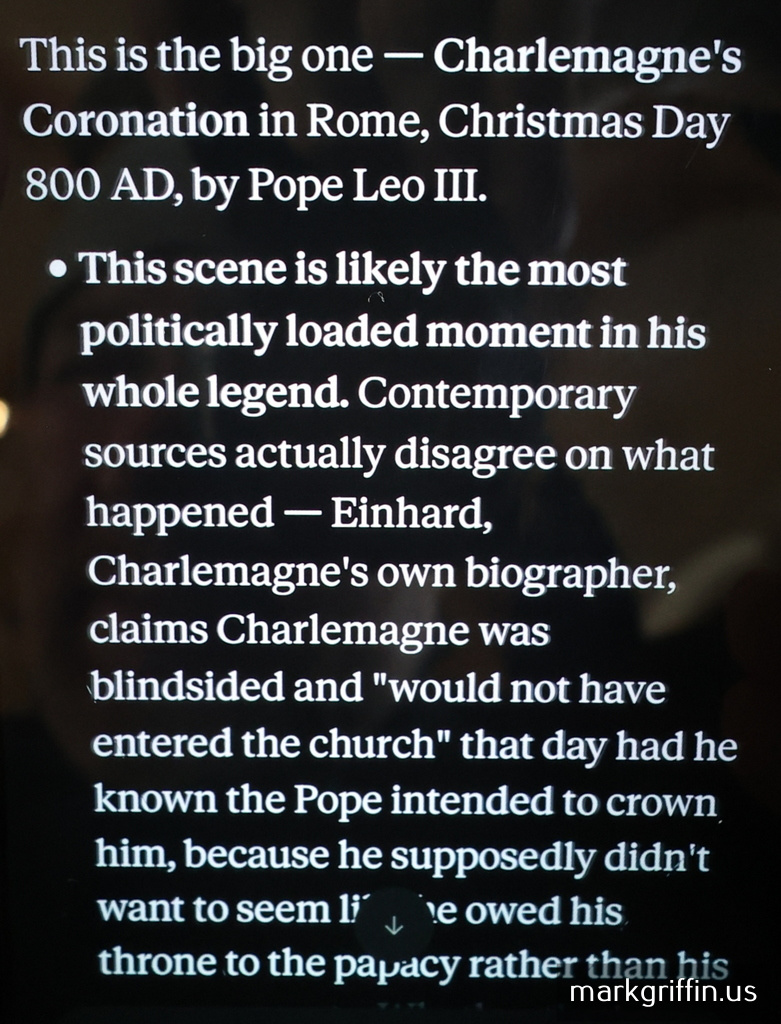
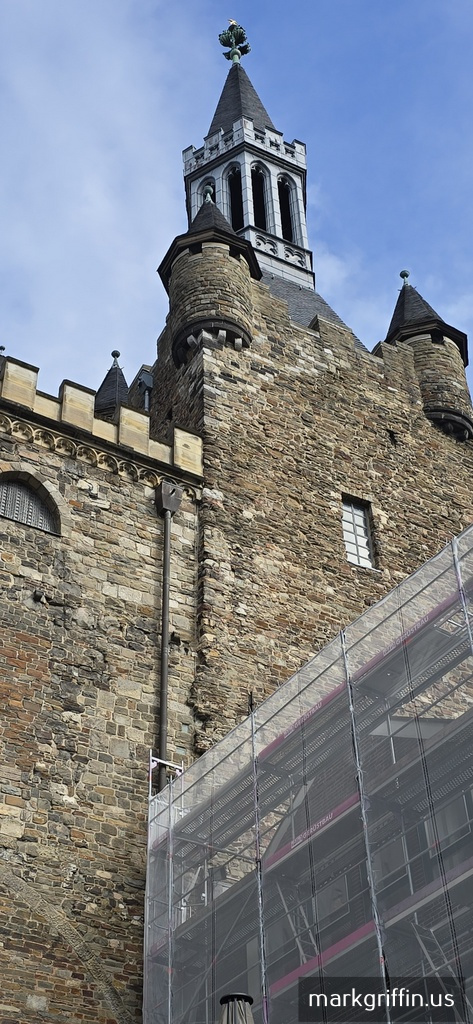
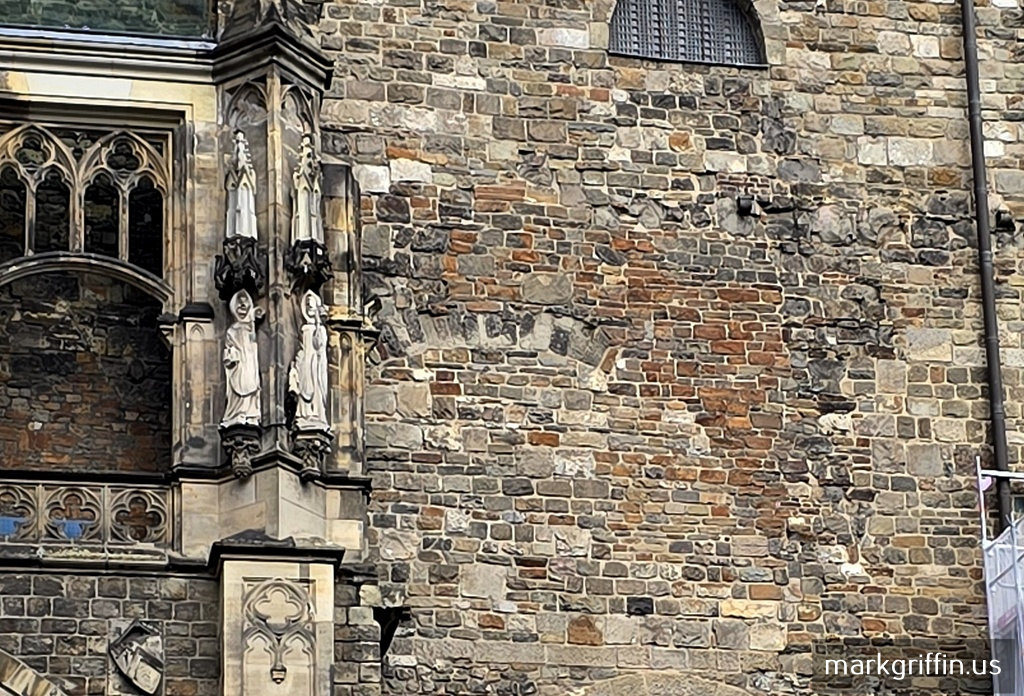
The last two photos are interesting. 1945 has the war winding down. Germany is losing the battle and they’ve moved onto the scorched earth playbook. Aachen is one of the first towns to turn over to the Allies. When the final bombs drops, more than 65% of the town is flattened. Germany reconstruction requires if a building survives war damage then you must preserve the damage. It tells a story of its history. That explains why the bricks are different colors and shapes. Locals took whatever would fit and shoved them in gaps to stabilize the structure.
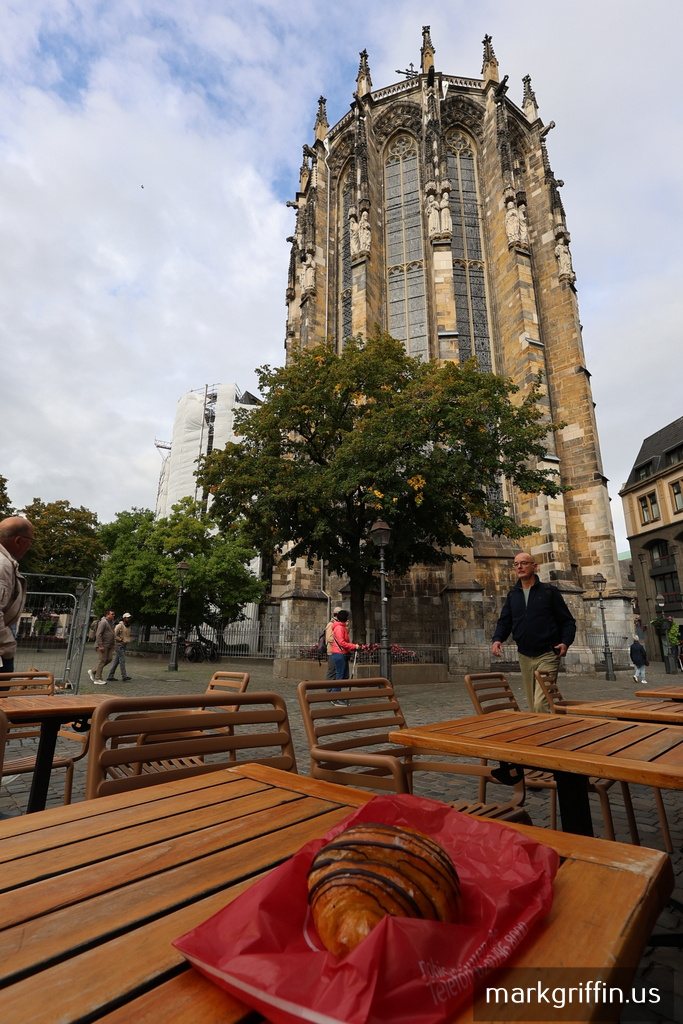
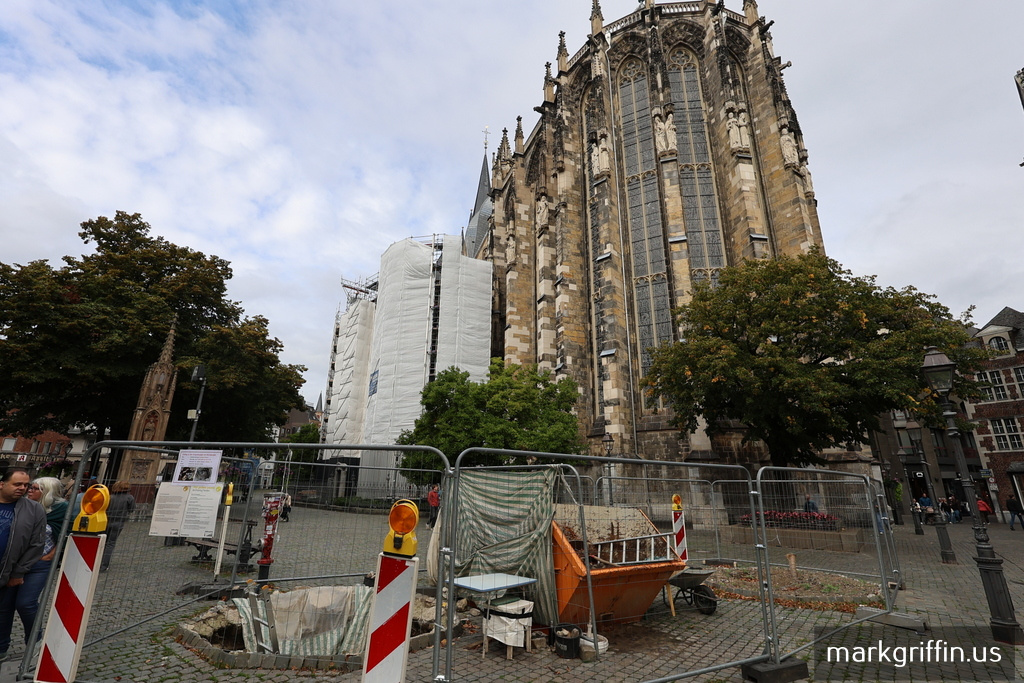
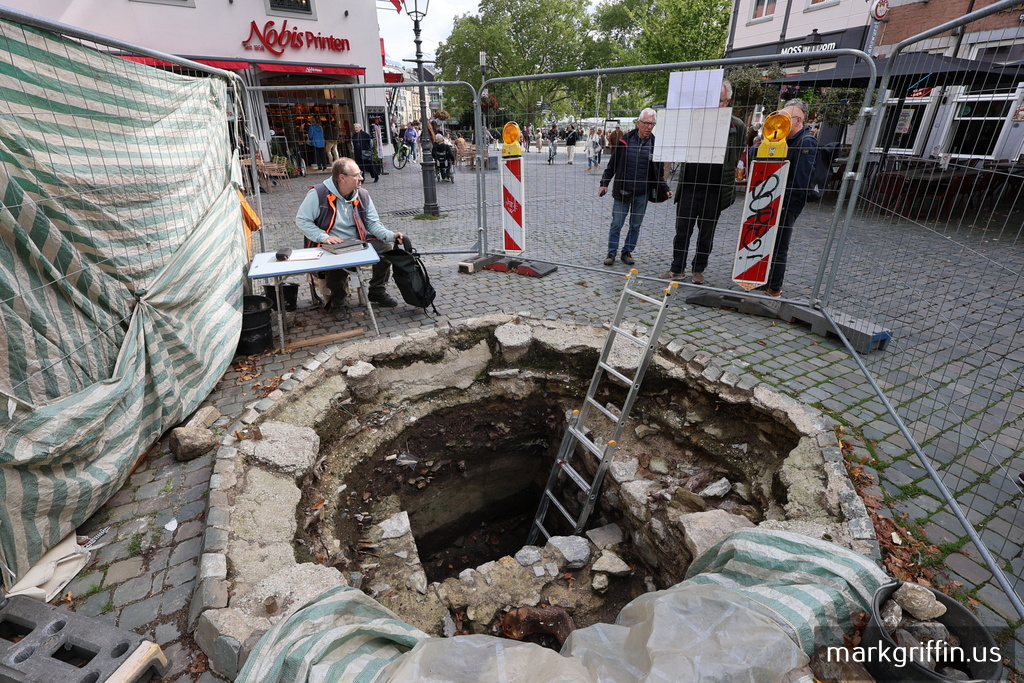
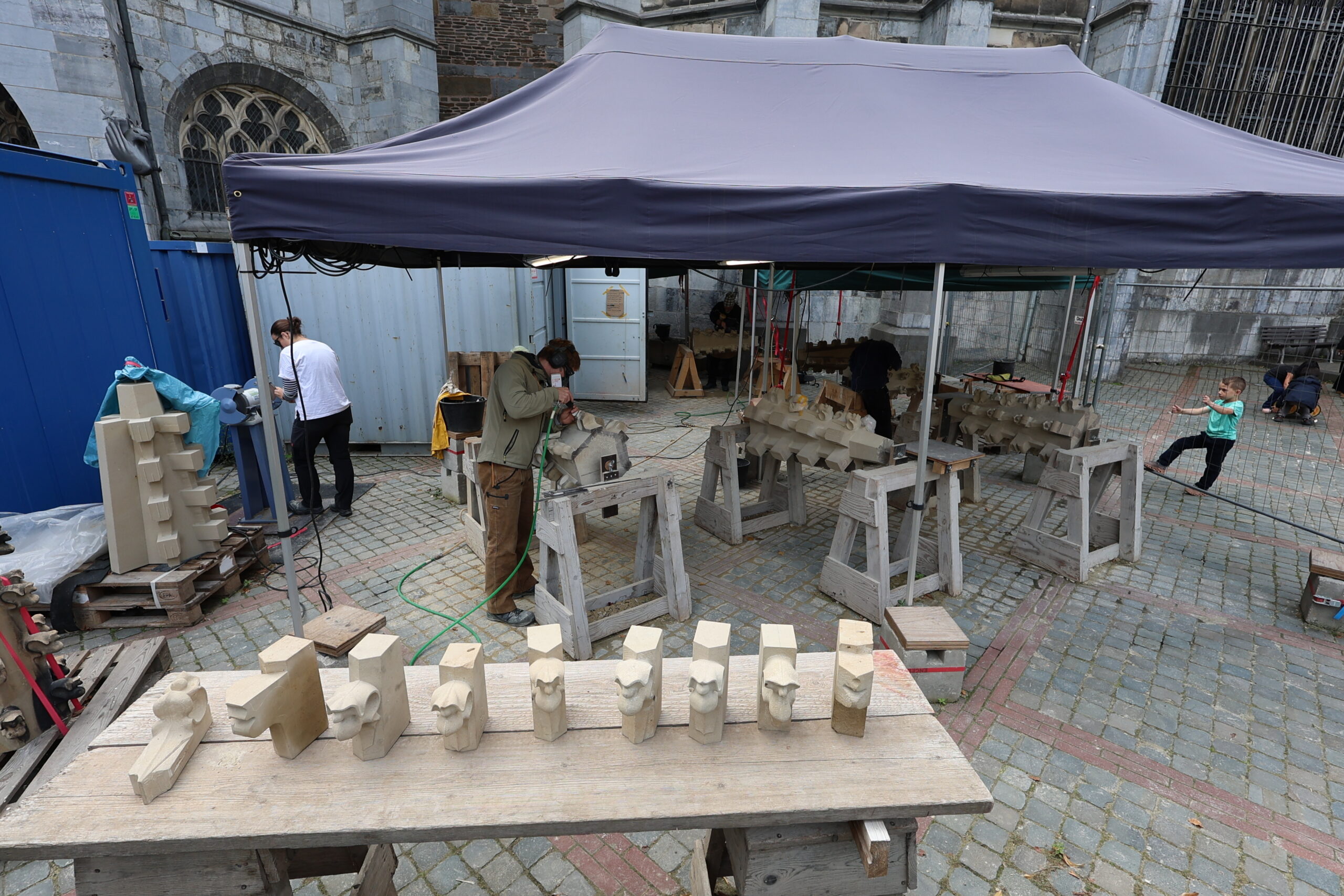
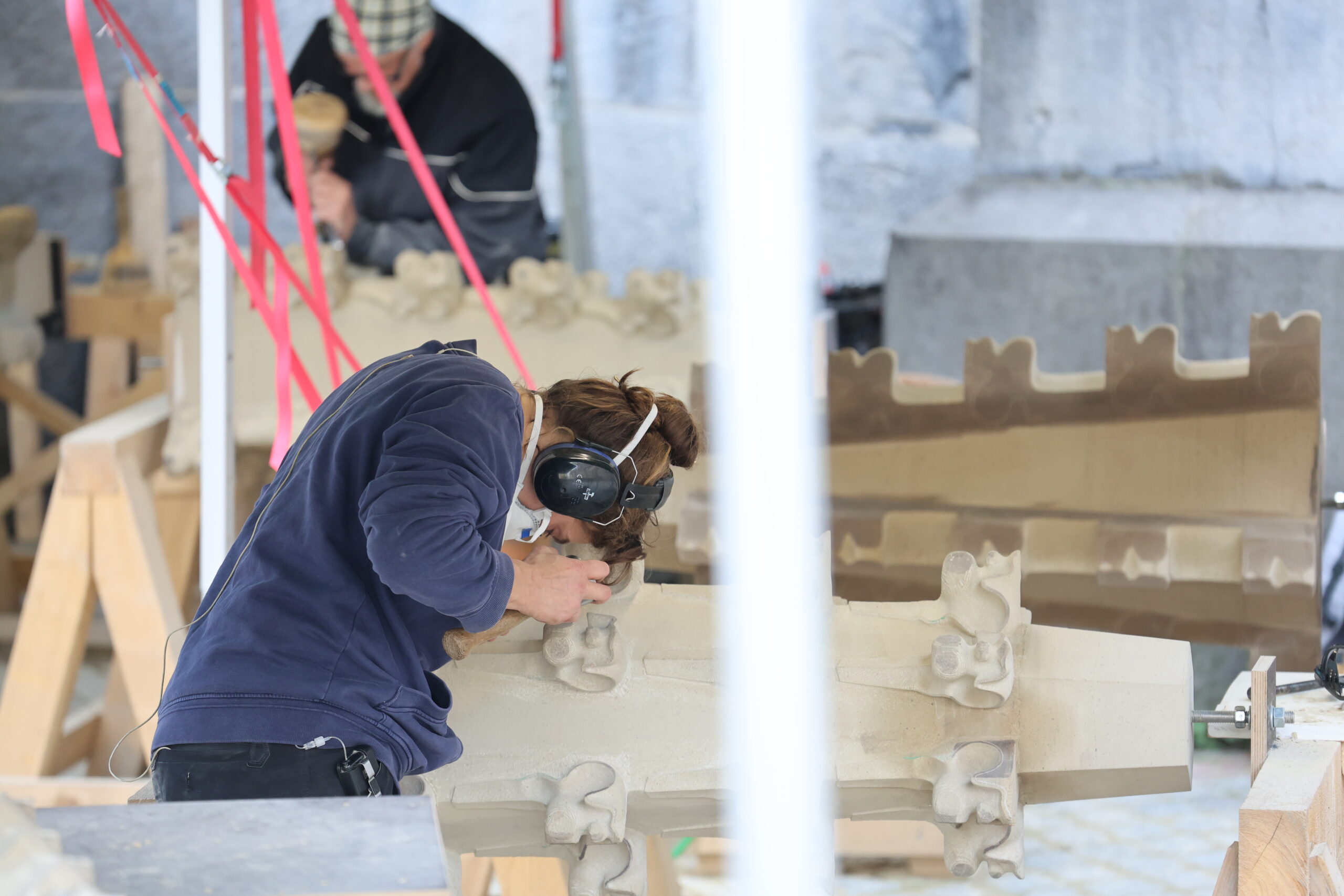
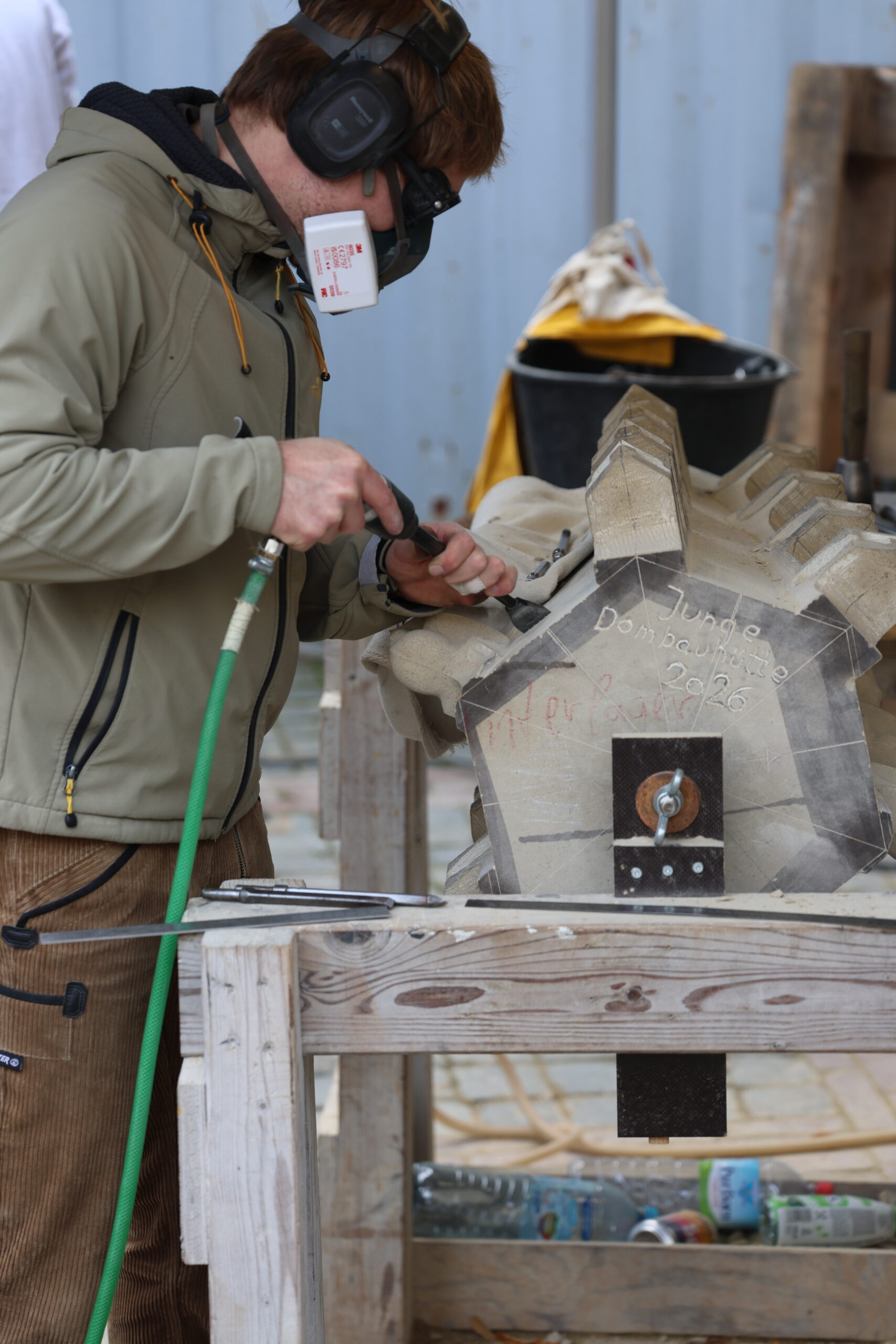
Now we get back to our introduction history lesson. In the second photo is a large gap. This is where the “home” of Charlemagne had been. In the far distance you see that tower. What person who thinks they’re greater than the Pope doesn’t build their own Cathedral. Bonus, it’s right outside your front door. Throwing in some photos of the trades people who are renovating old worn out elements of the cathedral.
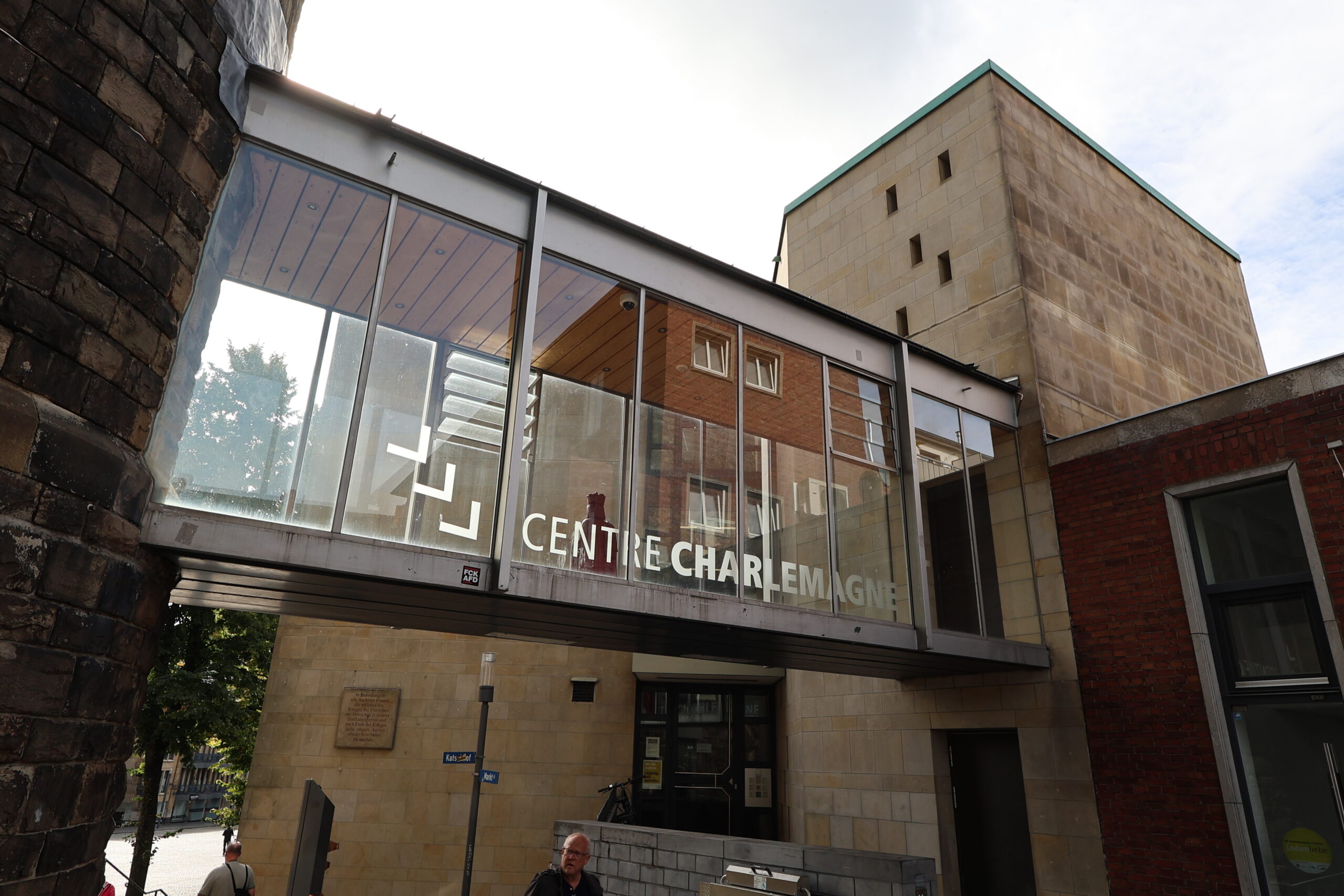
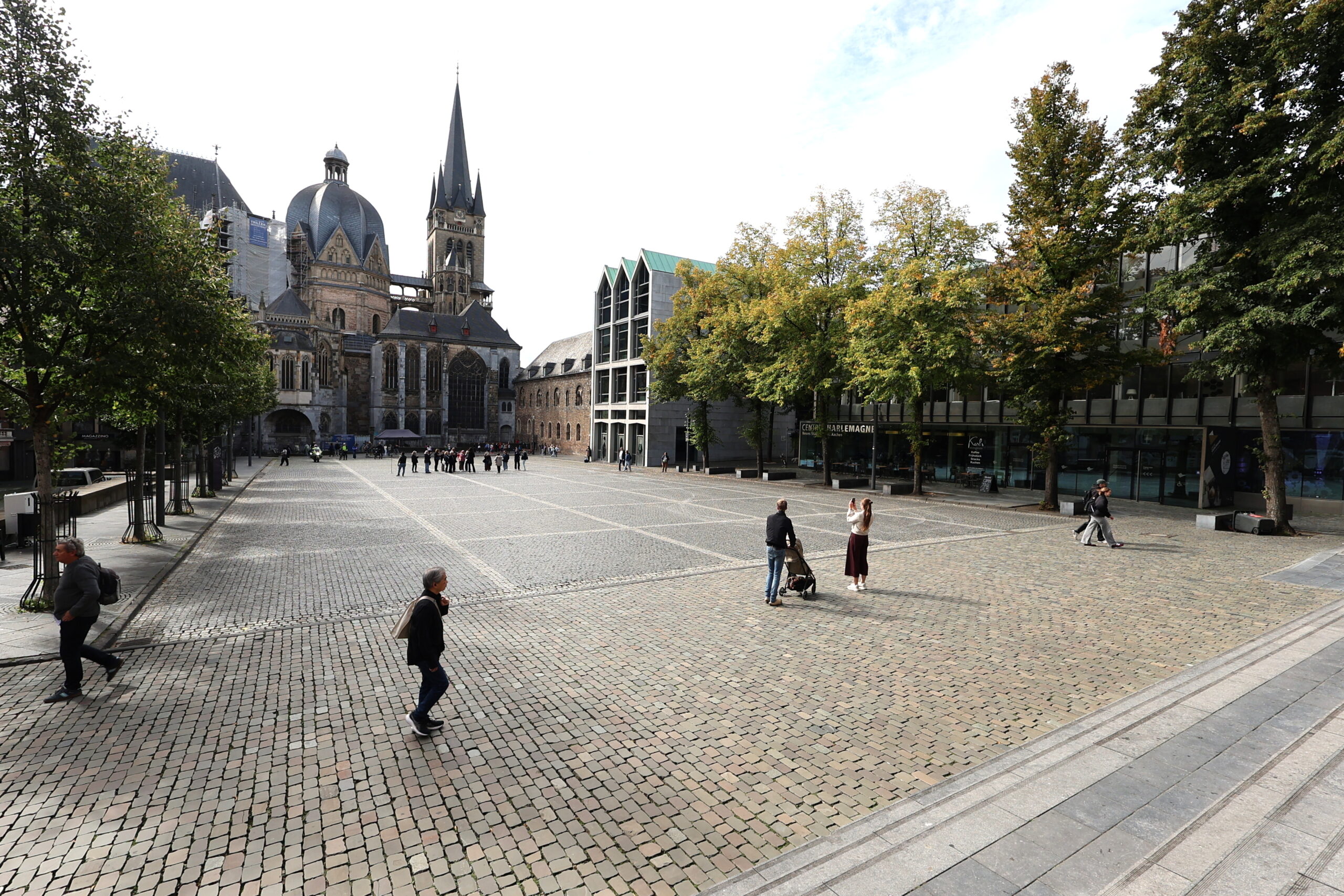
Now we’re in the 800s and Charlemagne has put all the wars to rest. He’s wanted to blow off the Pope, thinking he’s a useless relic of the past and that he is the rightful leader of the church. He had after all, got rid of the pagans and concerted the region to Christianity. All that’s left to seal this mindset, make a building to rival Rome. And it does it in 10 years. A feat that even Modern Germans chuckle at, knowing something couldn’t be built that fast.
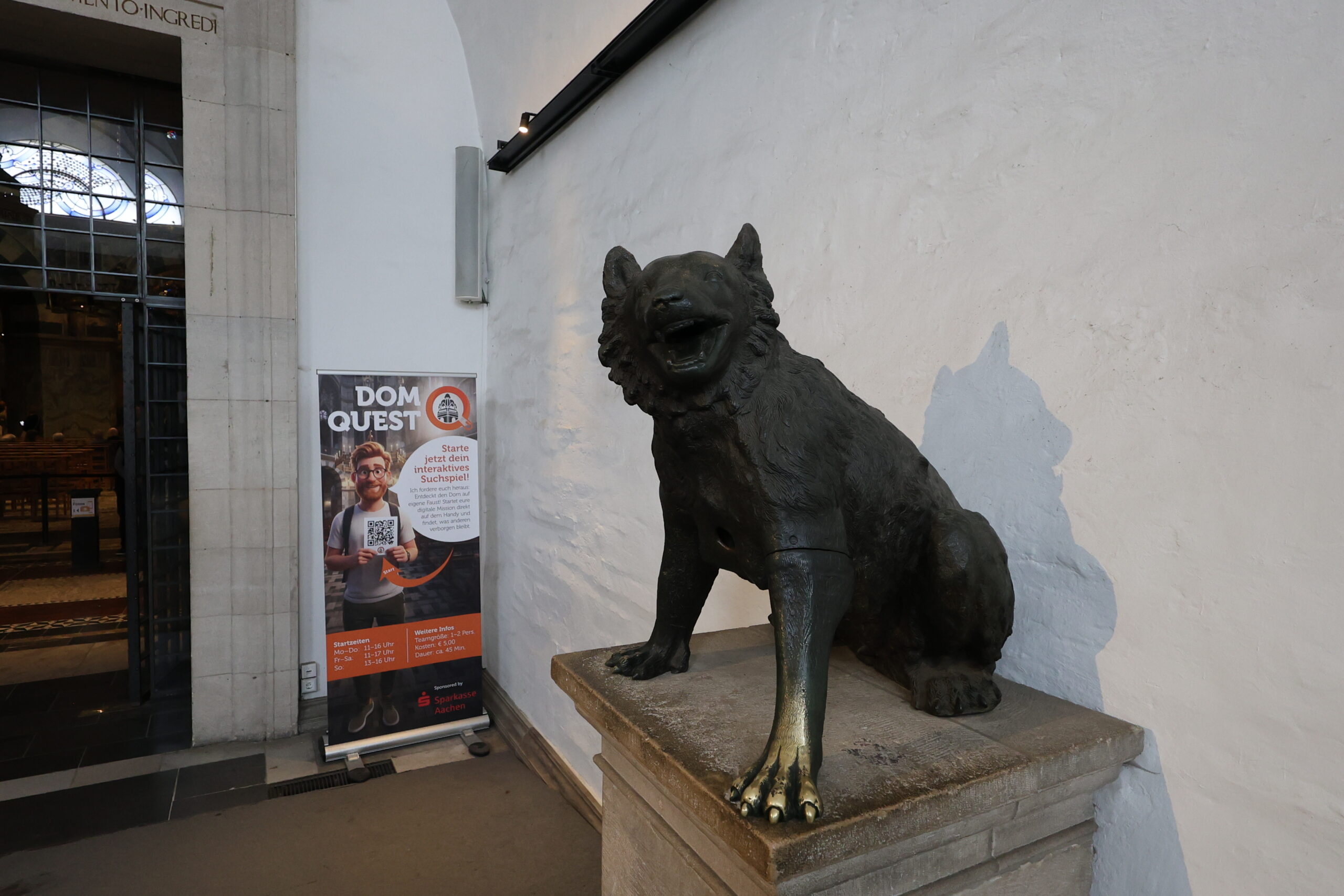
Folks lore says during construction money was running out. The Devil, sensing desperation, says he’ll ensure the work gets done but as payment he gets the first soul to cross into the completed building. This usually means a high ranking member of the church. When the building is finally done, the locals think creatively, capture a wolf in the forest and the devil takes the soul from the animal. After realizing he had been duped, the devil threw closed the front doors and had his thumb ripped off, forever leaving it the right door handle.
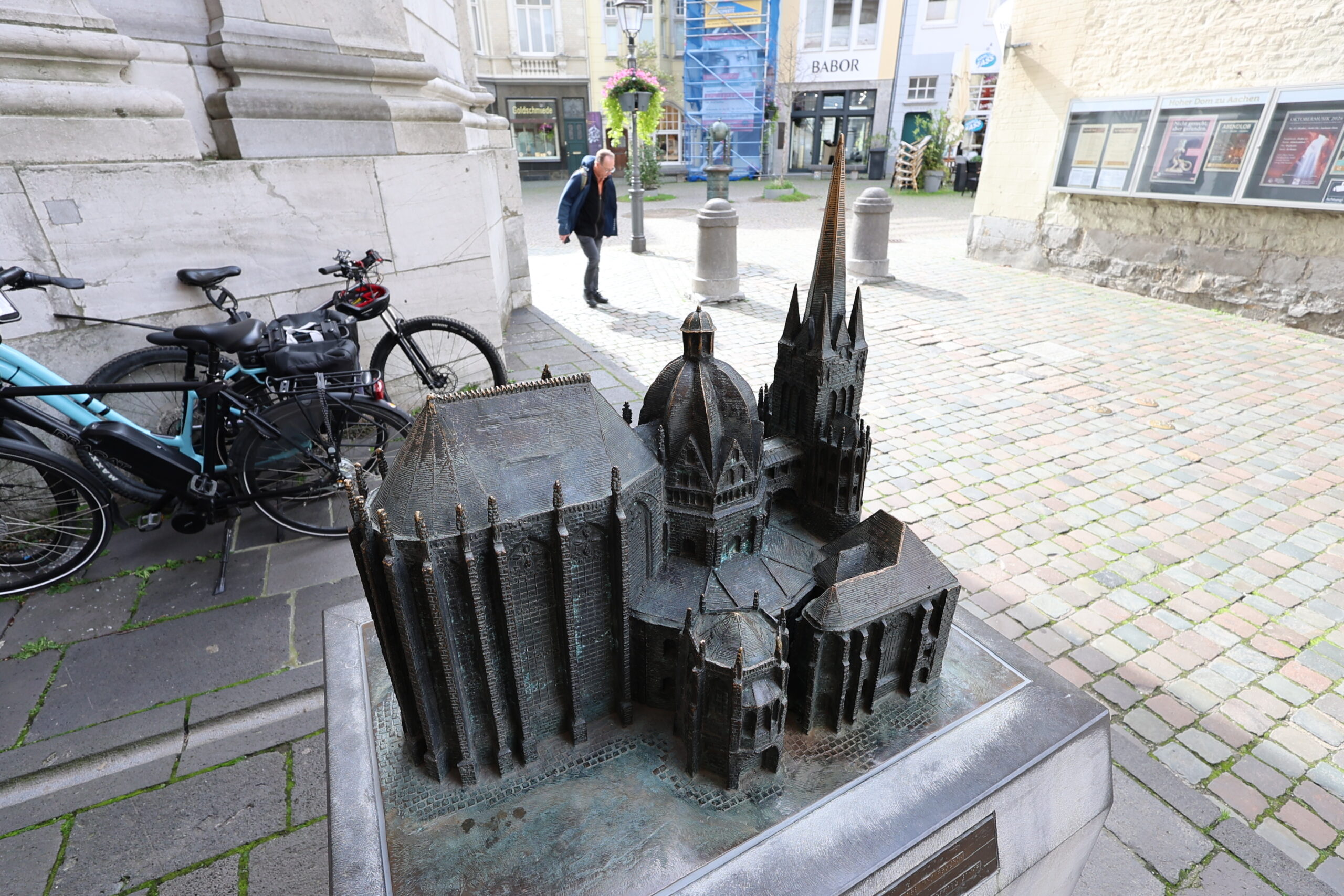
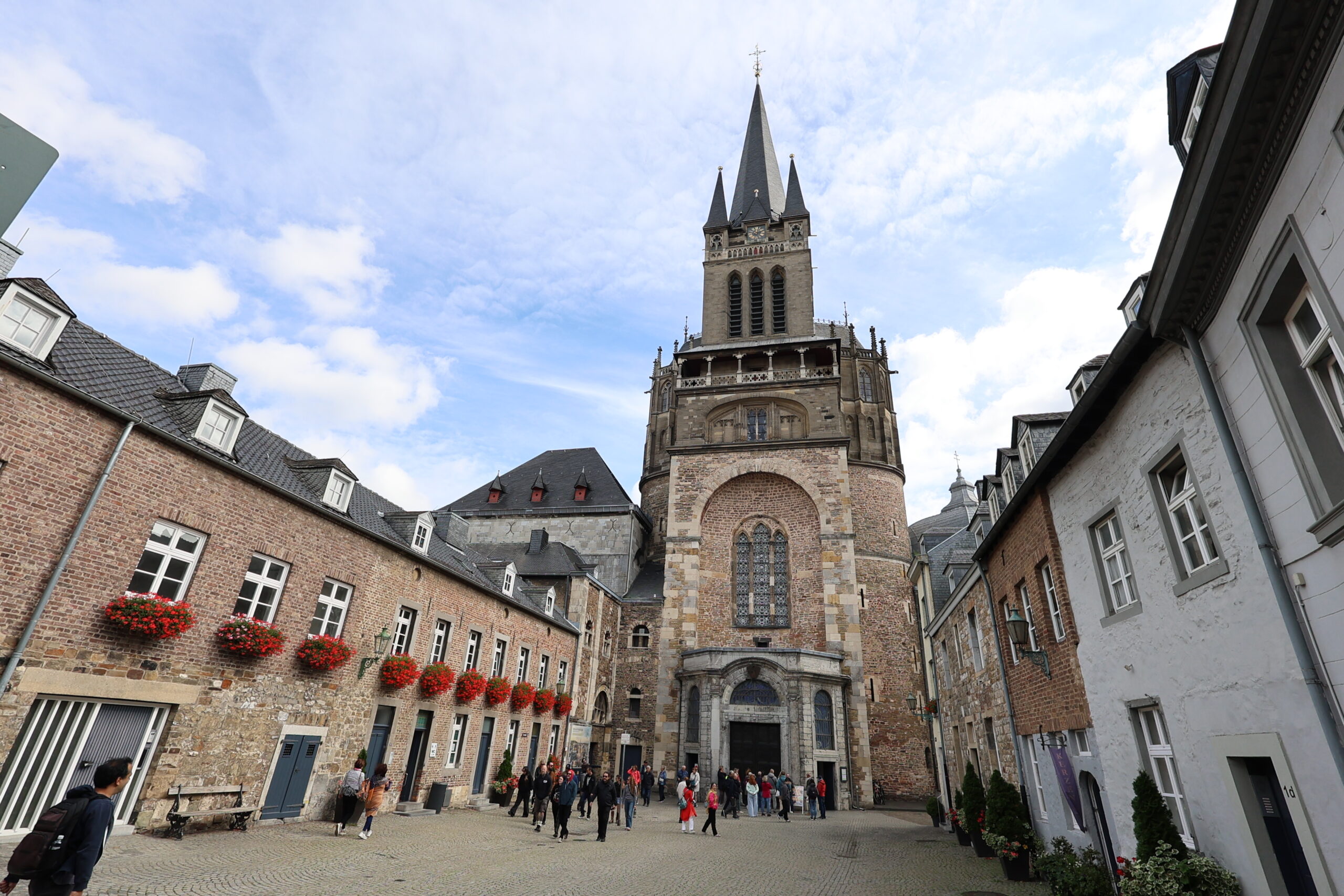
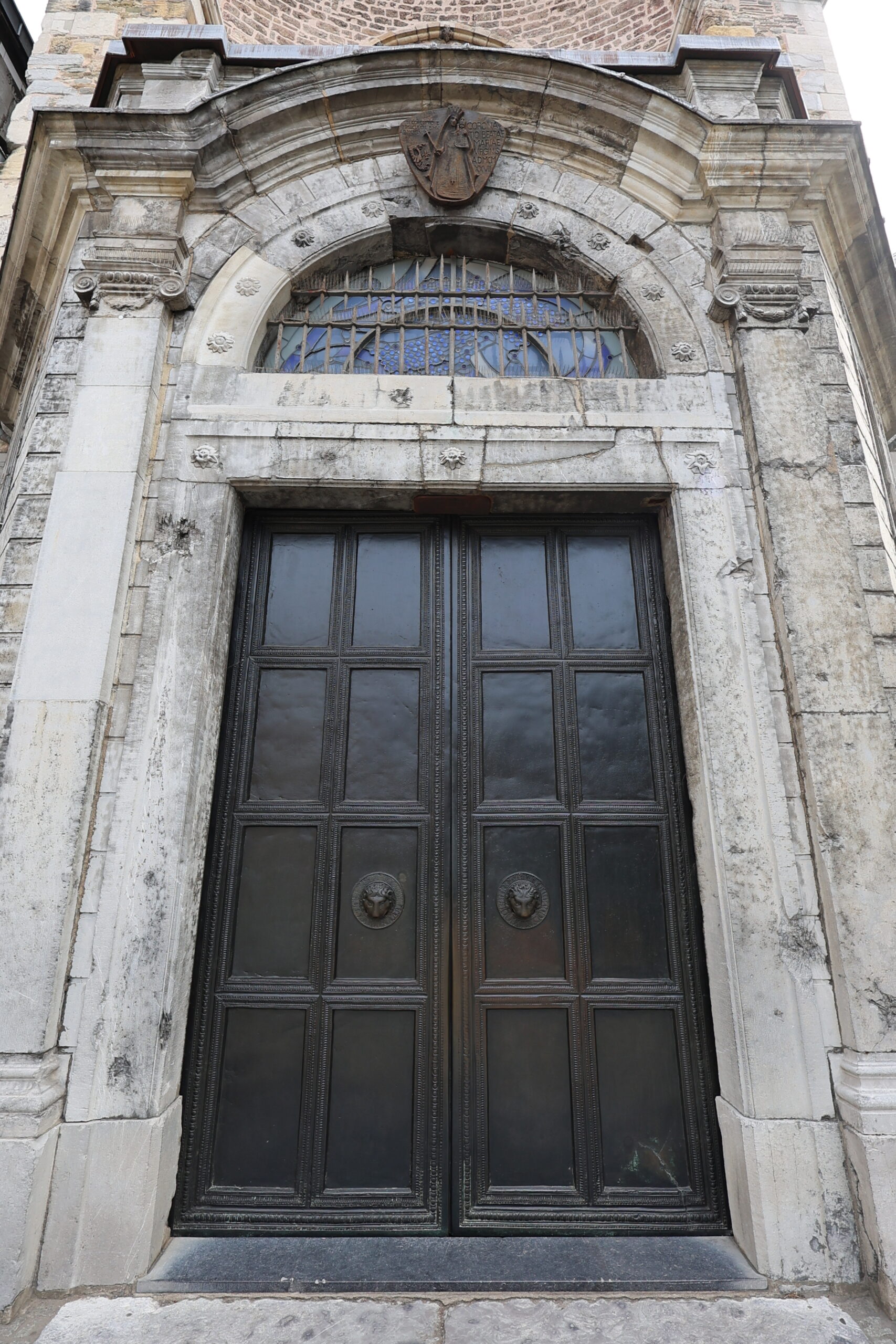
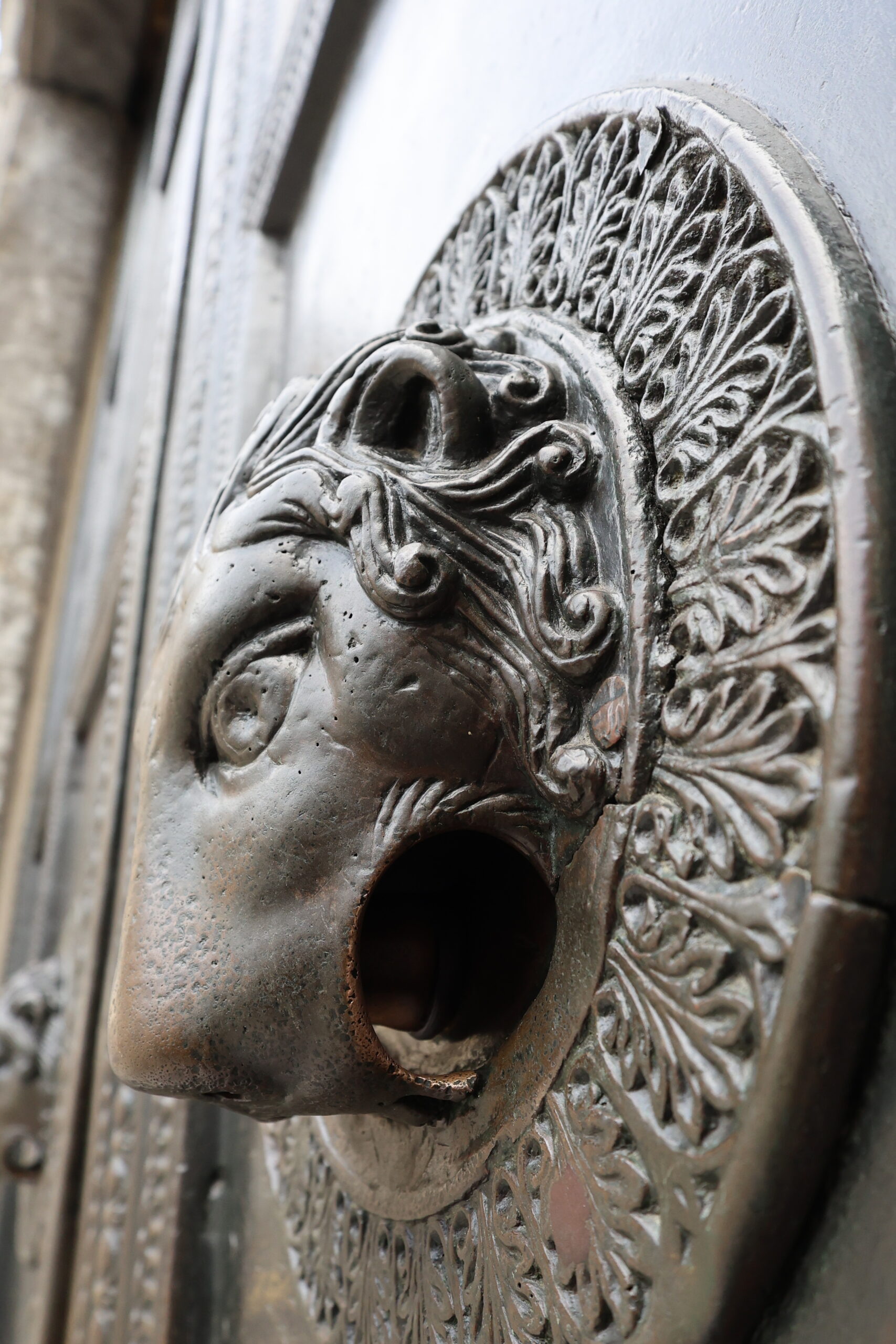
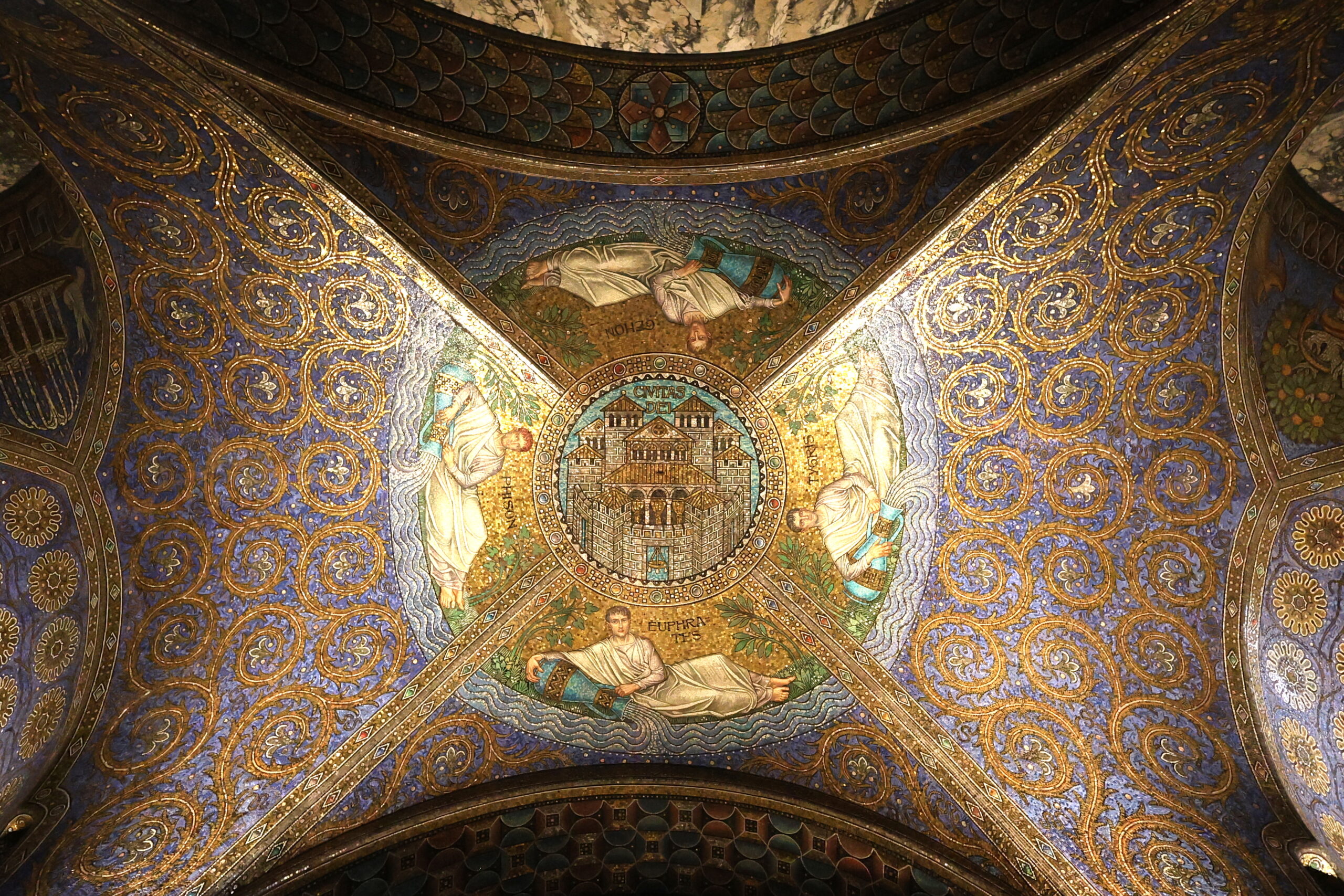
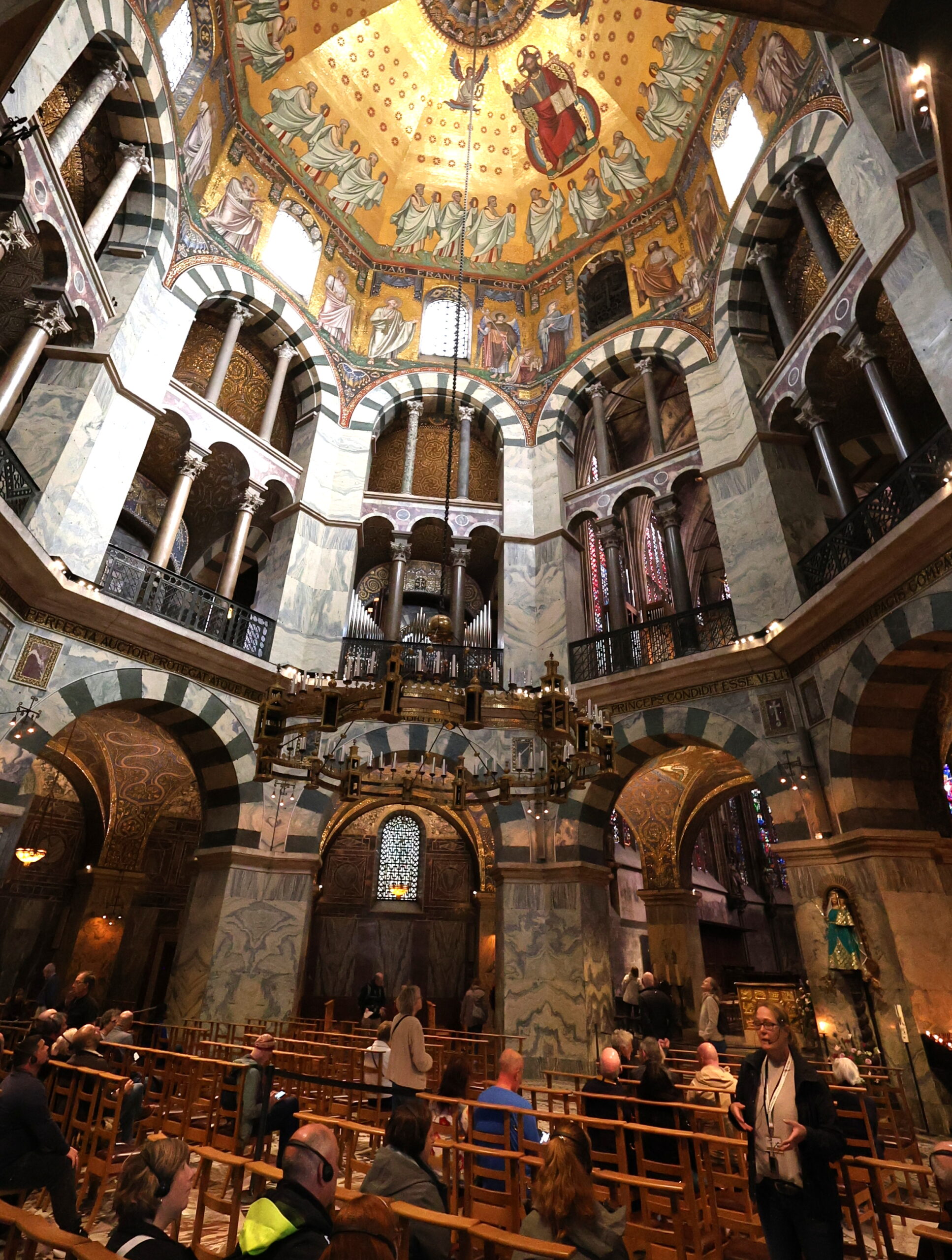
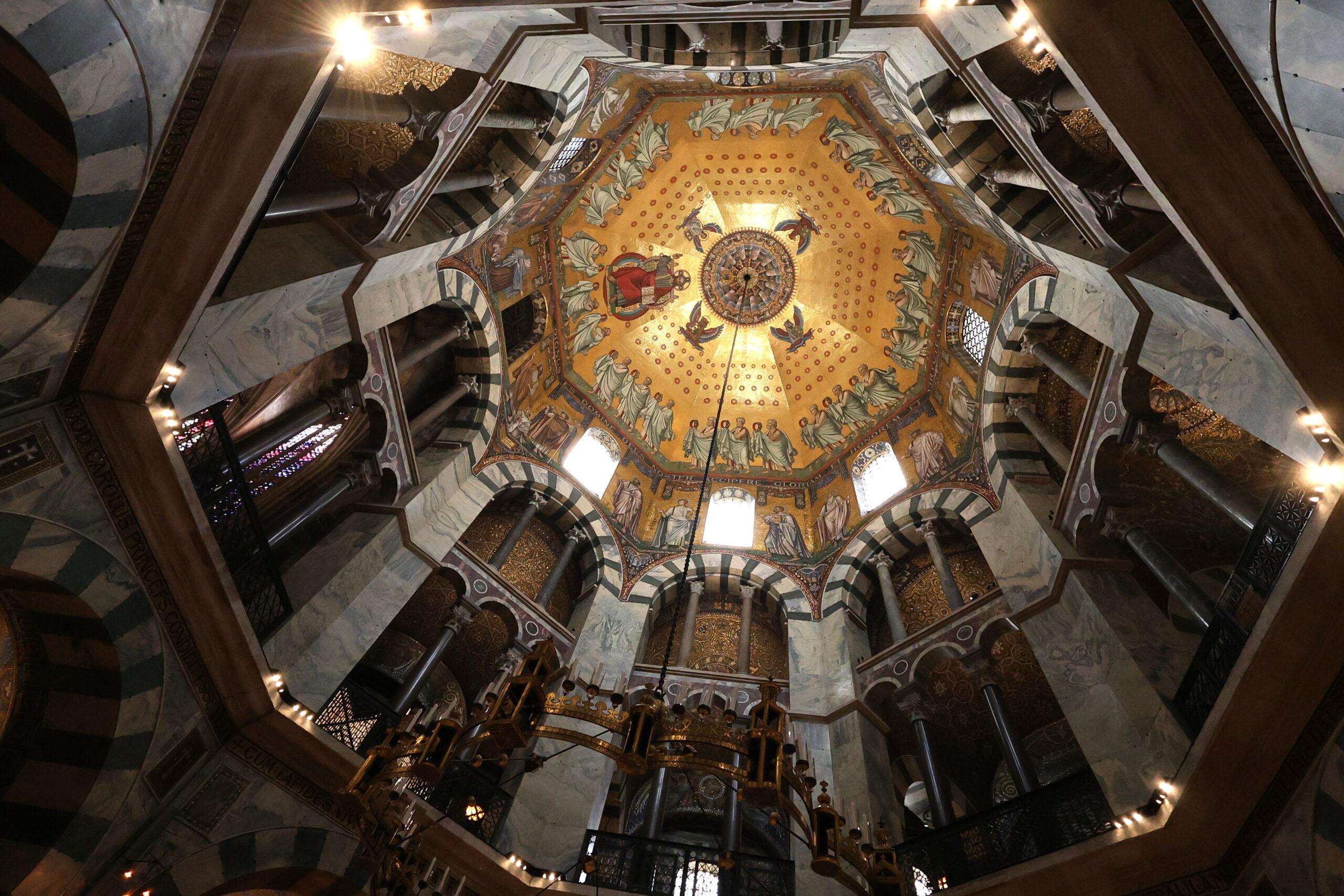
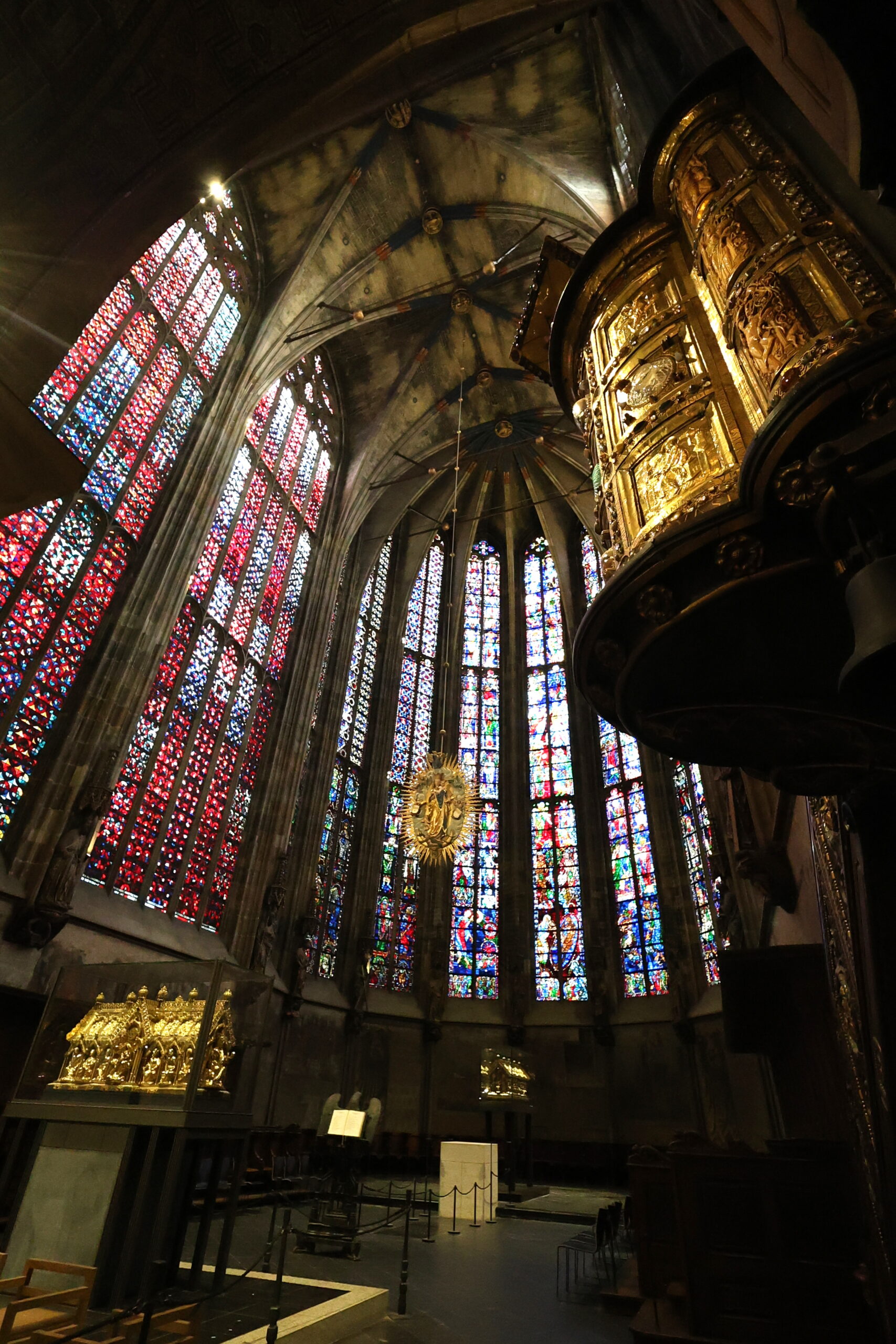
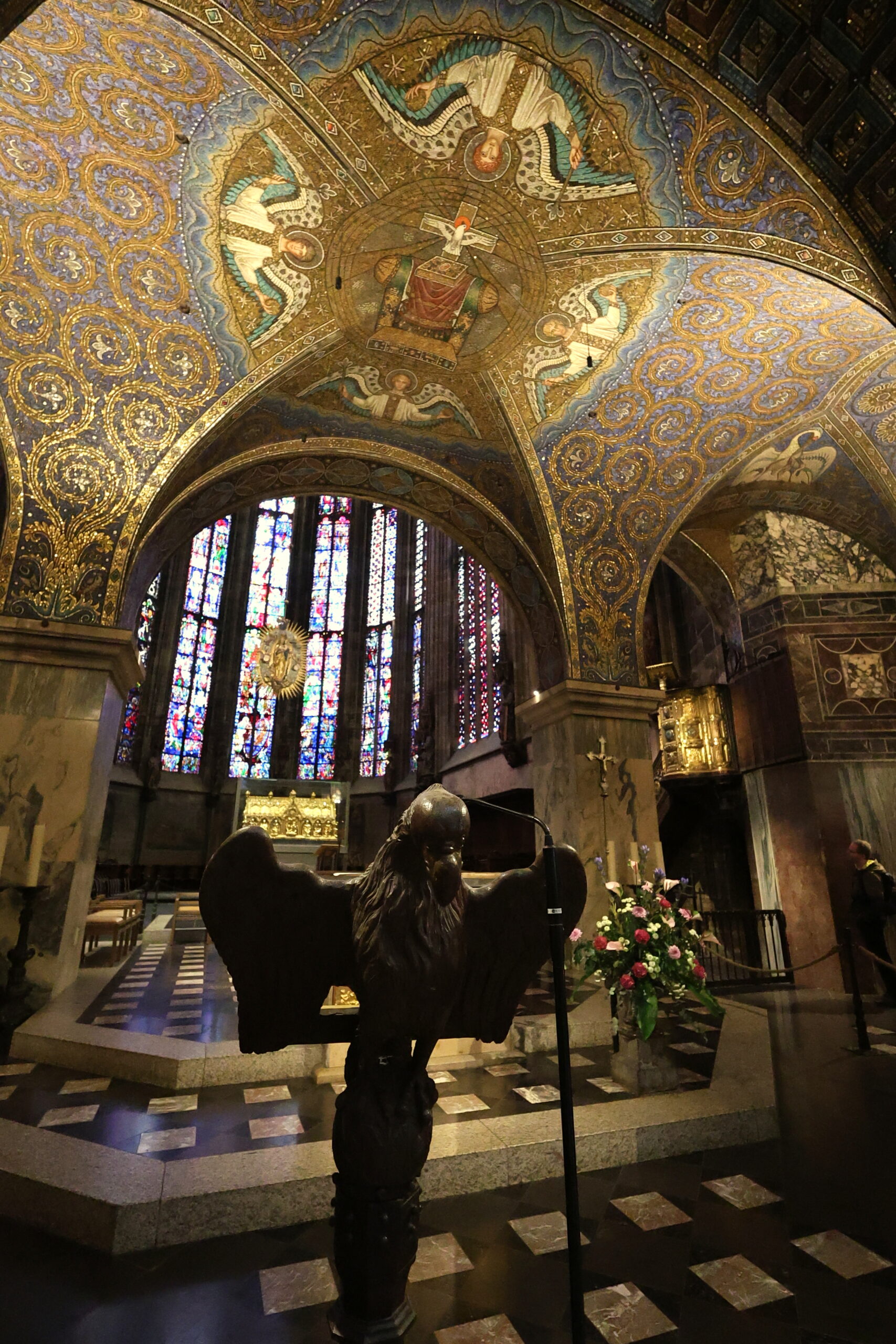
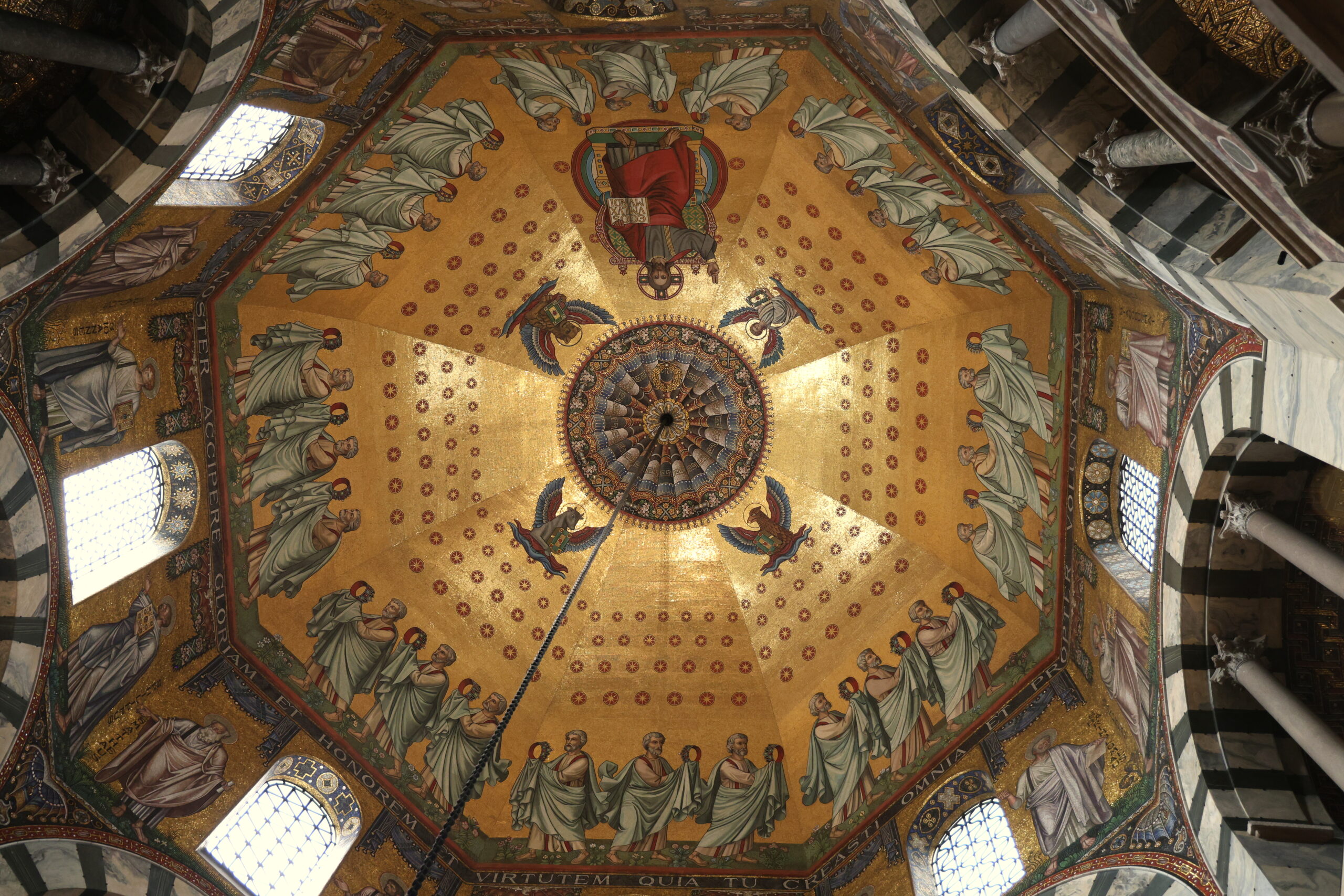
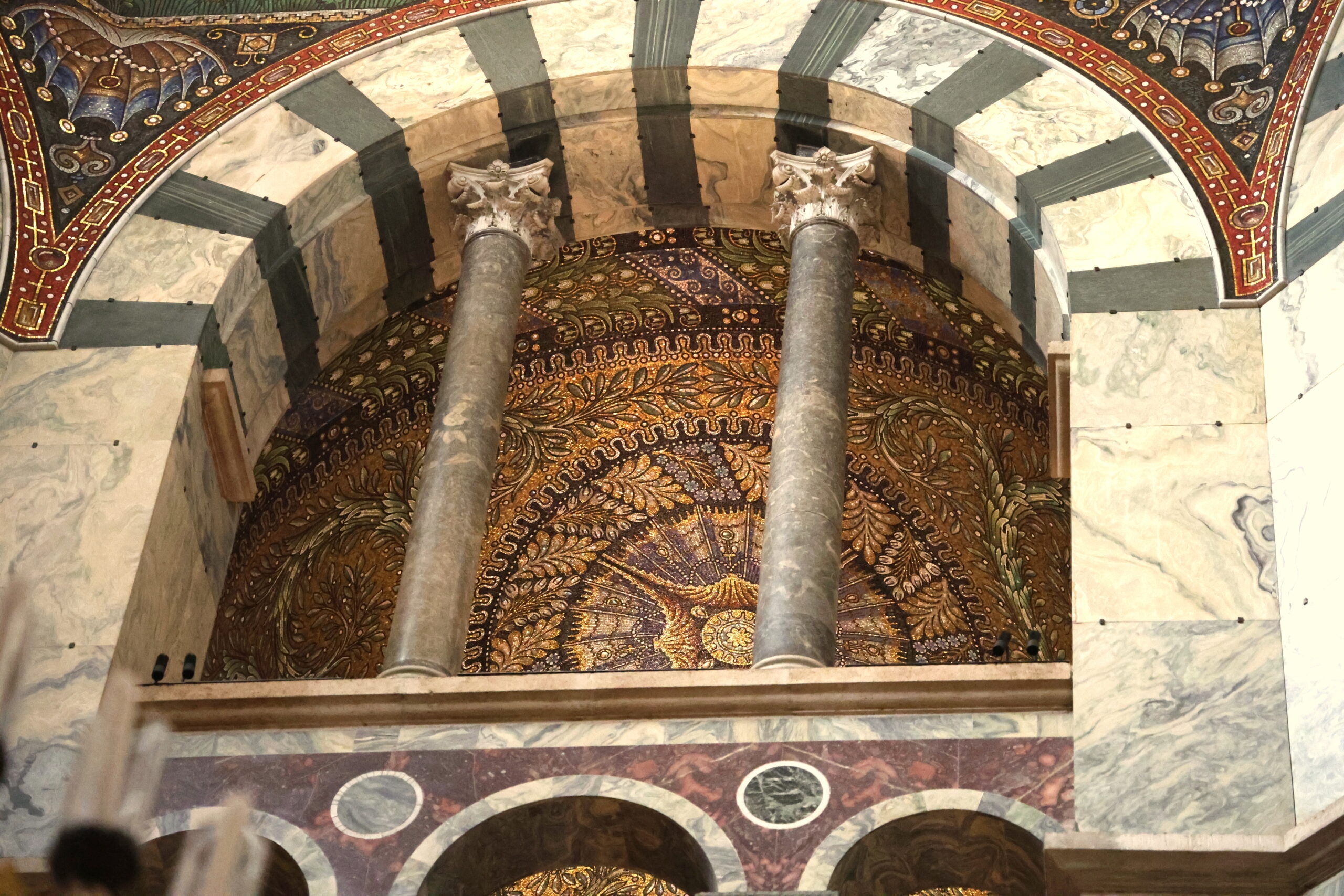
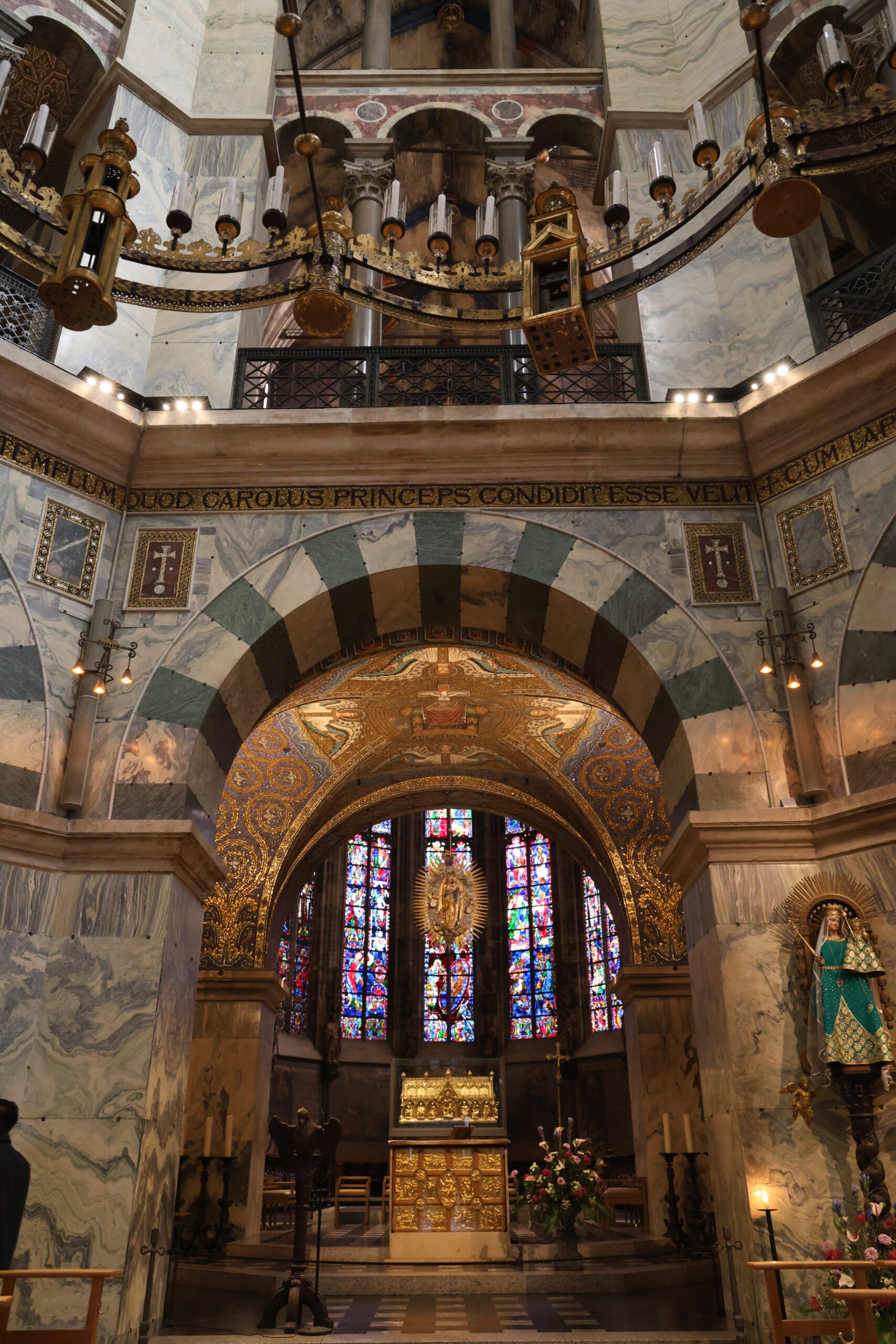
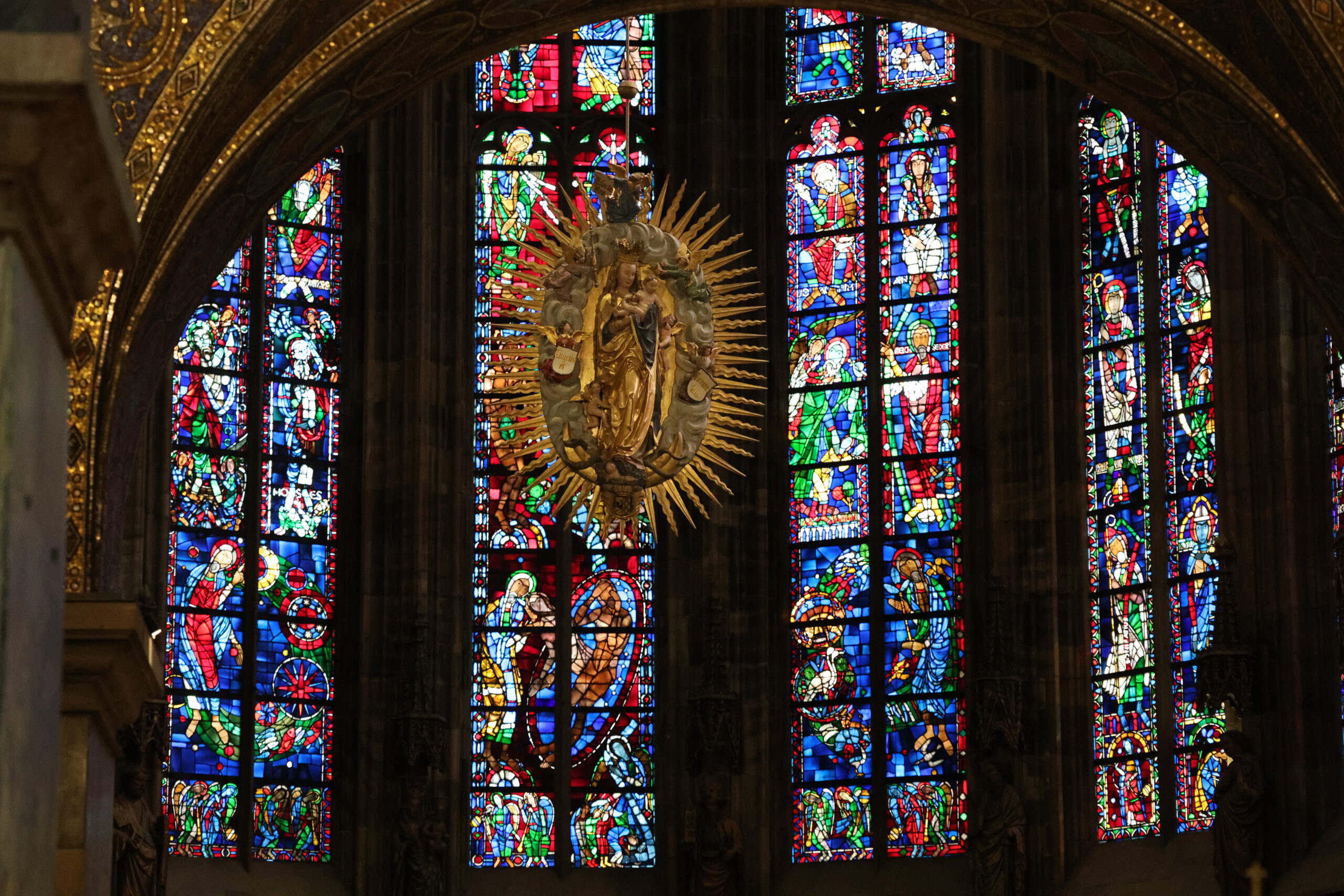
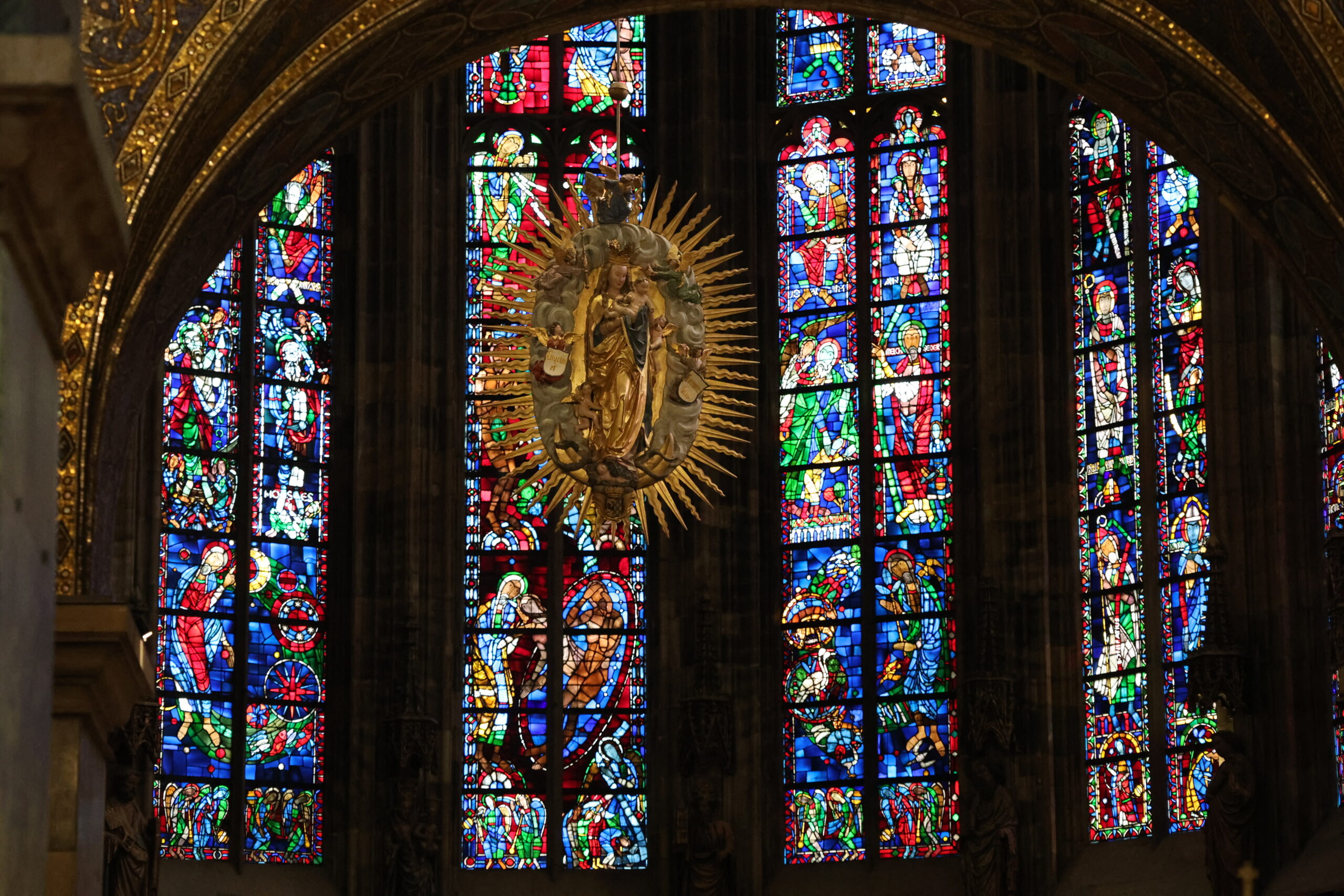
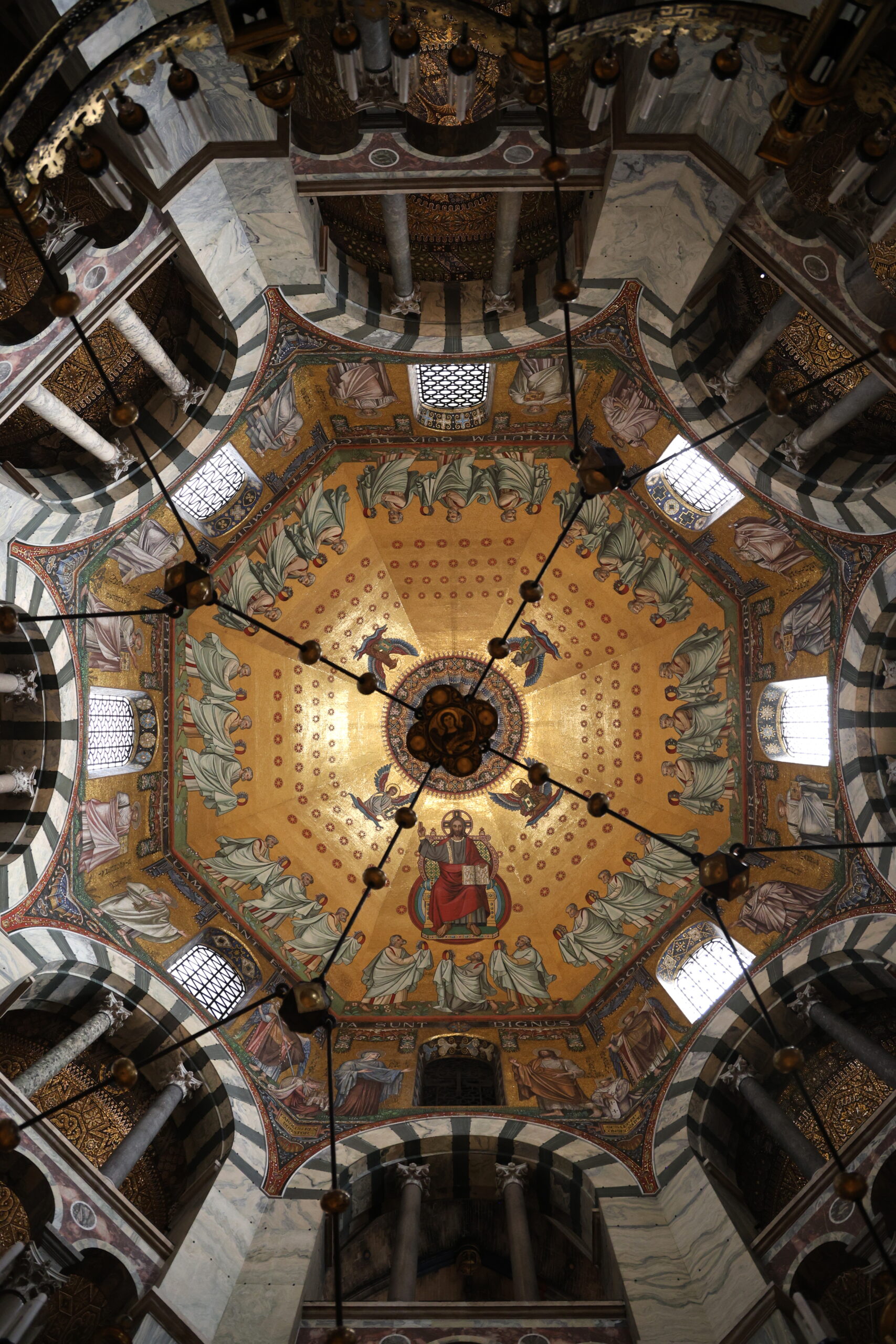
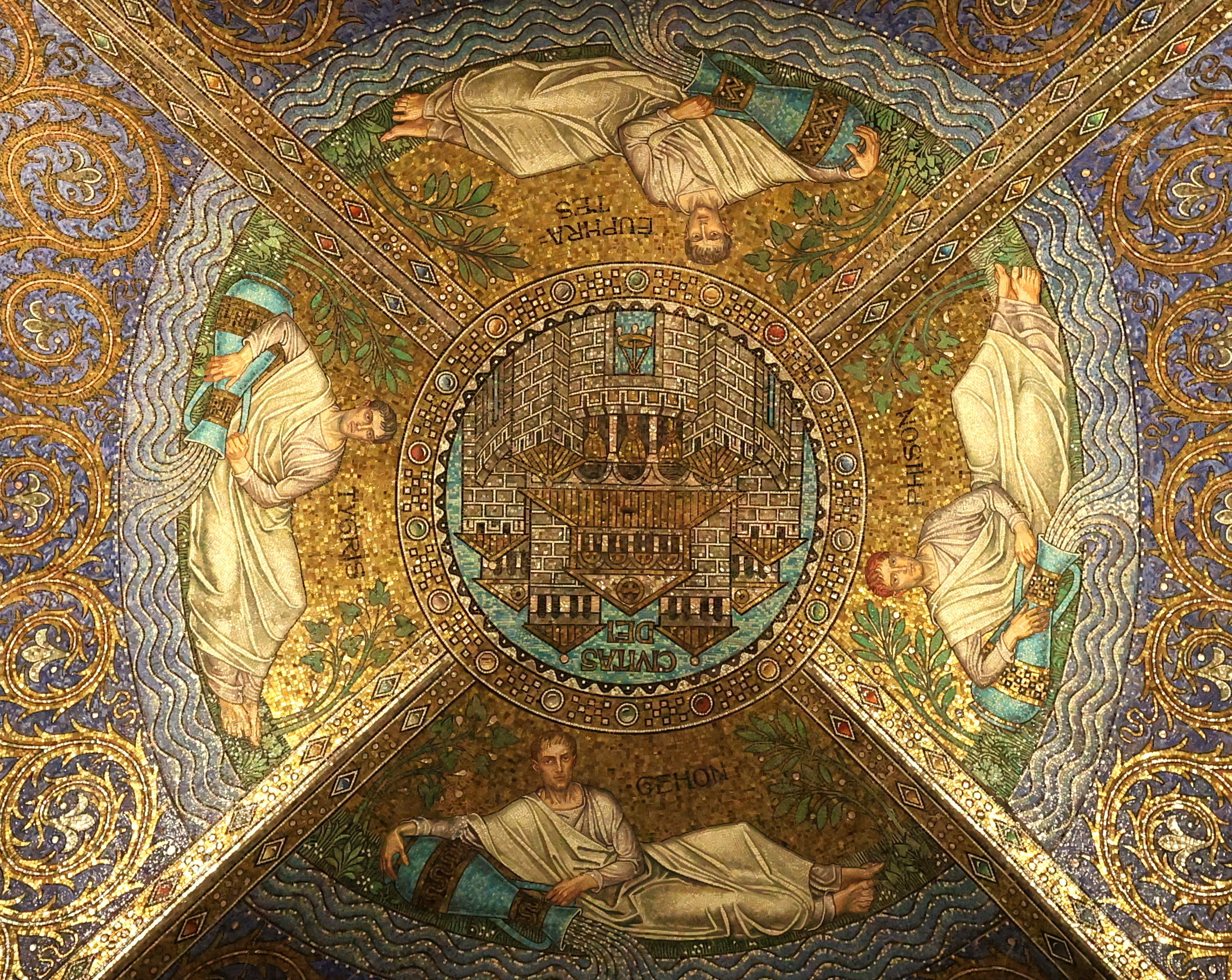
Initially the building is just an 8-sided building. At the time, very few people on earth knew how to build such a structure. Over time, like much of Europe, civilizations add onto religious structures. Eventually the naive is added as are a few side chapels. The tile you’re looking at is from the mid 1800s, King Frederick William IV of Prussia says they need to take care of it. They find old drawings and sketches of what it had looked like, and funds the renovation work.
I sat here for an hour, staring at everything. By pure chance I found there is a 2pm tour which you can go to the upper floors.
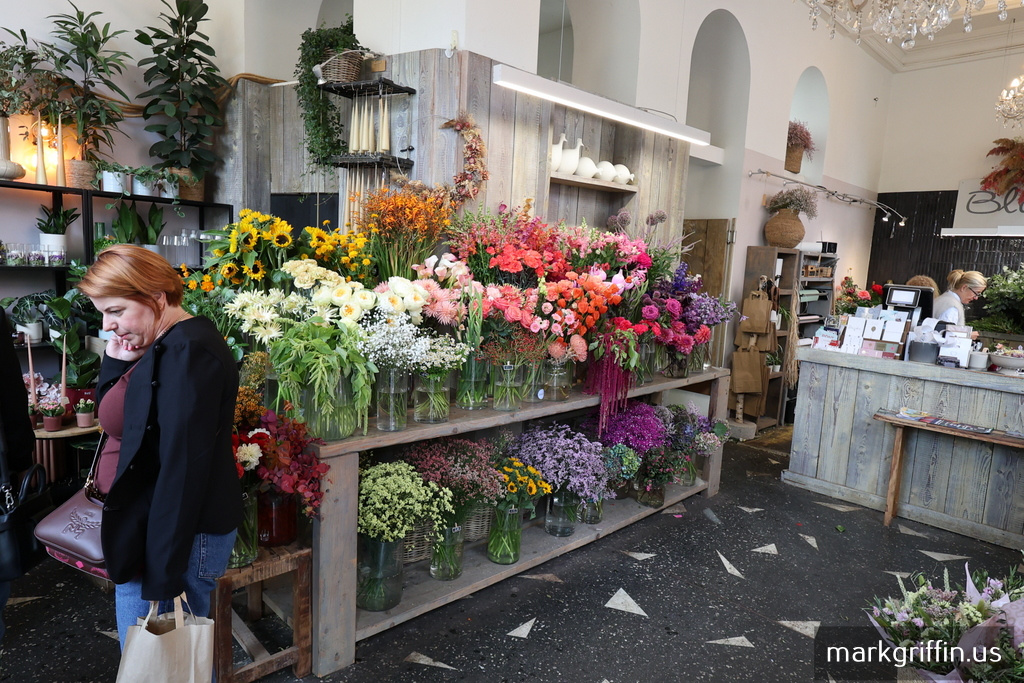
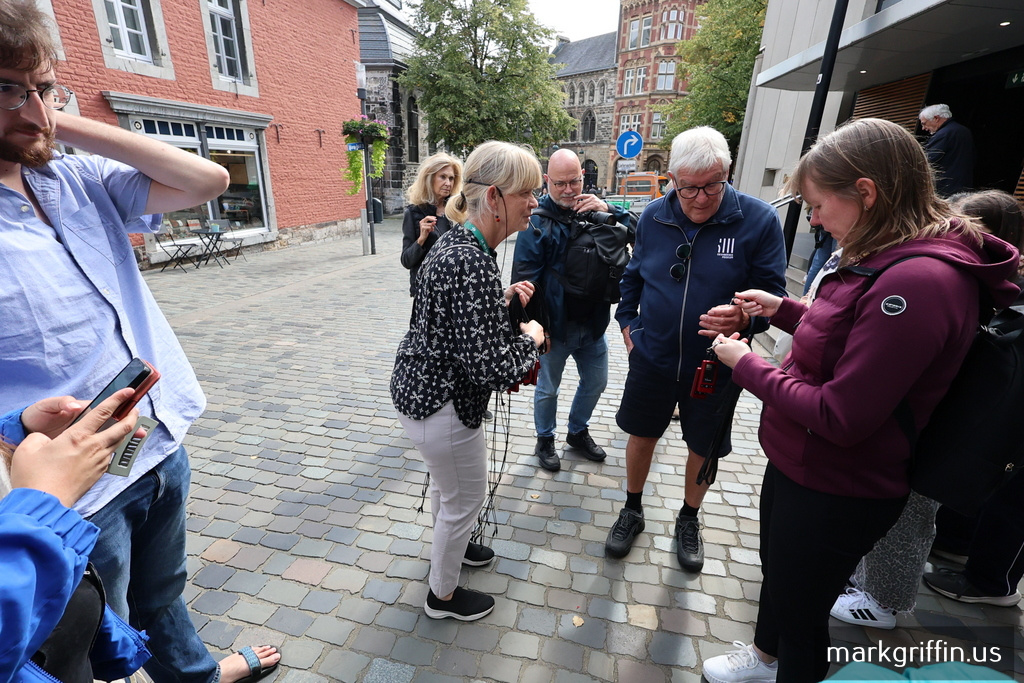
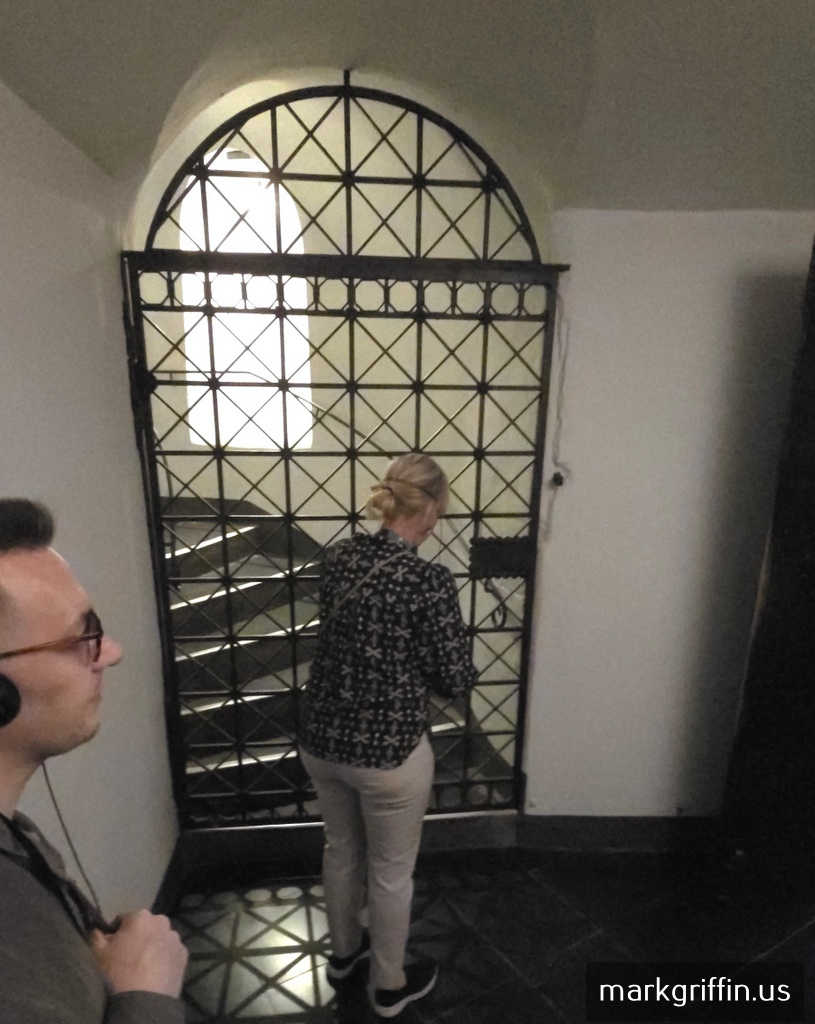
What’s so special up there? The Throne of Charlemagne.
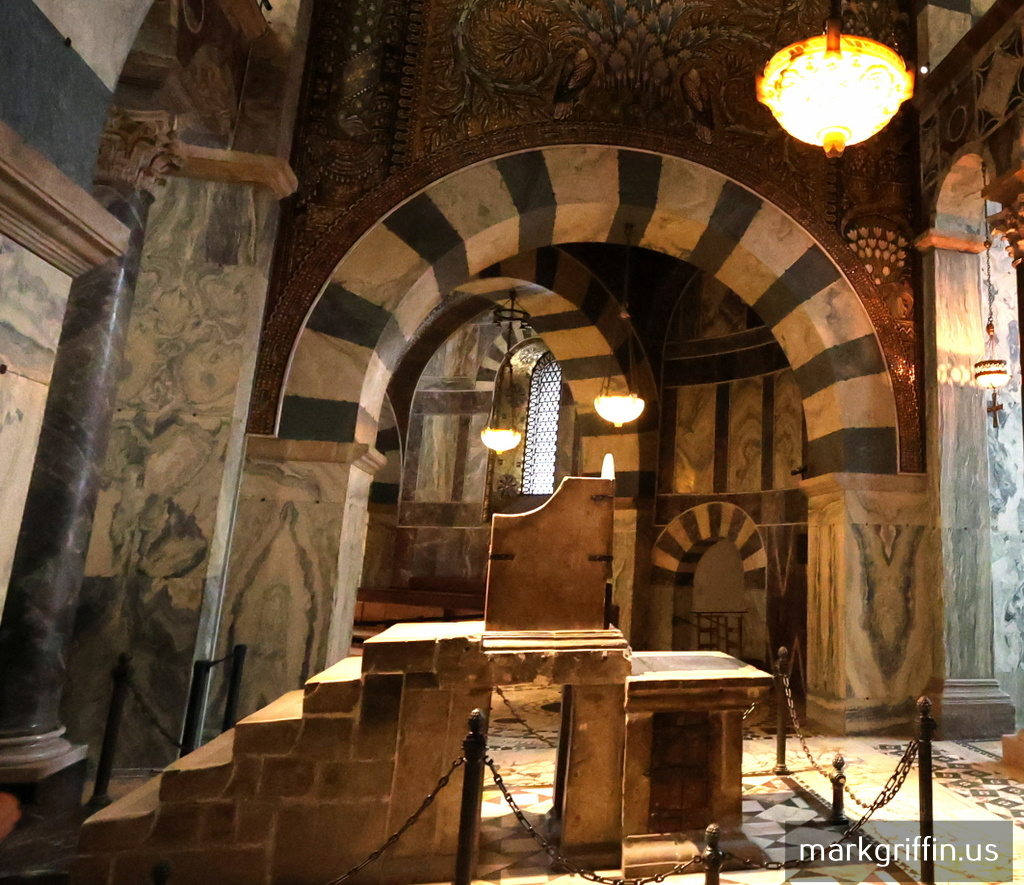
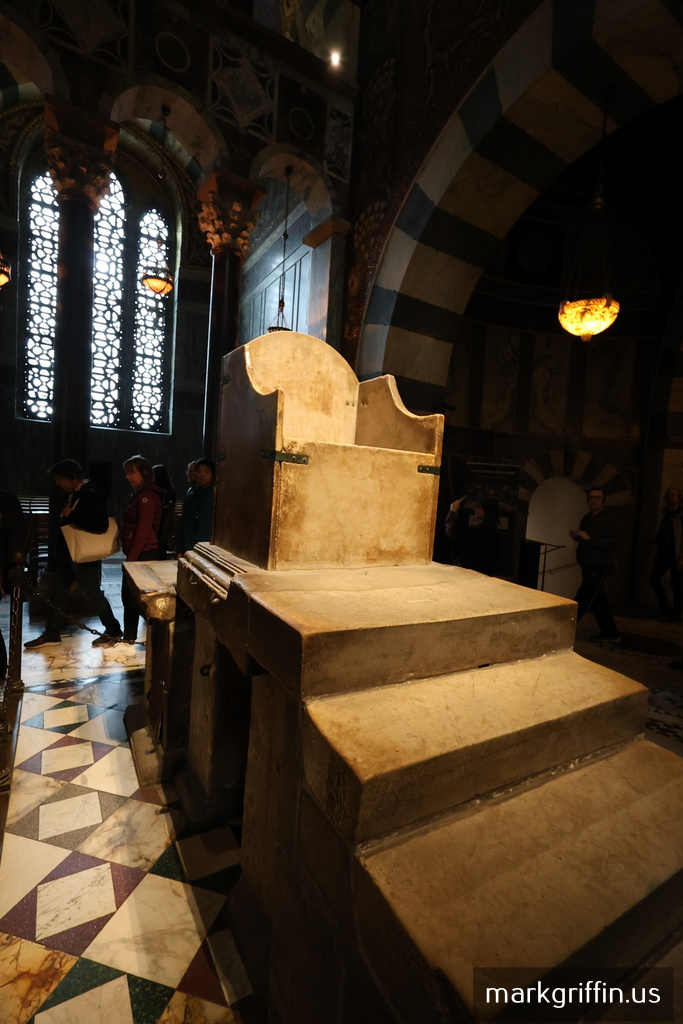
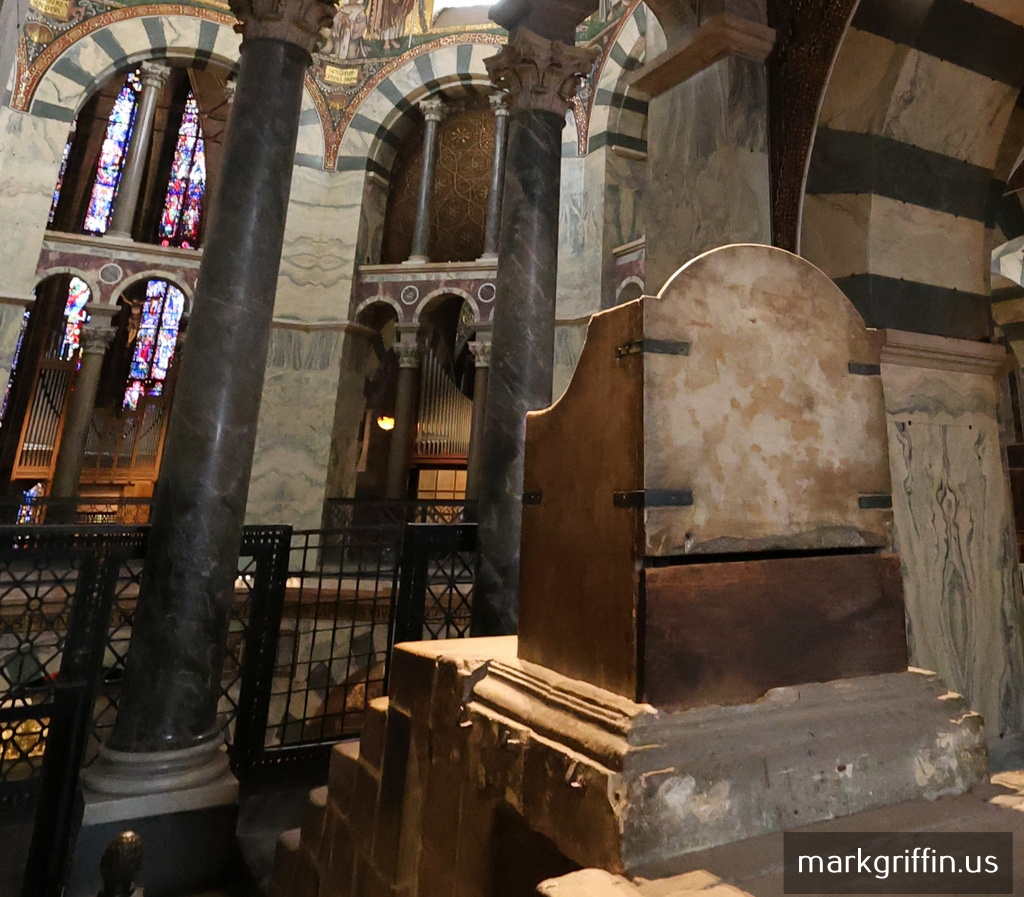
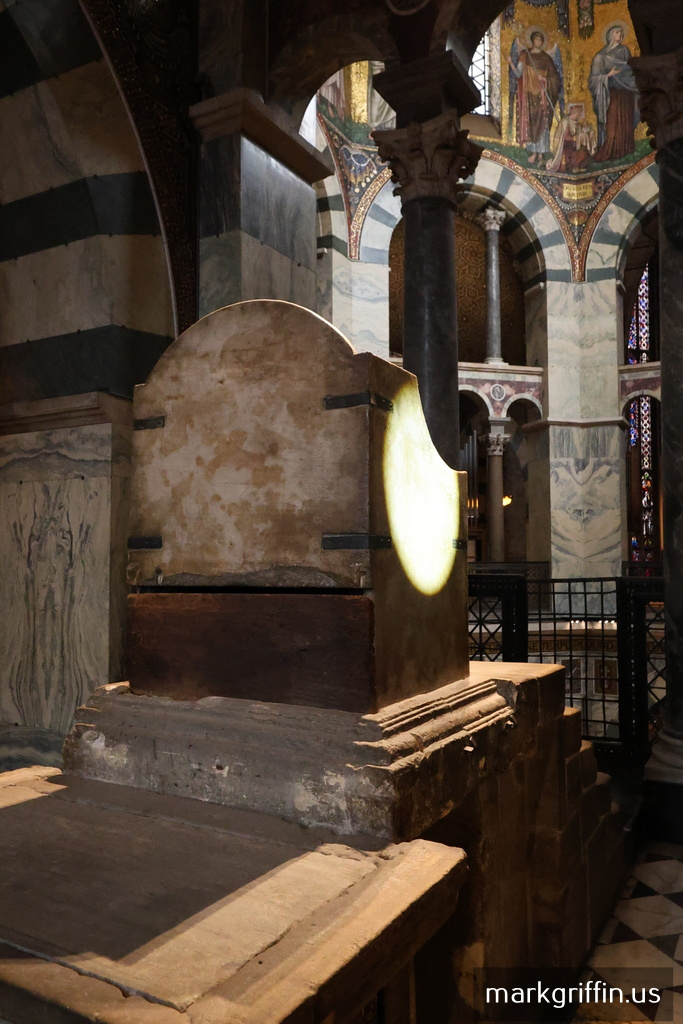
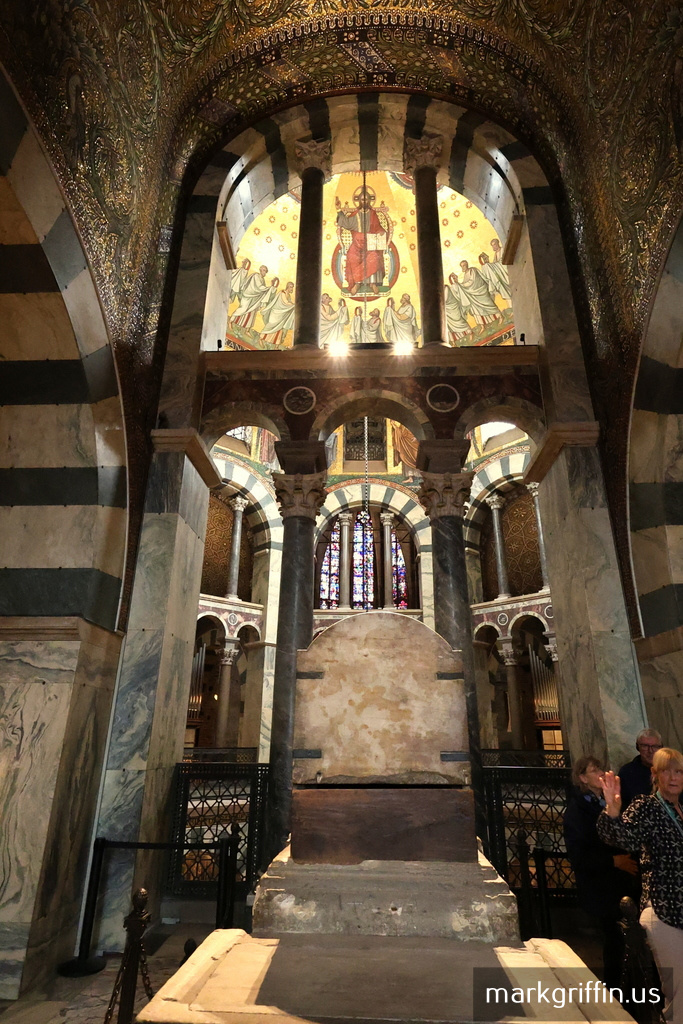
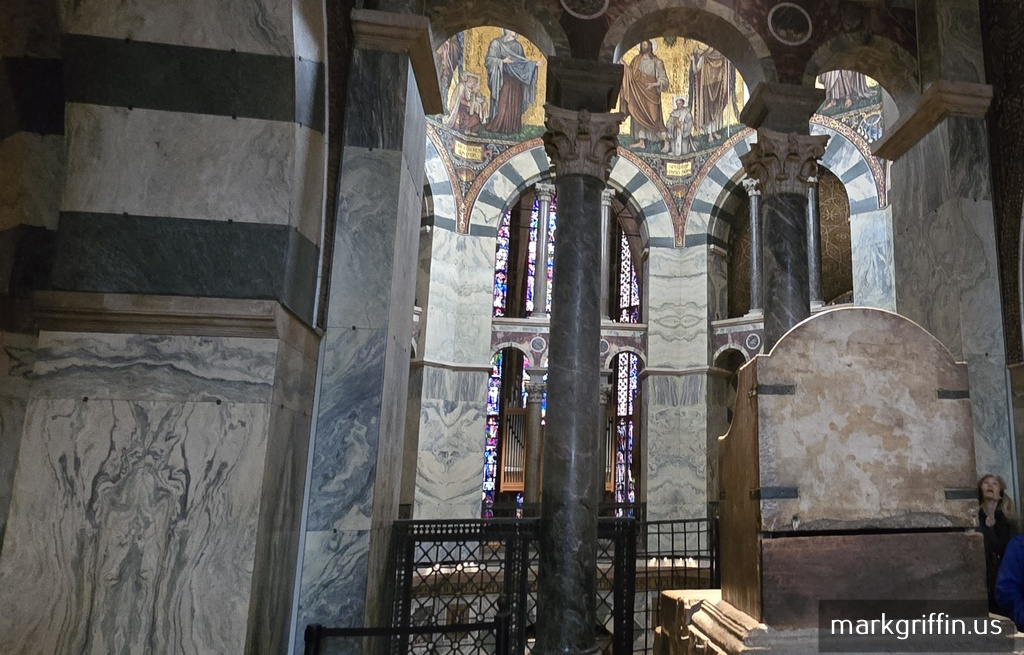
It’s made of plain marble slabs, not gold or elaborate carving. The marble itself is believed to have been brought from the Holy Land — specifically thought to originate from Jerusalem, though the exact provenance is debated by historians. If true, that would mean Charlemagne (or his builders) deliberately sourced stone connected to the most sacred sites in Christianity to construct his own throne. Another example of borrowing legitimacy through material symbolism, sitting on the stone Jesus ma have walked over.
In the fourth picture you’ll see the side is lite up. One of the side marble slabs has fine carved lines that appear to be the board for an ancient strategy game called “nine men’s morris” (a mill-type game, similar to tic-tac-toe but more complex), a game genuinely popular in Roman antiquity. The marble’s current yellowish-brown tint isn’t original, the throne was coated in tar during WWII as protective camouflage/preservation, which discolored the once-white marble. It could theoretically be polished back to white, but doing so would destroy the ancient game-board etchings and other historic markings, so it’s deliberately left “dirty” to preserve that evidence.
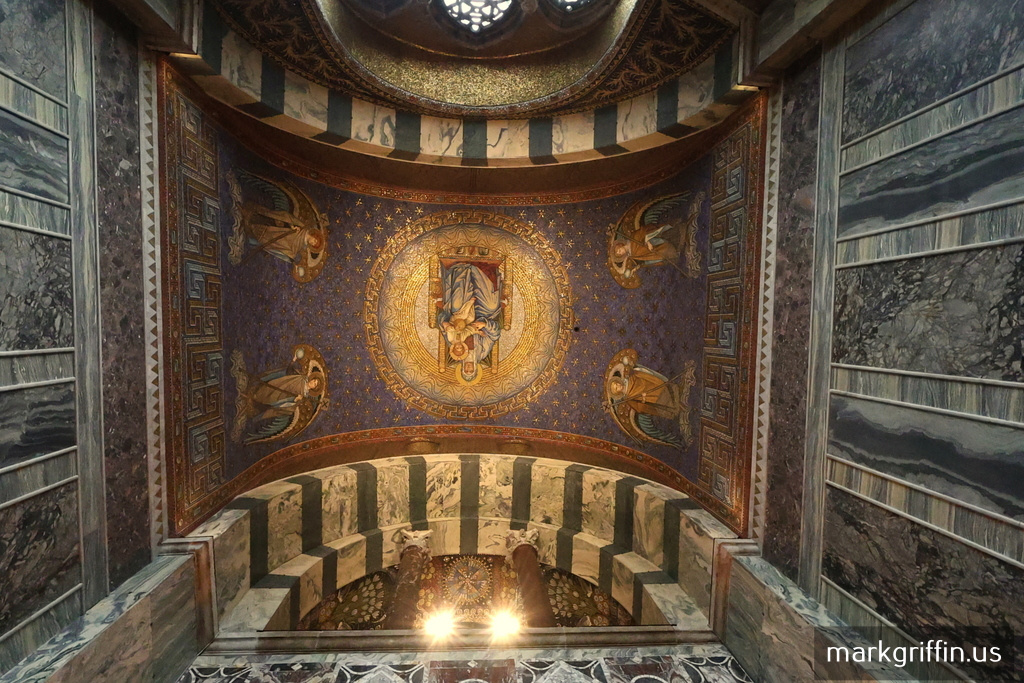
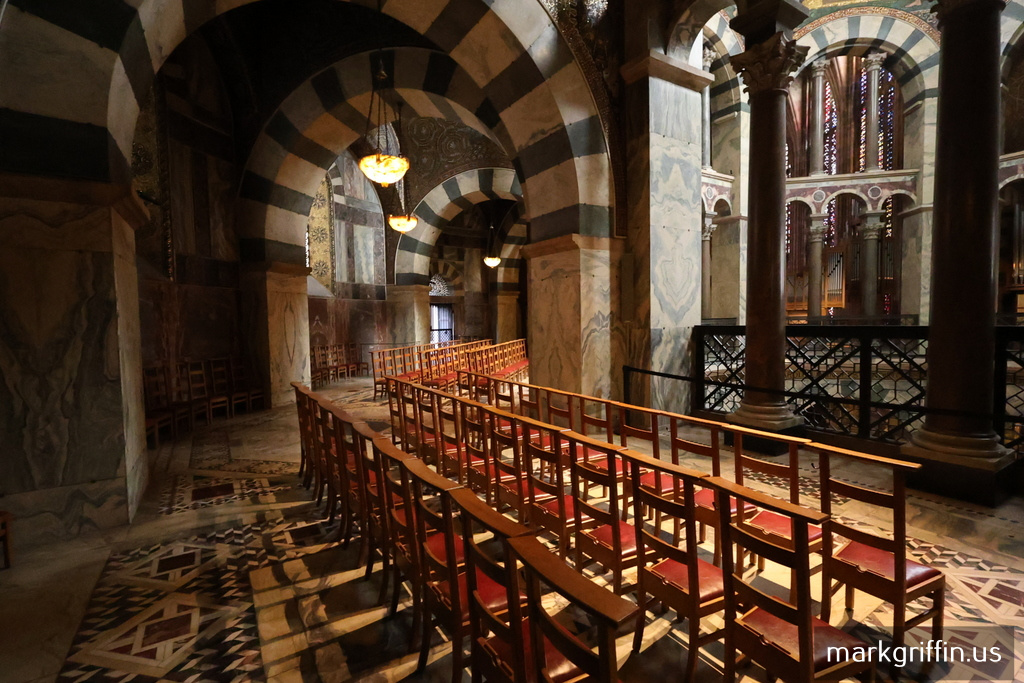
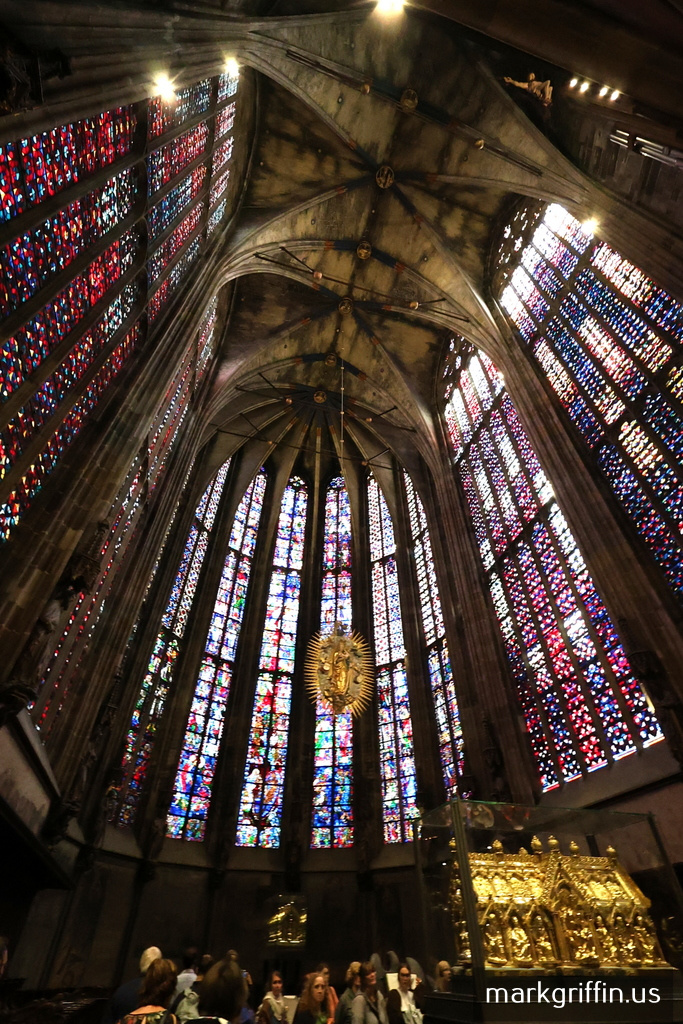
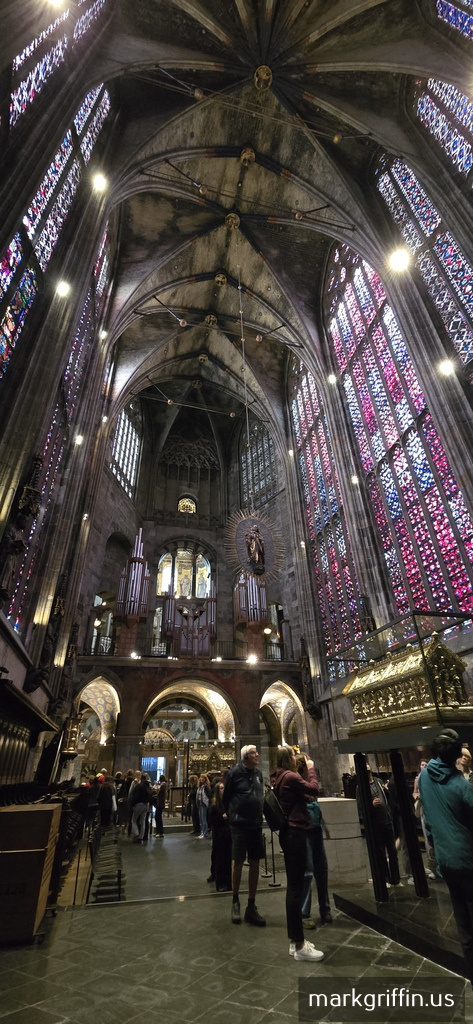
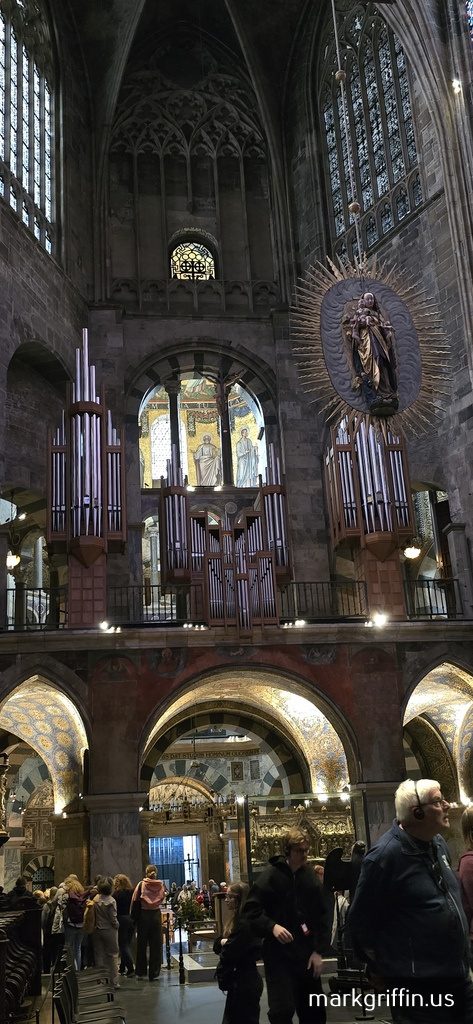
The tour wraps up with a visit to the high alter. All glass here was blown out in 1945. The locals never through they could lose the war so no one ever thought to take out the original class just in case.
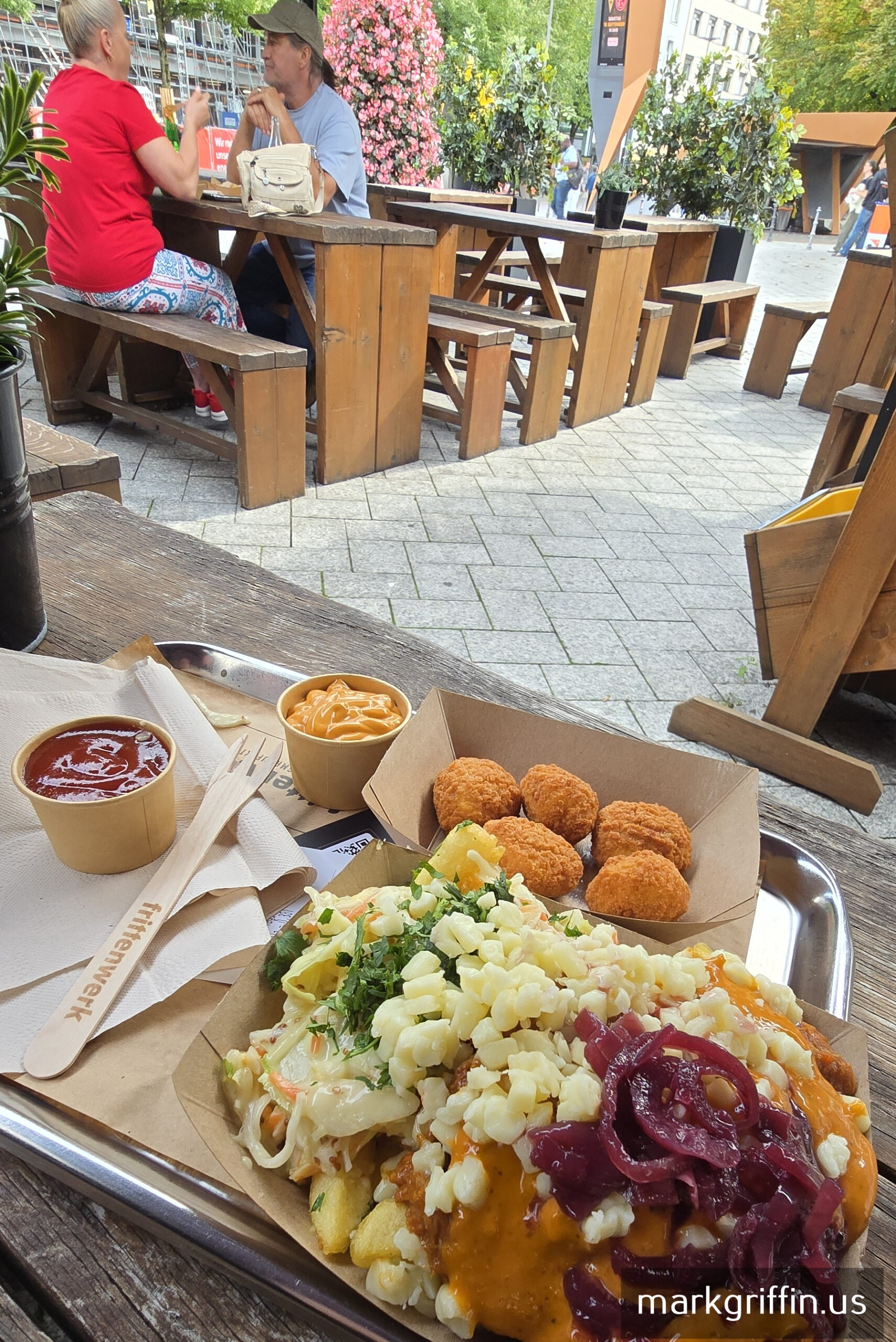
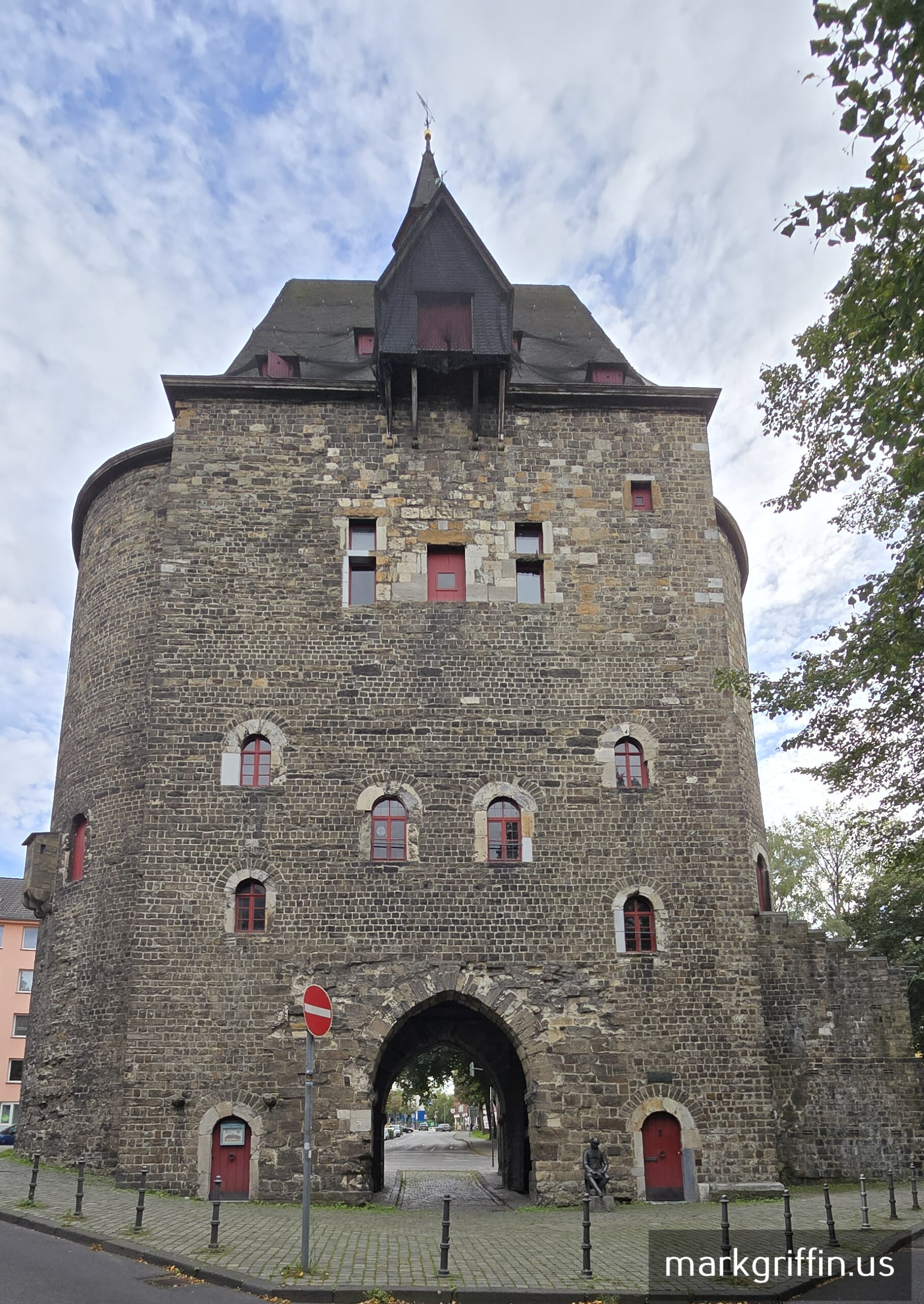
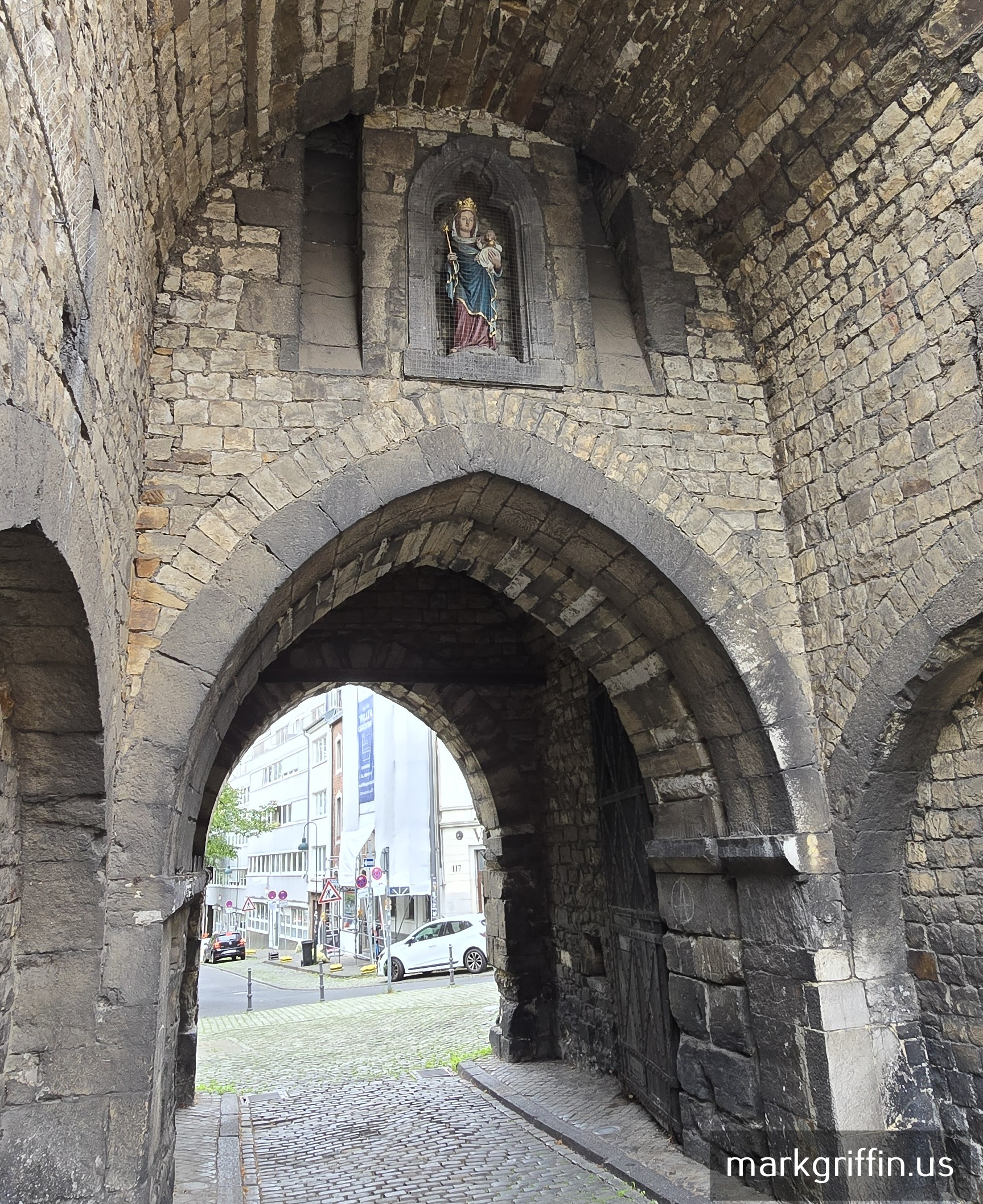
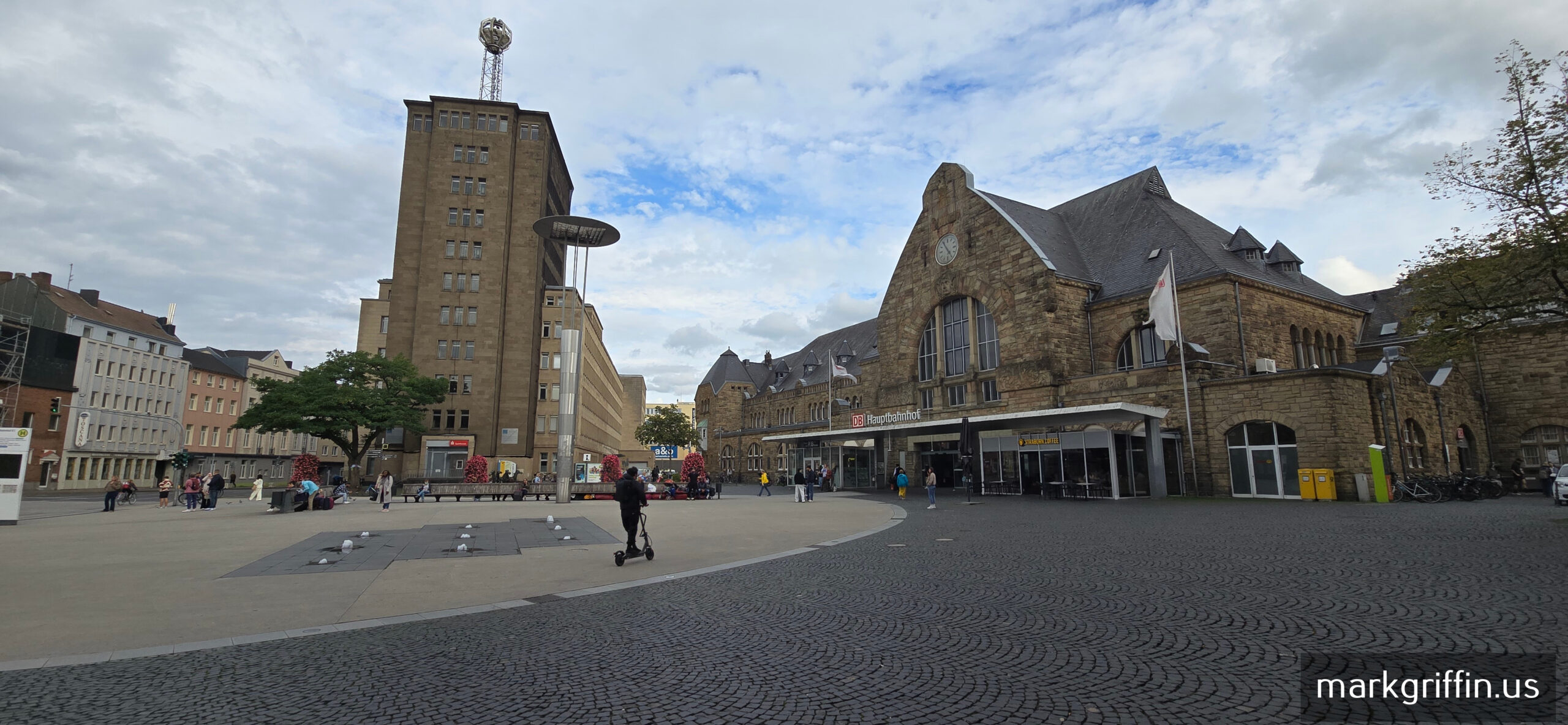
I’ve lost track of time. 7 hours were spent in this little corner of the world. Grab some interesting play on bbq chicken fries (with cold saw?), explore the last remaining fortification gate from the time when there was an actual wall around the city, then to the train station.