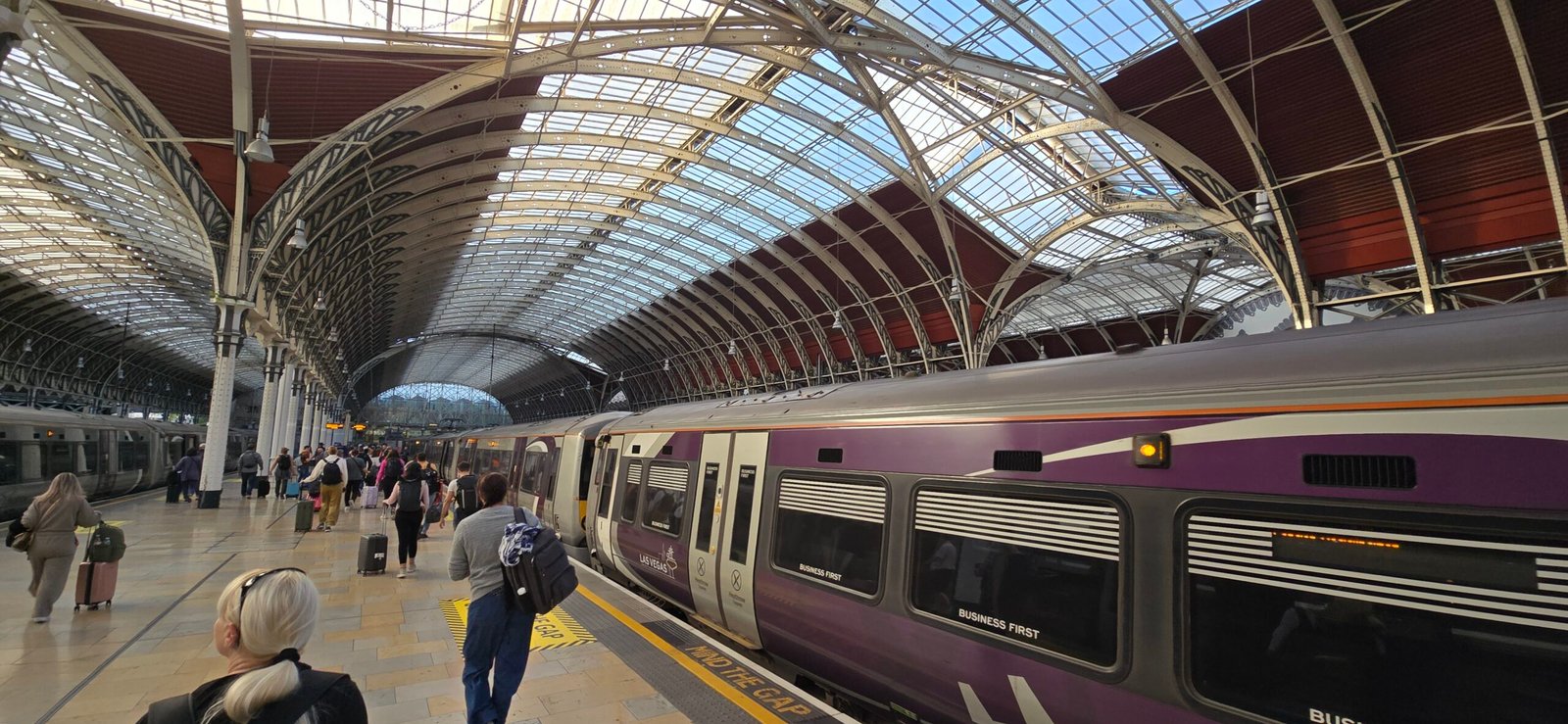
Coming into the city after a nice nap seems to have also helped with the time adjustment. Rather than a single 7-hour jump, Boston helped with a three-hour change so this is just a four-hour change. Taking the nonstop train from the airport into Paddington train station, it’s a short distance to the hotel.
As most US visitors come into London early in the morning, many opt to purchase a hotel stay the night before they arrive. This ensures when you show up at the hotel before the standard 4pm check-in you can instead go straight to your room. Don’t expect free early check-in should your first night be the same day of your arrival. They know you’re tired, wanting to drop your bags and they’re not afraid to charge you if a room is available.
With the bags dropped it’s off to explore the nearby area of Kings Cross, also known as St Pancras. The Old St Pancras Church is a quick walk from the hotel. It was one of the first churches in London designed in the Greek Revival style. Its unusual style has made it a London landmark, often nicknamed the “London Acropolis.”
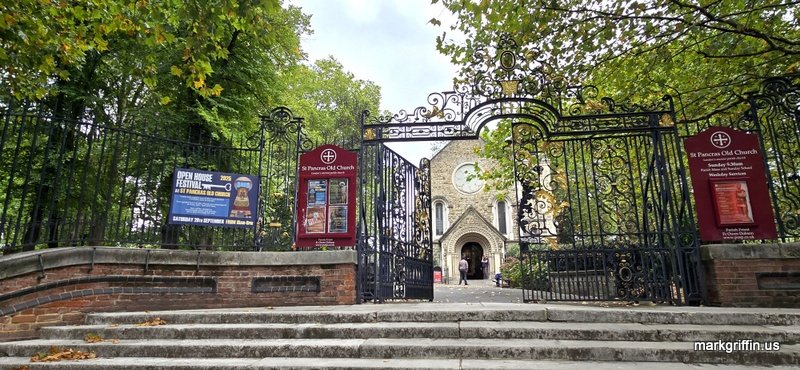
It’s believed this land has been a site of Christian worship since the 4th Century. Pancras was martyred in Rome 304, he was only 14 when he was beheaded by Diocletian. These grounds are significant for London in that records indicate 1.5% of all London’s estimated 6 million burials may have been accounted for at St Pancras.

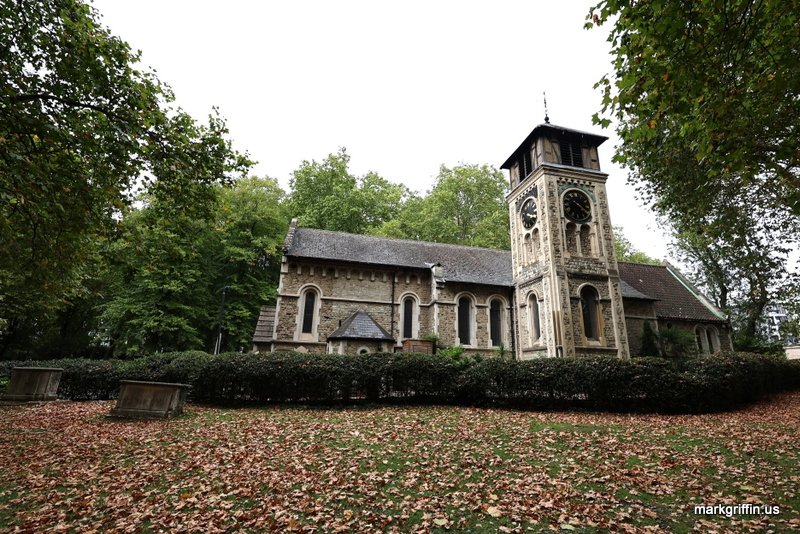
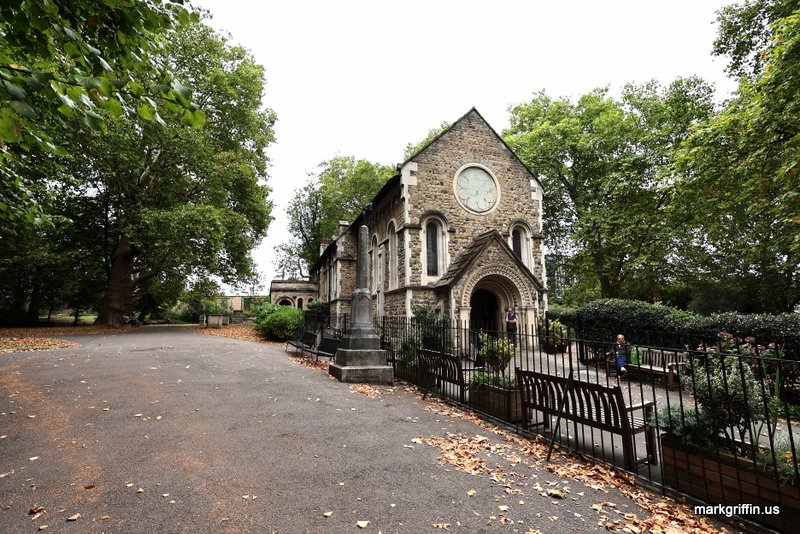
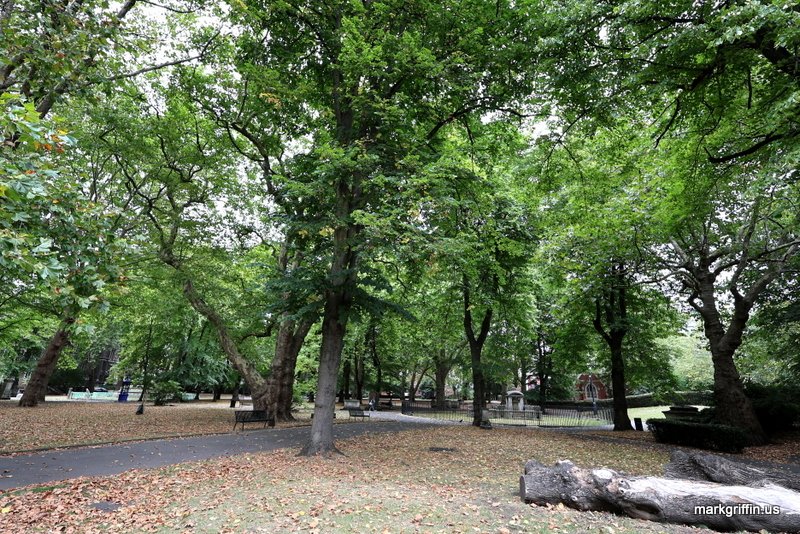
What is a first for me, attached to these grounds is a building which sits on its own in the corner of the cemetery. Upon closer inspection, it’s the home of the coroner. Fitting location and yes, it’s still actively used.
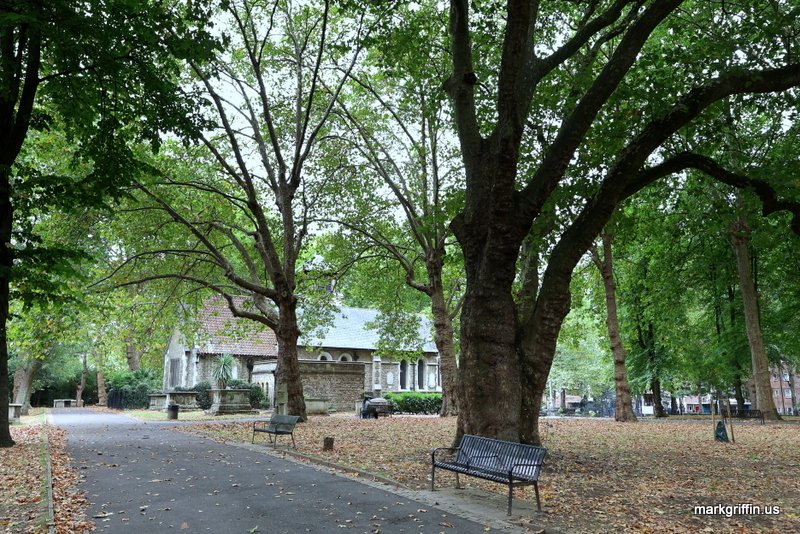
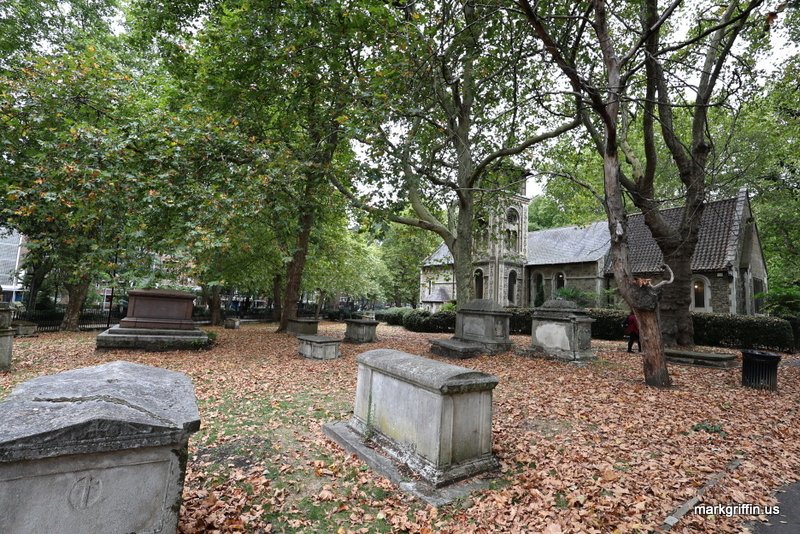
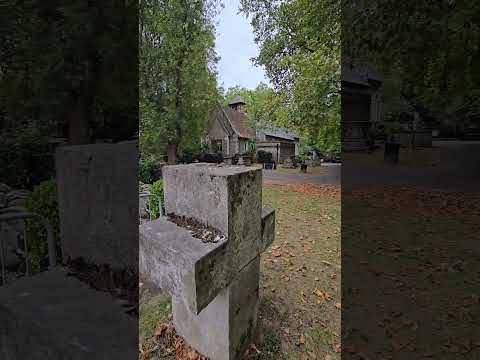
Although the dead may be at rest, the world continues to move forward. In the mid-1800s, the expansion of the Midland Railway and the building of St Pancras Station (1860s) cut directly through parts of the churchyard. Large sections of consecrated ground were dug up, reduced, or shifted to make way for the new lines, shrinking what had been one of the parish’s most significant spaces. Thousands of burials were affected. Human remains and gravestones were moved to accommodate railway construction. Click on the image below to see a video of the lands.
A young Thomas Hardy, then working as an apprentice architect, was tasked with supervising the clearance in the late 1860s. To manage the overflow of headstones, Hardy arranged them in a circle around a tree, now famous as the Hardy Tree, creating a haunting image of industrial progress literally uprooting the past.
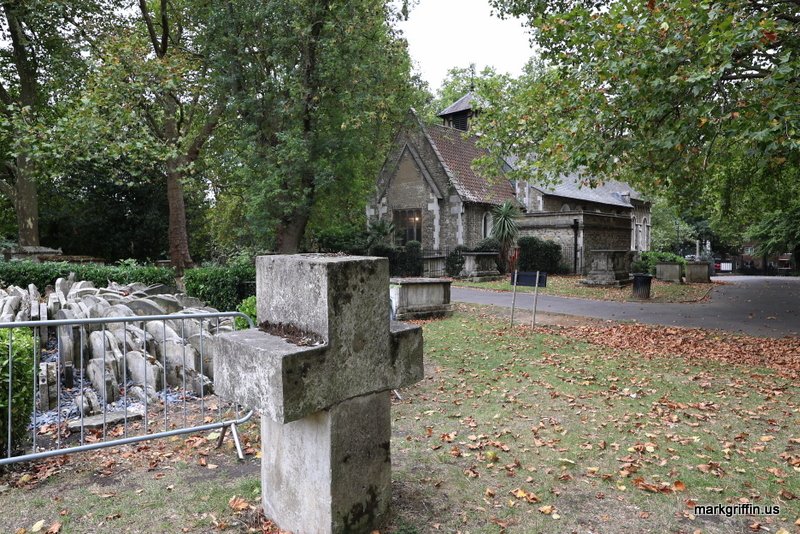
The tree which had existed before the replacement of the tombstones is now long gone.
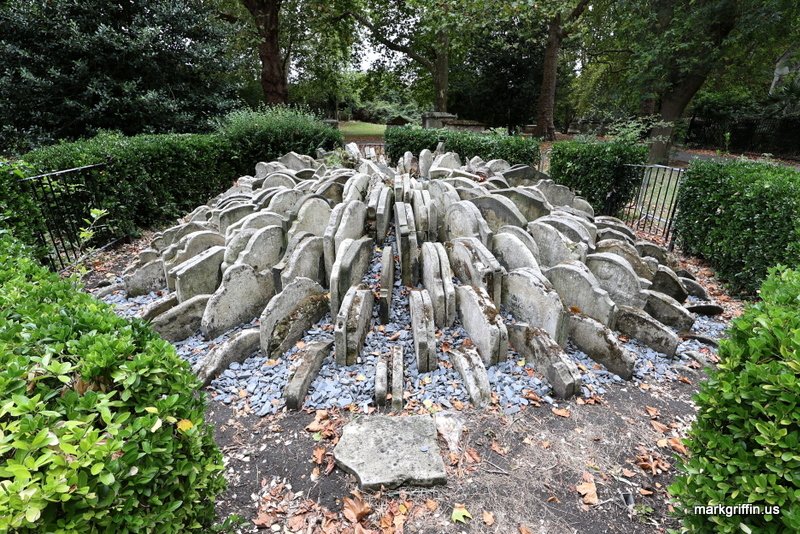
The episode illustrates how the Industrial Revolution forced historic and religious sites to give way to infrastructure. Today, visitors often see the Hardy Tree and the fragmented churchyard as a stark reminder of the clash between old London and the railway age. Leave the church grounds and you’re reminded how, even today, progress continues.
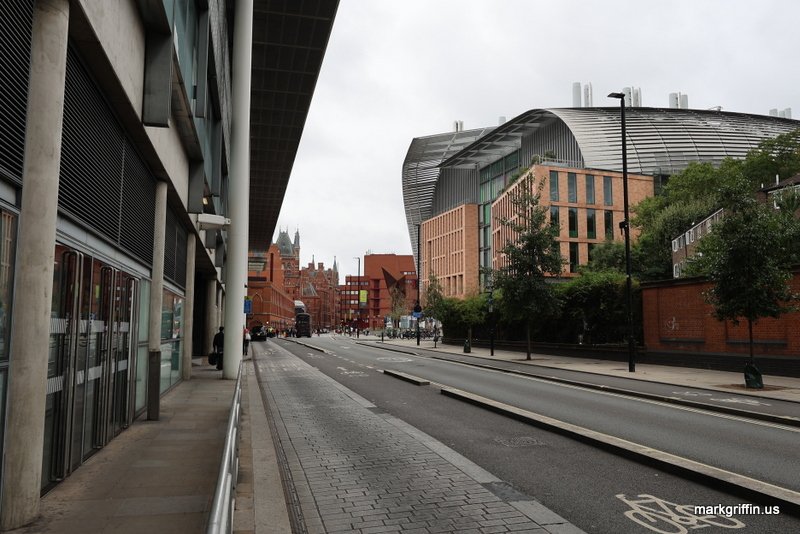
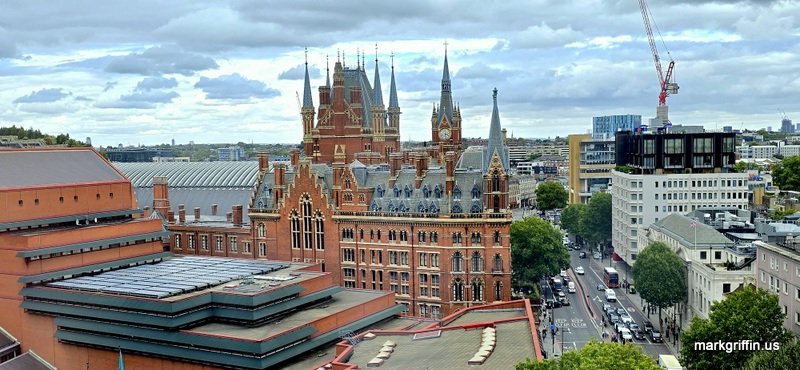
Opened in 1873 as the Midland Grand Hotel, the St Pancras Hotel was intended to impress travelers arriving at the adjacent St Pancras Station. It offered cutting-edge amenities for its day: hydraulic lifts, revolving doors, and even early forms of indoor plumbing, a huge luxury in the 1870s. By the 1960s it was considered for demolition as the style was considered outdated for the region, eventually closing in the 1980s. After extensive restoration it reopened in 2011.
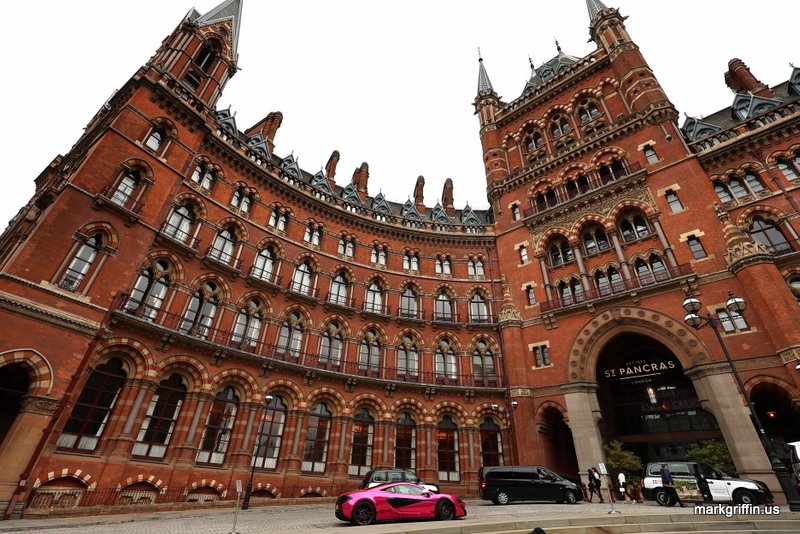
The building was only saved because of the planned high-speed Eurostar train line and the desire to once again awe people as they stepped out of the station. Had the train, linking London to must of the EU, the station surely would have been demolished. Not to mention, the view from the hotel would not have been as special as it is today.
Time for dinner and sleep. Tomorrow, Cambridge.